

By Charles Peirce
The Hare Hypothesis by Iain Spence is an interesting piece of pop-culture analysis which tries to link trends in youth movements to a larger pattern operating throughout history. It’s easy to understand the appeal — as anyone with a bit of historical perspective might start to notice the repetition of certain cultural trends. For Spence, whose background is in writing about music and youth in the UK, those repetitions are cycling in a four-stage pattern which he connects with his own, specific reading of the Life Scripts concept of Transactional Analysis.

 Deep Metaphors are a concept from Harvard Professor, marketer, and researcher
  Casting is one of the obvious essentials of any film, and like all aspects of the process worth examining: the assumptions that define it and the possibilities of how it might be used to best advantage. Casting’s key place comes in financing, where attaching the right star allows raising money based on their monetary value to specific regions or demographics. Enough attached stars offer the promise of pre-sales in distribution, and enough pre-sales can then determine a base budget. This would seem to follow the simple logic of a star’s popularity guaranteeing viewers, a shortcut in the task of finding an audience.
 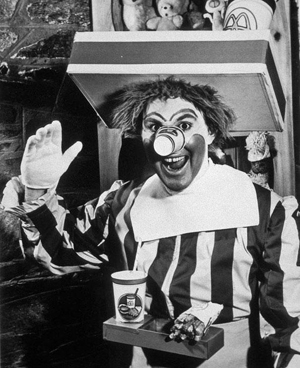 Originating in the thinking of Plato but finding its modern applications from the work of Carl Jung, Archetype Theory is a way of looking at and defining the world that has numerous uses, particularly in marketing and storytelling. At the least, Archetype Theory gives a structural thematic underpinning to organize ideas around. At the greatest, Archetype Theory might allow a primal, subconscious form of resonance and communication with audiences — speaking to them beyond the limits of language.
  Strategy is a great personal passion, but something I find few people have an adequate grasp of. While the basic assumption seems to be that advice of all kinds is inherently strategic and of value, it is often anything but. Any given suggestion or piece of advice is only worthwhile inasmuch as it allows the attaining of a goal — without knowing that goal and measuring the success of attempts to attain it, you are not operating strategically: you are merely using tactics of unknown value.
 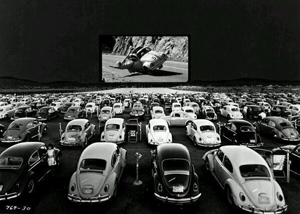 As I alluded to in a
 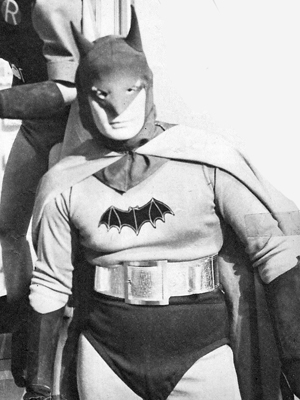 It would seem, to the eyes of Hollywood, the high form of film has become the franchise. It satisfies the two poles of conventional business wisdom: limiting risk as it promises more of the same, maximizing profit as it entices investors with that self-same prospect.[1] The Hobbit is stretched out to encompass three movies, hordes of young adult novels are on the horizon, and Bob Iger suggests Frozen