

by Andrew Einspruch
Filmmaker Andrew Einspruch attended Screen Forever 2013, the conference of Screen Producers Australia, this past year and wrote a series of articles for the event, which he’s kindly allowing us to reprint here. These articles originally appeared in Screen Hub, the daily online newspaper for Australian film and television professionals.
The world of content and culture is moving online. And search giant Google is in the driver’s seat to know what the trends are. But the digital world unfolds in a fraught way for many creators. In the opening session of this year’s Screen Forever conference, Derek Slater, Global Public Policy Manager, Google USA, gave a glimpse into this changing world, as viewed by the advertising behemoth. Andrew Einspruch reports.
100 hours.
That’s how much content currently gets uploaded to YouTube every minute. That`s a week`s worth of viewing in less than two minutes, and a year`s worth in less than two hours. That`s the supply side.
On the demand side, six billion hours get watched every month, or just under an hour per person on the planet, whether they have an Internet connection or not. It is a staggering change to the world, especially when you consider that YouTube did not exist nine years ago.
Google USA`s Derek Slater, a self-confessed fan of the Australian show “Frontline,” discussed this boom in creativity, and put it in the context of creators and money. Put simply, you have more content creators than ever before, and more ways for them to make money from all the connected consumers out there. He cited statistics that said digital music revenue was more than $5.6 billion in 2012, and that digital movies were nearly 30% of revenue in the US in 2012, up from 19% in 2011. Ebooks show a similar jump, with 457 million sold in 2012, up 43% from 2011.
It is still a developing market, but it represents a massive shift from the previous decade.
Slater also described Australia as a huge net exporter of video, with eight times as much Aussie video consumed off-shore than on-shore. Looked at differently, twice as much Australian content is consumed in the US than in Australia. From Slater`s perspective, it shows that local content is thriving, and contributing to a trade surplus in that category.
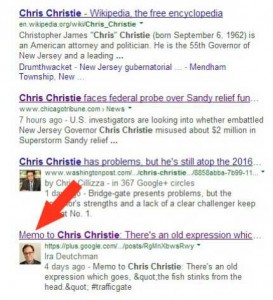 It all started just as the Chris Christie Bridge-ghazi scandal was gathering steam. Like many, I googled the besieged Governor to see if there were any new developments.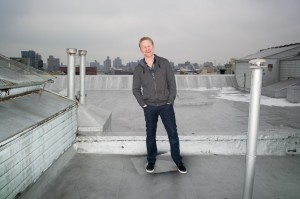
 If you aren’t shooting in 4K (aka Ultra HD or UHD), you’re two years late. In two years from now any film you shot in HD will be as obsolete as the stuff you shot in SD. But don’t take my word for it, and expect that within a few weeks or sooner, there will be new advances announced.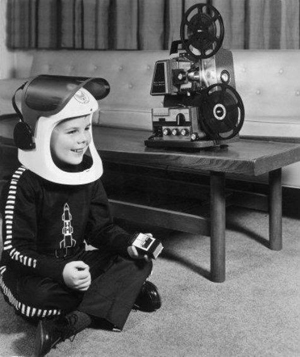
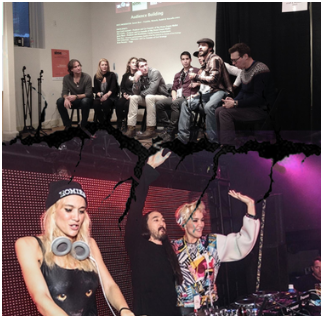 Walking down Main Street of the Sundance film festival this year, it felt like there was an ever-growing gap between the east and the west side of the street. Hollywood and Independent seem to be growing further and further apart, making the Sundance film festival, and other L.A. hyped festivals like it, such an increasingly awkward phenomena. You have a festival director who wants to keep the slate as Independent, fresh, and intriguing as possible, an audience that attends who has come to expect way more “accessible” stories, and big biz owned media companies like Variety claiming the festival “suffered from too much Brooklyn” and squawking at 2 million dollar advance tags for indie films in today’s market. We feel for you Mr. Redford, we do…but you created this monster, and now it ‘s become a near perfect representation of the dichotomy within the film Industry.