

Okay, the robots are lit a bit better than us, but who’s complaining? I had fun at last night’s discussion with Chris Hyams and Sharon Waxman.
Category: Truly Free Film
We are on the verge of a new film culture and infrastructure.
If I had to state one of the most crucial things we need to focus on in the indie film world right now, I would say that working to establish a sustainable investor class ranks right at the top. If only it did not take a bit more than simply stating it…
I have made over sixty films in about twenty years. Each film is a new start up with a new structure and new investors. It is not a very efficient system. Folks from The Business Community often express interest in trying to bring some greater reason to our world. I hope they succeed and I am available to help, but it is not so easy a mission.
One of the reasons that each film has it’s own financial structure is that every film has its own needs. We are not making a standardized product, but we are working with artists who have developed unique talents for getting their visions and emotion up and out there. Filmmakers need a protected environment to work in.
At the same time, Investors need access to the process to trust their needs are being taken care of. These needs are most often quite different from the filmmakers’. How to provide trust, confidence, and comfort is part of what makes producing such a challenge (and pleasure).
 Today we are pleased to present a conversation between Keith Bearden and Jordan Horowitz, the first-time Director and first-time Producer of MEET MONICA VELOUR, starring Kim Cattrall, about what it was like to make the film, the lessons they learned, and expectations for the future. The film will premiere at the Tribeca International Film Festival on Sunday April 25th, and other screening times can be found here.–
Keith Bearden: I have to start by saying that having done well with short films and commercials, the important parts of feature filmmaking were there when I started (when I hear about writers jumping head first into feature directing I wince in sympathy pain). But of course, there were still a lot of challenges ahead.
My biggest lesson was learning what you don’t need in a screenplay.
Finding what you want to watch when you want to watch SHOULD be the easiest thing in the world. It still will always be hard to know what you want to watch, mind you — but if you do, you should be able to find it.
In terms of the knowing part of the equation, playlists are a start. Every social media site should have an easy to use playlist function that allows you to post what you are going to watch, and for others watching those films to find you. The film watching experience is only partially about content. It is also about social and we need to have easier tools to connect with if we are going to make it all work again,
And combining playlists with easy searches of what is available online is the start of something truly great. Clicker helps a great deal in this regard. The ability to share playlists is a key thing when it comes to discovery and it doesn’t look like that is a possibility with Clicker unfortunately. We want to be able to build playlists, post them, embed them, share them.
Today’s guest post is from Distribber founder Adam Chapnick responding to the question of just what IS Distribber and how can it make the world safer for filmmakers.
Distribber was recently acquired by IndieGoGo, and in the wake of the publicity surrounding the announcement, we received a tremendous outpouring of enthusiasm and interest in Distribber’s service. As is inevitable, there’s been some confusion around what Distribber does and doesn’t do.
Distribber was created to help rights holders maximize the payback from their work and investment.
More specifically, Distribber was conceived as a solution to several persistent complaints from filmmakers and other creative rights holders about distributors in general and aggregators in particular. (“Aggregator” is the term used for a company that acts as a gatekeeper between a rights holder and a retail platform, such as iTunes, Netflix, Hulu or Cable VOD operators like Comcast, Time Warner, etc.)
The complaints surrounded 3 specific pain points:
Complaint #1. Eternal revenue-share for finite service
“Blood Simple” was the first film I bought a ticket for at a film festival. It was screening at the NYFF and I soon came to recognize that the films accepted to that fest were of a exceedingly high quality. The curatorial taste behind that festival choices was something I had confidence in. They gained my trust precisely because they have never tried to be all things for all people, and for that I have always been willing to pay a premium for. The NYFF was, and is, a trusted filter.
Too many festivals these days program too many films without revealing, or reveling in, their curatorial hands, diminishing the power of their brand in the process. If festivals are going to become the new curators, that will have to change. Festivals must emphasize their unique taste, if not overall, then within sidebars at the festival.
Today’s guest post is from Louise Smith, the producer of Nash Edgerton’s THE SQUARE (out now in theaters in the US and highly recommended).
I’ve just returned from a trip to New York & LA for the release of my film THE SQUARE.
In the lead up to the opening weekend, I was part of some Q & A sessions with Nash Edgerton (the director), and we were asked a couple of questions that I thought I’d share with you:
Had we ever thought to subtitle our movie (the lady who asked the question said she couldn’t understand our accents)
Does everyone in Australia have a mullet
Hmmm… no and… um, no.
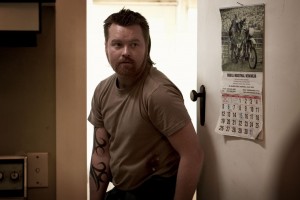
The cultural gap between Australia & America is always bigger than we Aussies anticipate – especially from the eyes of an American looking toward Australia. We however, consume American movies and TV all the time, so there’s no language or cultural things for us to learn about your characters when we watch them… we know them already because we’ve grown up on them.
