

By Christina Kallas
 So should we be discussing TV series as nothing less than long cinematic narratives? And if so, what would that mean? It is fair to say that TV, just half the age of film, has only recently (perhaps in the last 15 years) come into its own. Writers have only recently learned to take advantage of the unique powers of the medium itself. For years the focus was on each episode being a complete story, a standalone. Not only in procedurals but in series generally, the dramatic focus was on the unit of the episode. A TV episode was a mini-movie (much as a web episode is a mini-TV episode now). Then the primary canvas of the TV medium became the season.
 The prevailing idea is that film, like any other art form, is made by a single genius. TV drama is, however, more often than not the result of collaboration between many writers and minds. How is that possible, and what does it mean?
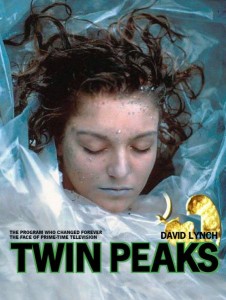 Filmmakers have always flirted with television. One has only to recall, from 1980, Rainer Werner Fassbinder’s Berlin Alexanderplatz, a series of, notably, thirteen 52-minute episodes plus an epilogue, or David Lynch’s Twin Peaks (1990/1991), which lasted for two seasons, the first with eight and the second with twenty two 50-minute episodes (the pilots were feature-length) or indeed Lars Von Trier’s The Kingdom (1994), a series of eleven 55-minute episodes. Cinema’s flirtation with the new form in fact started much earlier, perhaps with Roberto Rossellini’s infamous 1962 news conference where he declared that cinema, the medium for which he had directed such classics as Rome, Open City and Paisan, was dead and that he would henceforth be making movies for television.
  As I alluded to in a
