
Categories
Truly Free Film

38 Problems Discussion Continues

If you haven’t checked out the comments to last week’s post, scroll down now and do so.  It’s a lively discussion with lots of interesting points raised.

The discussion has also migrated to some other blogs too. Scott Macauley over at the Filmmaker Mag Blog gave the list a gander and had some futurecasting thoughts as a result:

In the “up” years of the indie film economy, enough people were getting a little bit of action, and the difficult questions of which models to endorse going forward and which to let die did not have to be made. Now due to collapsing revenue and business models, they do. Independent film is, after all, content, and while having specific challenges of its own it also shares many of the troubles that all content, from scripted one-hour dramas to daily newspapers, is currently facing. So, one question I had after reading Ted’s list is whether the loosely defined, loosely configured movement known as indie film will organize itself around the answers to these problems, or whether makers will decouple from the definitional tent of independent film and address them using entirely different paradigms.

Categories
Bowl Of Noses

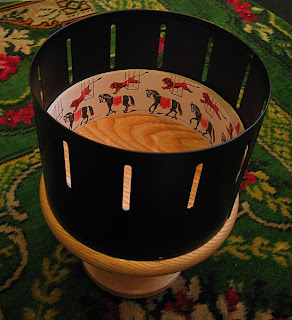
Styles Of Animation #6: Praxinscope

The zoetrope was replaced by the Praxinscope. You’ve seen a zoetrope in the museums.  You know you spin the wheel and look through the slots.  

“The praxinoscope improved on the zoetrope by replacing its narrow viewing slits with an inner circle of mirrors, placed so that the reflections of the pictures appeared more or less stationary in position as the wheel turned. Someone looking in the mirrors would therefore see a rapid succession of images producing the illusion of motion, with a brighter and less distorted picture than the zoetrope offered.”

In the video below, the filmmakers took that method and applied it.  No camera tricks at all.

Pretty darn neato if you ask me.


Thanks Brainpickings!

Categories
Bowl Of Noses

360 Degree Views

Panoramic photography is pretty darn cool — particularly on the internet.  Click on the controls and spin around.  Check this out and swim through the coral reefs without getting your hair wet!


Ile Aux Canards Coral Reef Noumea in Noumea

They’ve got a lot of other places to visit too if you got the wants but not the jets.


Escapade Coral Reef Sphere in Noumea

Thanks Boing Boing!
Categories
Truly Free Film

Ted Hope Live On Fox Business Network: Is Indie Film Dead?

I never did get to my 38 Reasons but I did get one good answer in.  Peter Guber got my questions (but man, is he GOOD!  He answered the challenges questions better than I could of) and Marina kept getting my other questions.  I did get to give props to Lance Hammer but he was only the first of at least ten people I wanted to mention!  I have to admit though it was a lot of fun.  Many thanks to Reed Martin for getting me on the show (read/buy his book now!).

Categories
Truly Free Film

38 American Independent Film Problems/Concerns

Okay, I think it’s obvious that I prefer to look at the opportunities and solutions before us, as opposed to the problems and concerns, but I am afraid this post may obscure that just a tad.

I am going to be on the Fox Business News network’s “America’s Nightly Scorecard” (630P-730P EST) tonight and I thought I would put my mind to what issues are affecting indie film right now. Off the top of my head I came up with a few issues that we need to solve to return to the glory days of years passed.   I am sure with your help, we can come up with some more too.
I don’t have time to rank them so maybe you can let me know how you feel.
 
  1. Too many leisure options for film to compete without further enhancing the theatrical and cinematic experience.
  2. Too many “specialized” films opening to allow such films to gain word of mouth and audience’s attention.
  3. Too many films available and being distributed to allow films to stay in one theater for very long, making it more difficult to develop a word of mouth audience.
  4. No Access
    No Access
    Lack of access — outside of NYC & LA –to films when they are at their highest media awareness (encourages bootlegging, limits appeal by reducing timeliness).
  5. Distrib’s abandonment (and lack of development) of community-building marketing approaches for specialized releases (which reduces appeal for a group activity i.e. the theatrical experience).
  6. Distrib’s failure to embrace limited streaming of features for audience building.
  7. Reliance on large marketing spend release model restricts content to broad subjects (which decreases films’ distinction in marketplace) and reduces ability to focus on pre-aggregated niche audiences.
  8. Emphasis on upfront compensation for star talent creates budgets that can’t reasonably recoup investment.
  9. HP&W fringe levels at too high a level to allow low-bud production to benefit from know how and talent of union labor.
  10. Lack of media literacy/education programs that help audience to recognize they need to begin to chose what they see vs. just impulse buy.
  11. Collapse of US acquisition market requires reduced budgets for filmmakers, and thus resulting in limiting content.
  12. Collapse of International sales markets requires reduced budgets for filmmakers, and thus resulting in limiting content.
  13. Foreign subsidies for marketing of foreign film makes reduces buyers’ acquisition appetite for US product.
  14. Foreign subsidies for foreign productions contribute greater budget percentage than US tax rebates do, allowing foreign productions to have larger budgets and thus more production value and expansive content — thus making it harder for US product to compete.
  15. Recession has reduced private equity available for film investment.
  16. Credit crunch has reduced ability to use debt financing for film investment.
  17. Threat of piracy makes library value of titles unstable, which in turn limits investment in content companies and reduces acquisition prices, which in turn reduces budgets, which in turn limits the options for content — so everybody loses.
  18. No new business model for internet exploitation at a level that can justify reasonable film budgets.
  19. Lack of community embrace of new creative story expansion models that would facilitate audience aggregation and participation (to seed, build, drive audiences).
  20. Emphasis on single pictures for filmmakers vs. ongoing conversation with fans has lead to a neglect of content that helps audiences bridge gaps between films and that would prevent each new film to be a reinvention of the wheel for audience building.
  21. Panic due to the 15 year promise of crystal clear downloads over internet despite the reality that it still has not developed — allowing the fear to move to a business practice of inactivity.
  22. Bootleggers have developed a platform that allows audiences to simply download whatever they want where ever they want whenever they want — something that the film industry has yet to do.
  23. Loss of job for newspaper based film critics reduces curatorial oversight which lessens word-of-mouth and want-to-see.
  24. Reliance on synopsis style reviewing fails to provide enriching cultural context for film and thus reduces audience satisfaction.
  25. Lack of marketing/distribution knowledge by filmmakers limits DIY success.
  26. Indie filmmakers mimic Hollywood’s obsession with regurgitating past success models, by regurgitating past festival hits’ story-lines or navel gazing. Cinema is 100 years old but we still tell the same stories in the same ways.  Audiences get bored, move on, play video games.
  27. Amer-Indie filmmakers are only recently starting to look at non-US-centric stories that can “travel” into international territories.
  28. America has no funding for the arts so filmmakers have to develop material based on pre-existing markets instead forward thinking inspiration.
  29. America has no co-production treaties (other than Puerto Rico’s Letters Of Understanding) that allow filmmakers to access foreign soft money subsidies.
  30. The specialized distributors force exhibitors to program for full week runs, preventing them from developing local community audience or niche programs on off nights.
  31. The truly independent exhibitors are not yet developed into a collaborating organization that would allow true independent features to be easily booked nationwide.
  32. There is no independent collection and disbursement agency that could allow DIY distribution to take hold.
  33. Filmmakers still believe that festivals are first and foremost markets and not media launches.
  34. The ego-driven approach to filmmaking vs. one of true collaboration generally yields lower quality of films and greater dissatisfaction amongst all participants.
  35. Lack of real role models who represent integrity and commitment to the craft (in order to inspire others).
  36. Corporate hierarchy and access that is driven foremost by privilege (college, connections, class) limiting diversity and new content and approaches.
  37. Inability for filmmakers to influence iTunes editors to promote their work.
  38. Lists like this make the foolish despair.

Ted’s note: I wrote a sequel the next year.  Here are 38 more problems. If you want to move into the future still further, here are the Really Bad Things In Indie Film 2013.

Categories
Truly Free Film

Who Can Really Help Indie Film?

There are a lot of people who in a position to improve our culture — if they want to.  If they don’t, does it mean they really want us to suffer?  And if they want us to suffer, does that make them our enemy?  And if they are our enemy, how are we supposed to respond to them.  Well, that’s all something to discuss, but for now I was just more interested in who can be indie film’s savior.  

Why don’t more people do more things to make this world a better place?  If you ask me, they could even do well while they are doing good — or in other words, I bet it would be profitable if they put a little more effort into making sure we saw the best work in the best, most convenient manner possible.  Maybe if we talk about them, we can motivate them to act.
I hope to make this a regular feature at TFF and would love your suggestion on whom, with a little effort, could make a big difference to us all.  Let me know your thoughts on this.
Today’s suggestion is the unknown editors who pick what is featured on the iTunes store home pages.  They wield tremendous power.  Just by featuring a short film, app, or film prominently they influence purchasing habits in a very big way.  Check out this article that I was tipped to by Variety’s Anne Thompson.  It pretty much says it all.  Unfortunately, we don’t know their names so for now they are but gods who names we can not speak.  Yet imagine if they took initiative to save indie film.  Think of the good will they would have in the community.  Wouldn’t it entice more filmmakers to want to work with them?  How sweet would that be for everyone, eh?
Categories
These Are Those Things

Story Of Stuff Update

Way back, before I took to blogging, I blasted my friends urging them to see a little video I had stumbled across.  It’s been viewed over 5.5 million times since.  The New York Times finally did an article on “The Story Of Stuff”and if you haven’t seen it you really have to check it out.  It’s some of the best, most digestible activism available.  Kid friendly too.  And check out their website too.
