
Categories
Truly Free Film

Jason Brubaker on “The Modern Movie Making Movement”

Times HAVE changed. In many, many ways. But what we call Indie Film is an era gone by. The opportunity to create and connect has never been greater — and it means other changes are afoot. Jason Brubaker reached out to me with what I felt was an important idea, but like many I encounter, I was too busy to participate unfortunately.

Jason recognizes that filmmakers no longer need “discriminatory distribution” and can reach audiences with their work in new and different ways. But Jason also recognizes we need to share the info on how we do it. Most importantly, he recognizes this is a community effort. He has done a great service to our community and deserves our thanks. But I am going to let him tell you all about it with a guest post. Thanks Jason!
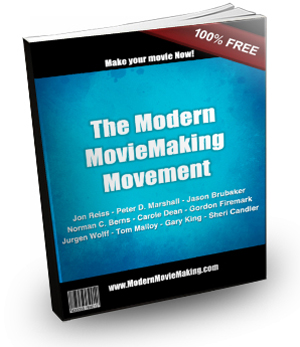
When I started out, getting a movie made seemed super impossible. Like
most independent filmmakers, I was inspired by the news of Kevin
Smith, Ed Burns and the other indie filmmakers who were finding
innovative ways to get movies made, seen and sold. These guys inspired
me to take action and gain experience. But instead of staring my
career in Los Angeles or New York City, I decided to produce a short
film in my hometown of York, Pennsylvania.

To accomplish this, I saved up all summer and bought a used Arri BL
16mm camera and a few rolls of film. I spent an entire weekend
producing my movie. And after buying some beer for the wrap party, I
promptly ran out of money. So for the next six months I worked to save
enough money to process the film and transfer it to video. I remember
coming home each night and gazing lovingly at three 400’ rolls of
exposed 16mm film presently collecting dust on my bedroom floor. This
was proof that I was indeed a filmmaker.

While I did eventually get the movie processed, transferred and edited
– I couldn’t help but feel a little disheartened. I mean, if it took
me a year just to finish a short, how long would it take to get a
feature made? To answer this question, I moved to New York City, where
I ended up working alongside the (then) twenty-something year old
entrepreneurial producer, Seth Carmichael. With Seth, I learned what
it took to make features. But I also learned of the next hurdle –
discriminatory distribution.

This was a time when most independent feature filmmakers based their
business on the Sundance Dream. “I’m going to make the movie, sell it
at Sundance and live happily ever after.” But the reality was, very
few filmmakers realized this dream. Instead, most traveled the
festival circuit to exhaustion. And in place of a dream distribution
deal, many of these filmmakers forwent money and relinquished their
rights for the mere validation that comes from seeing their titles on
the shelves at local video stores. “At least my movie made it to
Blockbuster.”

I eventually transferred to Los Angeles, where my team and I produced
our first feature, a silly zombie movie. As expected many traditional
distributors contacted us, offering crappy deals. And just prior to
losing all hope of income, we decided to set up shop in Amazon. At
first, none of the producers liked the idea. I mean, aren’t we
conditioned to believe that self-distribution sucks? But then we made
our first sale. We thought this was an anomaly. We had no movie stars,
our production value left a lot to be desired and most people on earth
had never heard of our title (including you.) But then we made another
sale… And then a dozen…

That was five years ago.

Since that time, it has become widely accepted that HDSLR camera
technology, crowdfunding and internet movie distribution marks the
democratization of independent filmmaking. But in order to prosper,
modern moviemakers must now master a whole new set of skills revolving
around audience engagement and one-off sales. And this creates some
questions. Namely, how the heck do filmmakers source a paying audience
large enough to justify a movie budget?

To help the answer these questions, I reached out to TEN of the most
inventive filmmaker thought leaders in the world and asked them to
share their best practices on how to survive and thrive. Suffice it to
say, the responses were overwhelming. I didn’t just receive a few
bullet-points, but I got over 100 pages of extremely NEW and extremely
valuable filmmaking information!

In organizing the material, I realized that what we had was more than
just another how-to filmmaking book. I mean, while many fundamentals
such as screenwriting, production and film finance obviously remain
essential to getting a movie made, the material also emphasizes new
strategies, like how to create a crowdfunding campaign, how to
leverage social media and how to sell your movie without the
middle-man. Because the information is useful, timely and modern, we
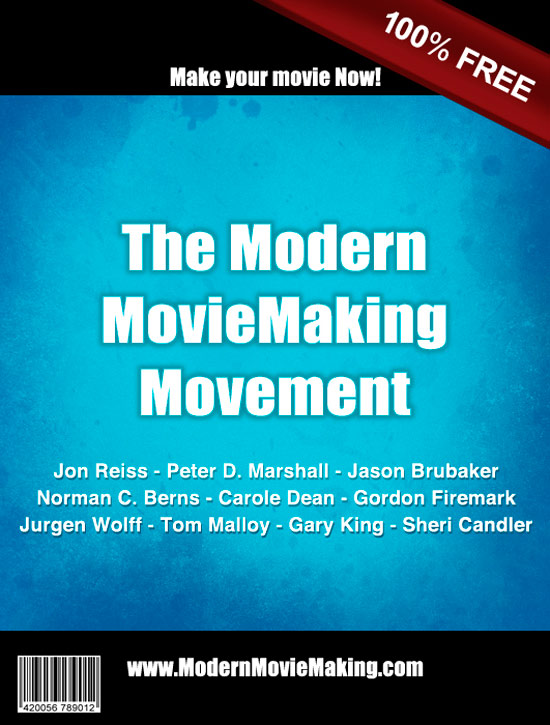
simply called it, The Modern MovieMaking Movement.

And this begs a new question: What does it mean to be a “Modern MovieMaker?”

While the philosophy is evolving, Modern MovieMaking is defined by an
era of entrepreneurial filmmakers who do not ask permission to make,
market or sell movies. Instead of making movies and hoping the movie
will get seen, picked up and sold through traditional distribution
channels, the modern moviemaker makes movies, directly engages with
the audience and builds community around his or her movie titles. In
releasing The Modern MovieMaking Movement, we also decided to do
something else revolutionary – the contributors all agreed to give the
material away, for FREE!

So if YOU would like to download a copy of The Modern MovieMaking
Movement, you can do so by visiting the official site:
www.ModernMovieMaking.com

Wishing you all the Modern MovieMaking success in the world!


Jason Brubaker is a Hollywood based Independent Motion Picture
Producer and an expert in internet movie distribution. He is focused
on helping YOU sell movies more easily by growing your fan base,
building buzz and creating community around your title. For more info,
check out Filmmaking Stuff, at: www.FilmmakingStuff.com
Categories
Truly Free Film

What Are Your Favorite Film Quotes?

Continuing on with my crowdsourcing of blog posts for you, I followed up my tweet of “What’s the first best lesson you learned about the film business” with one about what was your favorite quote. I didn’t get anywhere near as many suggestions, but the results are good. More suggestions are welcome.

Billie Burke On Hollywood: “To survive there, you need the ambition of a Latin-American revolutionary, the ego of a grand opera tenor, and the physical stamina of a cow pony.” – (via Randy Finch)

Brian De Palma: “The camera lies all the time; lies 24 times/second. ” (via @rudra_banerji Rudra Banerji)

Werner Herzog: “You want to make a film, steal a camera, steal film stock, sneak in to a lab and do it. – from Werner Herzog Eats His Shoe (via @wvfilmmaker Jason Brown)

Alfred Hitchcock: “”A lot of movies are about life, mine are like a slice of cake.” (via @rudra_banerji Rudra Banerji)

paraphrasing Mike Nichols: “Directing is like sex. You don’t usually get to watch other people doing it, so you are never sure you are doing it right.” (via @catsolen)

Graham Taylor: “What’s not boring is making shit happen.” (via dantherriault Dan Therriault )

Orson Welles: “A writer needs a pen, an artist needs a brush, but a filmmaker needs an army.” (via TS86142 TAKAE)

Orson Welles: “I do try to keep the screen as rich as possible, because I never forget that film itself is a dead thing, for me at least — the illusion of life fades very quickly when the texture is thin.” (via @catsolen)

“Waste everything except Time” 1 of my carpentry mentors. (via @davepowersNYC Dave Powers)

Categories
Truly Free Film

It’s NOT About Art: The Film Industry Is About People Keeping Their Jobs

Avenue Q reminded us: The internet is for downloading porn. Well, do you need me to remind you that the film industry is for keeping the few jobs in film development, production, sales, marketing & distribution that still remain?

Don’t forget that cats bark; they only meow when people are around. All creatures say what the people want to hear, and another thing when they think the coast is clear. I have a lot of meetings with people who tell me they want to make great films. When I am sitting next to them, it sounds like they are speaking the truth. It’s taken me a long time to see that many of those in the “business” speak a secret language, or at least one the creative community will never understand. The decoder ring is that it is all about the job. Jobs are precious and few, and damned if someone is going to let a movie jeopardize that.

The core principal behind why most people do what they do in the film industry, is employment. Studio execs, agents, acquisition execs, and the like all must act so that they do not lose their jobs. They are not trying to make art; that’s a luxury few can afford. They are not really trying to make money for their company; how is that going to benefit them? They are not dedicated to some higher principal; the daily grind eats any space that such lofty ambitions might foster.

It is risk mitigation and a concern to cover your ass that drives most of the behavior within the corporate structure of film. The logic of most corporately-employed professionals’ actions is blatantly clear if you trace the motivation to this principal. I risk stating the obvious, because not only am I asked regularly, but I also have to remind myself: “why is it so hard to make good movies in this world?” A simple recognition won’t make the pursuit of great work any easier, but it may help you endure the brutality of the struggle. If you base your actions around recognizing this motivating principal of others in our field, you will probably have an easier time.

Not so long ago, some folks recently expressed dismay at the number of sequels on Hollywood’s slates, or the hope for the future of film, but it all makes sense if all anyone wants to do is keep their job. In Mark Harris’ GQ article, “The Day The Movies Died“, my former partner James Schamus points out: “Fear has descended, and nobody in Hollywood wants to be the person who green-lit a movie that not only crashes but about which you can’t protect yourself by saying, ‘But at least it was based on a comic book!’ ”

Harris states: “Give the people what they don’t know they want yet is a recipe for more terror than Hollywood can accommodate.”

I have always liked Alice In Wonderland’s White Rabbit quote “I like what I get” for succinctly summing up most public tastes, but if you combine that with Cultural Gatekeepers fear of unemployment, what do we get? An industry that recycles last years ideas and a public that permits them to do so. It certainly doesn’t create a culture that will live for ages. Sure we get an anomaly or two every year that manages to be truly original and wonderful, but that certainly doesn’t justify the enterprise or the investment. What are we doing? There is another way, and it can generate both art and profits.

I reluctantly subscribe to the notion that change only occurs when the pain of the present exceeds the fear of the future. I also have read studies that show that neglect and the minor irritation can wreck greater havoc than pure trauma. If that is the case, we can’t just let things continue on. We need to identify the symptoms of this job focused industry and reach higher. Since we don’t have John Carpenter’s magic TheyLiveEyewear, how do we spot the symptoms?

What is it that helps people stay employed:

Hire those that are like you.
Hire those that will yes you.
Yes those that hire you.
Do what others in your position will do.
Have a defensive position worked out in advance.
Base new work on other work that has somehow succeeded.
Don’t trust your gut, trust the numbers.
Subscribe to the popular philosophy.
(I am sure you can add to this list. Please do.)

Now let’s do something completely different from all that. Can we change our thinking to aspire towards great work above all else, even at the risk of losing our precious job? Wouldn’t that blow your mind if a studio exec told you that they wanted to make a better movie even if it made less money? What if you didn’t have to direct a successful Batman episode in order to create an original idea? What can we do to help both the creators and the audience demand originality and ambition from the entertainment industry? It’s both a macro and a micro issue, political and personal: I know I have a problem meeting people that are considerably different than me, yet still hold common interests and principals. How do we break out of our small social & professional circles? Isn’t that what the promise of the internet was, and still is? It can be done. I need to work harder. Do you?

Categories
Truly Free Film

Kit Carson on “Jan Harlan — Stanley Kubrick’s Producer”

L.M. Kit Carson, the legend, the man, returns to discuss his recent encounter with greatness, Jan Harlan, Mr. Kubrick’s producer.

Read L.M. Kit Carson’s last guest post for us on David Holzman’s Diary Here.

What you can find out from some semi-private time with Stanley Kubrick’s multi-movie (The Shining, Full Metal Jacket, Eyes Wide Shut) final producer Jan Harlan is…

…you can find out — how totally susceptible Kubrick was to the story-power of music. A special memory kept by Harlan is seeing Kubrick struggling with how to work his movie-making-evoking of the Mystery of the Universe for 2001: A Space Odyssey – Jan (a classical musicologist) suggested trying Richard Strauss’ “Thus Spoke Zarathrusta” in the X scenes. As Harlan puts it: “Stanley got truly satisfied that this piece by Strauss was all he needed. To make the question remain… about whether there might be some deliberation effecting us somewhere in the Universe.”

…can find out – the subject of all Kubrick’s movies in many ways was… Kubrick. All his movie-making choices about why-and-how – mega-personal.

Harlan: “Stanley seized the rights to Peter George’s 1958 tough extreme apocalyptic political novel Red Alert – the nuclear competition between Russia and the United States was a constant Red Alert in Stanley’s mind. He kept warning his colleagues: ‘Feel like I must make a movie here now – because this world-danger is going to go wrong’. But he couldn’t find the voice that worked for this story. Then he got into a meeting with screenwriter Terry Southern who almost unexpectedly joked: ‘The only way for you to make a Kubrick movie here now – y’gotta make fun of this nuke nuttiness. We don’t know anything about what’s really going on in the nukes. So Y’gotta heighten the seriousness of your worry by making it into a comedy.’ And Stanley got it – made his own fears into his unique movie – it feels like he’s on the track of an absurd fairy tale.”

For me this insider-double-insight-combo opens up why you can feel Kubrick so strongly in the surprise unforgettable last sequence of Paths of Glory.

Battled-rattled soldiers packed drunken into a bar – banging their beer-mugs onto the tables bullying the bar-owner. He drags out mid-bar a captured young German girl goading her to sing. Hooting soldiers. The frightened girl begins to sing simply with a trembling voice. The crude shouting fades. She sings more and more near-tears. Some soldiers begin to hum brokenly along with her – and humanity fills the room – in spite of the war-horror outside.

And Genius Kubrick makes you see what he sees – the bar-room transforming. And say more – as you watch this scene, you truly see-and-feel Stanley Kubrick fall in love with the young actress playing the heart-breaking girl – Christiane Harlan. Shortly after the movie-shoot, Kubrick married her – for life. Jan Harlan’s sister.

CINEMA JOVE 2011, the international film festival’s 26th year, honored and celebrated Jan Harlan with the Luna de Valencia award (a stunning crescent-moon-shaped crystal trophy). For his 30-year creative career-work helping making movies with Kubrick. Also for his strong work now curating the archives and exhibitions spreading the brilliant cool of Kubrick in museums and schools world-wide.

With sincere modesty, Harlan raised the trophy to Kubrick: “Kubrick’s films do remain as a valid marker for future generations to look into our lives in the second half of the 20th century.”

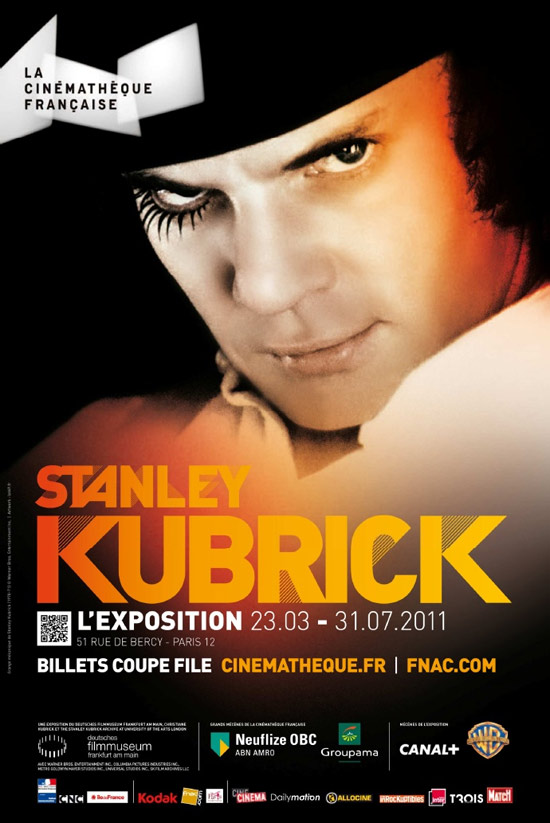
Jan Harlan recommends a special multi-part showcase he helped mount: the French Cinematheque’s current Kubrick Retrospective (March 23rd – July 31st).

CINEMA JOVE Film Festival — End-of-June, 2011 Valencia, Spain

Check this savvy web-site:

www.hotels-paris-rive-gauche.com/blog/2011/03/08/stanley-kubrick-exhibition-paris-cinematheque-francaise

— L.M. Kit Carson

Filmmaker/Journalist L.M. Kit Carson recently jump-started back to his documentary roots – using Nokia N93 & N95 cellphonecams journeying across Africa to record a digital diary docu-series for the Sundance Channel: AFRICA DIARY. This work combines truth and heart in newsworthy reports set to air on the Sundance Channel’s 3 screens – cable-TV; computer; and cellphones – launching in Fall 2011.

Categories
Truly Free Film

Rachel Gordon on “Streaming Educational Media”

Rachel Gordon first posted on this blog about tapping into the educational market, and what we need to do to be in a position to benefit from the opportunity before us. Today, Rachel continues with an update on how that market, like everything else, has evolved during this Age Of Digital Disruption.

Like the rest of the media consumption world, educational uses for films no longer solely occur by watching DVDs. Though non-theatrical forums are still mostly reliant on physical copies to screen, there is a growing trend of streaming media for classes. This is done in multiple ways: using a provided username and password at a designated website, logging into a central institutionally-owned server to watch a film in preparation for an upcoming lecture, or training people in several geographical places at the same time.

Included in this post are collaborative initiatives that benefit both parties – producer and cultural organization – using media. It makes the audience base larger while showcasing progressive agendas and cutting edge ideas. Everyone should think about what kinds of unique projects can be expanded on from even a portion of the films they are creating, or scenes that might have been deleted but still hold value. Admittedly, most of us would prefer to have an entire piece being seen but if a group of people can benefit from isolating a 5-minute clip, this should still be fostered.

Some recent impressive uses of media used by organizations in an online streaming capacity that create social capital and extend human awareness are:

The College of Direct Support began a Film For Thought (FFT) series, utilizing Body & Soul: Diana & Kathy as a tool for training direct support providers, state agencies, and colleges with personalized stories of people with disabilities. Body & Soul: Diana & Kathy is the story of two women with different disabilities – one with Down Syndrome and the other with Cerebral Palsy – who help each other to live independently outside of institutions and lobby Congress for disability rights.

Film for Thought (FFT) Courses are courses built on one film. Their curriculum is designed for learners to connect CDS courses, content, and learning to the main themes and story line of each film chapter. Learners are also asked to integrate this with their work as a Direct Support Professional or Frontline Supervisor. FFT courses will help learners see, hear, and feel how many of the issues are played out in the real lives of people with disabilities. Currently, over 800 individuals have used this course.

You can see more about the program by clicking here.

The Roshan Foundation is a nonprofit organization supporting the preservation, transmission, and instruction of Persian culture. In a pilot project to reach out to new students attending university courses in Asian studies, they decided to use cinema that came directly from the region and collaborated with AsiaPacificFilms.com, a streaming-only service that showcases over 500 films from every Asian and Pacific community worldwide. The foundation took 24 of those films and created a curriculum, with academic introductions, to provide faculty and students located anywhere immediate access to this cultural resource through a designated portal. You can see the creatively multi-layered result by clicking here.

It was a success and now a similar program focusing on Korea is in the works.

Freedom Machines, a film which originally aired on POV, about how assistive technology helps people with a variety of disabilities to actively participate in their communities, was placed on the internal server of Sun Microsystems, in its chaptered sections, for employee education. It was made accessible throughout all of their offices internationally to show how and why disability accommodations in the workplace are necessary. Progress Energy is also utilizing the film as part of its diversity initiative in explaining the complications of barriers in any corporate setting.

The film Monica & David, about a couple with Down Syndrome who gets married which was broadcast on HBO, collaborated with the American Council for the Blind. This unique partnership provided the filmmaker much needed accessibility features for creating their DVD while expanding the audience online to people who were visually-impaired by creating audio description. For the HBO broadcast debut, an audio described version of the film was produced with ACB Radio, who was able to enjoy a free simulcast stream that night. ACB Radio is American Council of the Blind’s free online station.

These examples wouldn’t be on the top of anyone’s lists as initial ideas in marketing plans or distribution strategies, but they’ve all increased public awareness of important causes while providing some extra income, technical tools, or exposure for filmmakers. So I highly suggest keeping your eyes and options open for similar opportunities.


Rachel Gordon is a New York based independent filmmaker and consultant who started Energized Films to help other filmmakers, and distributors, expand the audience of their media into receptive homes in academic, non-profit, and other specialty markets. She’s currently developing a comedic feature about feminine fear of commitment, making a documentary about homeopathy, and speaking to film schools about the importance of teaching distribution to students.

Categories
Truly Free Film

Anthony Kaufman’s MUST READ New Blog: Reel Politik

I have long felt the indie film community has needed someone to write regularly and call attention the various issues that both effect our life as filmmakers, and how film, in all its various forms, effect our life as citizens, societies, and individuals. What an awesome gift for us all that Anthony Kaufman has taken it upon himself to do this. His first post from his re-booted blog, REEL POLITIK, lays out the manifesto:

Anthony Kaufman’s ReelPolitik

Why relaunch my blog with a specific emphasis on film and politics?

Inspired by such declarations of purpose as Dogme 95, the Oberhausen Manifesto, Dziga Vertov’s We: Variant of a Manifesto and Charles Foster Kane’s “Declaration of Principles,” I’d like to outline my reasons below in a little manifesto. I’ve always liked such proclamations. Pretentious and polemical, sure. But they’re also passionate and alive.

So here are 6 reasons for ReelPolitik’s being:

1. Because over the next 16 months, we will enter a contentious period of political skulduggery, with lies, distortions, and propaganda from both the right and the left. And filmmakers, film lovers and the film community need more places to exchange ideas, vent, and respond to the political-ideological formations of that mass entertainment machine known as the movies. As a community, we must also remember that there’s strength in numbers, and if we don’t want the country (and the world) to go to hell, we must stay politically involved.

2. Because we have lost sight of what film can do.

Read the rest here.

Categories
Bowl Of Noses

The World’s Largest Corn Maze

Check this out.  It even has a Starbucks.
