How do we extend our work? Film culture has been stuck in a single product mentality for a long time. Even when the core of a work is a feature film, can’t we place other elements on to different platforms to aid in the discovery process?
As common sense and as necessary as this seems, we are hindered by the lack of opportunity to do so. My spirits are always lifted when I learn of a new opportunity. I am delighted to share this email I got with you.
The submission process for The WIndow Project is on-going. We have current openings in 2011 and 2012 for:
Sept. 21 – Oct . 21 Experimental Installation (Submission Deadline is Aug. 1)
Oct. 21 – Dec. 21 Premiere Installation (Submission Deadline is Sept. 1)
Dec. 21 – Jan. 21 Experimental Installation (Submission Deadline is Nov. 1)
Jan. 21 – Mar. 21 Premiere Installation (Submission Deadline is Dec. 1)
Mar. 21 – Apr. 21 Experimental Installation (Submission Deadline is Feb. 1)
*Premiere Installations last 2 months and will have a reception. Experimental Installations last 1 month.
The Window Project is a curated new media installation space facing
the southern end of Woodruff Park from the windows of the Digital Arts
Entertainment Laboratory (DAEL). The infrastructure consists of six
high definition projectors synchronized to create a rear-projection
screen that stands over six feet high and spans over 80 feet in width
and can be seen from any vantage point in Atlanta’s central park and
from the main pedestrian path of students of Georgia State University.
We invite the participation of local, national and international
emerging and established artists to submit current work reconfigured
for six projectors around a curved surface or new work specifically
created to take advantage of the multi-projector format. This space
and format allows artists to break from the constraints of a single
screen on a flat surface with a prescribed viewing point. We do not
seek a specific theme for the content, but expect that it should be
high visual, technical and conceptual quality and well suited for this
unique public space, which is large, but subtle due to the curved
glass and location on a downtown building window.
This project is sponsored by the Digital Arts Entertainment Lab. DAEL
is a multimillion-dollar entertainment research and production
facility located in the heart of downtown Atlanta on the campus of
Georgia State University. Through industry and university
partnerships, DAEL facilitates the creation and testing of digital
media content. DAEL incubates emerging media arts businesses, trains
graduate students and engages in user-centered media research.
How to Apply: Please email a brief artist statement, a link to artist
website and up to 5 images or videos to:
eli@gsu.edu
with your name in
the subject line. If an emailed/internet submission is not possible, a
CD or DVD can be sent in the mail.
I have met many filmmakers who were avid skateboarders in their teens; some remain so today. Although scientists have yet to find a link between the two activities, but as they both encourage people to find their own personal style, you can see why there there is a connection.
Of course, filmmaking and skateboarding go together like peanutbutter and jelly. And my favorite city is always the bread for two great tastes, as this film proves.
Skateboarding is a bit challenging in New York City, particularly when you have a board like this…
I want you to see my films. Both DARK HORSE and MARTHA MARCY MAY MARLENE will be in Toronto. But I am excited to see so many others too.
Already I have been so moved and impressed by THE SKIN I LIVE IN, THE KID WITH THE BIKE, and MELANCHOLIA. But there is so much more to check out. It looks like a good fall for cinema.
If I had a universal queue, tops on my list for Toronto would be (in alphabetical order):
360 — Fernando Meirelles The Aritst — Michel Hazanavicius Drive — Nicolas Winding Refn Jeff, Who Lives At Home — Duplas Brothers Like Crazy — Drake Doremus Take Shelter — Jeff Nichols Trishna — Michael Winterbottom Twixt — Francis Ford Coppola Tyrannosaur — Paddy Considine We Need To Talk About Kevin — Lynne Ramsay
Is there a place in the Indie Film Eco-system for a good story well told? Artist strive for this goal, but can audiences unite around something not built around a big concept, big cast, or controversial element? Perhaps the bigger question is can a filmmaker even take the risk of trying to answer this question?
TRUE ADOLESCENTS (starring Mark Duplass & Melissa Leo — two of the most watchable folks out there) opens today in NYC and got a good NY Times Review to boost it. Writer/Director Craig Johnson guests today about why and how he took that dare.
In her SXSW festival review of my first feature film, TRUE ADOLESCENTS, starring Mark Duplass, critic Karina Longworth said:
“In recent years, there’s been a vast gulf at SXSW between the tiny films critics and bloggers love and champion throughout the year (as in, virtually every other film Mark Duplass has been involved with) and the big movies that studios introduce to the audience in Austin which then become certifiable hits (as in, Knocked Up, or last year’s SXSW opening night film and eventual sleeper blockbuster 21). In scale and intention, True Adolescents feels squarely in the middle of those poles. I’m interested to see what its future brings, if it ends up drifting to one camp or another, or if it actually manages to bring the disparate fates together.”
Two years later, as my film is finally being released to the world, that “vast gulf” between SXSW indies and big studio comedies seems as vast as ever–and I don’t believe that TRUE ADOLESCENTS ever found footing in either camp. Which I think is a good thing.
You see, I made a “tweener” film. By that I mean I made a film that has the story and structure of a Hollywood dude-coming-of-age comedy but the look and feel of a scrappier, more naturalistic character portrait. It’s a marriage that I believe works, and the critics almost universally agreed. But it did render TRUE ADOLESCENTS an ungainly creature in terms of finding it a home. Beyond the misfortune of debuting in 2009, the year EW critic Owen Glieberman referred to as the “nadir” for Sundance indie film distribution, it boasted no A-list stars (Melissa Leo had not yet blasted into the Oscar stratosphere) rendering it too small for the studios. But it also didn’t have the kind of micro-budget, buzz-worthy “under-dog” status of many of the tiny indies championed by critics at SXSW.
So here we were, with a film about adolescence, that was kind of awkward itself: too small for some, too big for others. After many false starts, dead ends and “almost” situations with distribution we eventually found a home with the newly-minted Flatiron Films arm of NY-based distro company New Video. But over the 2 years it took to find distribution, I had many opportunities to reflect on what exactly the film was and what it said about me as a filmmaker.
I grew up in the 80s, a child of Spielberg and Lucas. My film universe was a literal universe populated by aliens, Jedis, gremlins, poltergeists, ghostbusters and the occasional band of Goonies. These were the only films that mattered to me as a kid. I knew my parents saw other stuff (something where guys in white shorts ran along the beach set to triumphant synth music) but I couldn’t care less. Then my mother brought home a rented VHS copy of Lasse Hallstrom’s MY LIFE AS A DOG and my little movie world was blown open. The Swedish coming-of-age classic about a young boy who spends a summer with his eccentric relatives in the Swedish countryside was like nothing I’d ever seen before. Strange, haunting, naturalistic, funny but dark, with a frank depiction of childhood sexuality, it opened my eyes to what a movie could be. Not to mention it was subtitled. From that point on I was officially a movie buff.
I ended up going to grad film school at NYU where I became obsessed with all the usual suspects: Renoir, Vigo, Demy, Welles, Ashby, Altman, Forman. I struggled to get into Bresson and Tarkovsky but dammit I respected them. I ripped-off my favorite directors in my short films and wrote a couple genre screenplays for practice. For the TRUE ADOLESCENTS script, however, I drew on my personal life and, for the first time I felt I had written something that really was my sensibility; a fusion of my interest in honest, natural, character observation (an interest picked up later in my film-obsessed life) fused with a classic coming-of-age narrative (drawing on my childhood love of Hollywood and genre). I wanted to make it, and through a mixture of hard work, luck, collaboration, a little bit of talent and a lot of good timing I managed to do it. It got into SXSW and we were, as my pragmatic dad would say, “hoping for the best & preparing for the worst”. While the worst certainly never manifested, neither did the best. And it became reality-check time.
Whether we admit it or not, every first-time film director secretly thinks our film will set the world on fire. The reality is, maybe two films per year actually do. Even though I was vaguely aware of this reality, I thought I would be the exception–it’s human nature. So when you find yourself in the position I’d read about often in Filmmaker magazine (the frustrated indie director who made a good feature but is struggling with distribution) you find yourself saying “sheesh, am I that guy?”. And the cold, hard answer is: yes. I am. But so is everyone in this game. Even Todd Solondz. The trick is to know yourself, to remain true to your instincts and to stand by your work. As for how your work is perceived, I take my cue from the Sondheim tune “Move On” from SUNDAY IN THE PARK WITH GEORGE:
“Stop worrying if your vision is new. Let others make that decision, they usually do. You keep moving on.”
I am deeply proud of TRUE ADOLESCENTS. It perfectly captures my sensibility which I believe does straddle an indie and Hollywood world. And what’s wrong with that? My favorite directors work within the studio system and yet maintain their distinct voice, filmmakers like Alexander Payne, Alfonso Cuaron, Gus van Sant and Ang Lee. This balance between commercial instinct and personal vision is what I aspire to in my own career.
Though it’s taken two years to distribute TRUE ADOLESCENTS, the film kick-started my career immediately. I got a manager and agent directly after SXSW and just last week I moved from NYC to LA to write for 20th Century Fox. I am also cobbling together financing for my second indie feature as director. If my film hadn’t been such a “tweener” I’m not sure I would have been in this position. So here’s to the “tweener” film. May it help usher in an era where the lines between Hollywood and indie filmmaking become a little blurrier. I swear it can happen. It did, once upon a time. Lest we forget, MCCABE AND MRS. MILLER is a Warner Brothers film.
TRUE ADOLESCENTS premieres July 29th at the reRun theater in Brooklyn and runs through August 4th. Star Mark Duplass will be at both the 7pm and 10pm screening on the 29th along with director Craig Johnson and producer Thomas Woodrow. You can buy tickets HERE.
TRUE ADOLESCENTS marks Craig Johnson’s feature film writing and directing debut. He is currently writing a project for 20th Century Fox and preparing his second feature as director, THE SKELETON TWINS, which he co-wrote with Mark Heyman (BLACK SWAN). He holds an MFA from New York University’s graduate film program, where he was awarded a Clive Davis Award for Excellence in Music in Film.
How do we truly think about film? Do we ignore the truth even when it is right before our eyes? Are we sometimes willing to compromise our ethics in order to achieve our creative goal? Would we be willing to defer that goal in order to maintain the ethical standards that we otherwise embrace?
I named David Geertz as one of Hope For Film’s Brave Thinkers (2009 Edition) for a new start up he had then. That venture may now be gone, but David is still very much a Brave Thinker, as his guest post below, and his commitment to more, attests.
So you’re planning on producing an independent film — good for you, join the club. You are now officially a Slave Driver.
Before I begin this post I’d like to state that this post is mainly precursor of a series of posts to come for filmmakers and backers who see film as both an art form and an enterprise. An enterprise that pays skilled people a living wage, and provides an opportunity for those who fund those endeavors a chance at seeking a return on their money, while providing the needed funding for best and the brightest to continue to push boundaries within the moving image.
Let’s play a numbers game first before we dive into this post. Here are some assumptions that I am going to make on your behalf about your unmade film stuck in development hell.
1. # of pages in my script – 90
2. # of characters in my film – 10
3. # of days on average that my talent will be on set – 7
4. # of people on my crew – 20
5. # of days I need to prep – 6
6. average # of crew during prep – 8
7. # of days I need to production – 15
8. average # of crew during production – 20
9. # of days I need to post – 30
10. average # of crew during post – 6
11. # of hours a day in production – 12
Using these tidbits you can get a rough idea of what it will cost you in labor to produce your film. All you need to do now is to assign each member of your crew an average dollar per hour for all their hard work. Here are some results.
2 bucks per hour $14,352
5 bucks per hour $35,880
10 bucks per hour $71,760
25 bucks per hour $179,400
40 bucks per hour $287,040
70 bucks per hour $502,320
Never before has it become so easy to access technology to make and deliver these cultural snippets that are part of the every day fabric of modern storytelling. I mean all you have to do is buy a cheap camera and some editing software and BLAMMO you are now a full on filmmaker!
The question is: Are you a slave driver?
Never mind about all the marketing, publicity, travel, deliverables, legal, accounting and banking mumbo jumbo….lets just get the film done.
And lets also forget about all the services like food, hair and make up, gear, locations, wardrobe, props, permits, insurance, hard drives, etc etc….
Lets focus on the people and assume that they will make up the majority and the rest you can do for a paltry 50K.
So….whether or not the people working for you feel like….well…slaves….here are a few more questions.
1. Where are you going to find the money?
2. What are you going to offer in return?
Perhaps before you try and answer those questions it’s a good idea to think about the people who are funding you and what their needs are. I think it’s a good idea knowing where your backers ‘donor fatigue threshold’ is as well as their ‘opportunity threshold’. There are two things that will make it easier for you to obtain this said funding (providing that you have all the creative, technical and management issues ironed out in your package but I’m not here to talk about that) and these are those things::
1. Provide easy access for people to fund you.
2. Provide an even easier method for those same people to recover.
Seems simple, but how do you do this without having to jump through the regulatory hoops, hire for a bunch of underwriters and lawyers? Even if you do this properly how do you ensure that the people who helped you out are going to have the best chance for a return on their money, or that your true fans get to see your film in the best light without having to wait for it to come out on Netflix?
Over the coming weeks I’m going to be writing a series of blog posts here. These posts will cover a range of topics mainly dealing with aspects of these subject matters.
— enterprise and/or hybrid crowdfunding
— theatrical and online digital distribution of your indie film
— building a promoter mindset inside the film community
— learning how to accurately find and engage your audience prior to a funding campaign
— how to put a fair pre-funding valuation on your film prior to approaching people.
I hope you’ll join me and clobber me with all your questions and concerns regarding all of these issues as we try and find a happy middle ground not only for producers, but for crews, backers and consumers of independent film.
Join me and find out if you are indeed – a slave driver.
“You’re unhappy. I’m unhappy too. Have you heard of Henry Clay? He was the Great Compromiser. A good compromise is when both parties are dissatisfied, and I think that’s what we have here.” — Larry David
David Geertz has worked in the film business since 1992 and is a partner in Binoir Media, a diversified holding company that has a focus in the content sector and is heavily engaged in building social utilities for the producers to assist them in funding, marketing, distribution and audience participation of independent media based projects. David’s work currently focuses on finding the new sweet spot for ensuring a balanced approach to funding and profiting in the content sector through his newest technology company SoKap.
Spike, Lisa, and I got to have a great conversation at The Cleveland Public Library early this year, and a great crowd came. An official video was shot of the proceedings and hopefully will be available shortly, but this one came from the crowd, and is a nice little nugget to wet your appetite.
We are really in this together. As never before, we know no barriers. I met Mihar Desai virtually, over the internet, and have been impressed with his passion, innovative ways, commitment, and collaborative instincts. Possessed with such qualities, it is no surprise that he has come up with a simple solution to solve some problems.
I am very interested how the issues of micro-budgeted filmmaking are being addressed around the world. We face a set of common problems. Solutions will come from all over. Adopting transparency and openness, a commitment to share, we will make better films. With his first guest post here, Mihar is stepping forward and offering some solutions. Who will be next?
You must have heard of the phrase “Filmmaking is a collaborative process.” Does that apply to every kind of filmmaker? What about DIY filmmakers who probably just make films with a two to three person crew? It becomes really difficult to manage a lot of things when making a DIY film: Skeleton crew, constrained budget, lack of equipments and definitely no studio backing!
We may have our scripts ready, DSLRs set up with no lights to shoot with but what about sound equipment? One of the few drawbacks of shooting with DSLRs is lack of great sound. You can’t really monitor sound, visually or with headphones. There are no XLR inputs in the camera to record sound directly. Your best bet would be to invest in an additional piece of equipment like the Zoom H4N or else rely on post to improve sound. The latter is what most low budget filmmakers do. We try our best to clean up or use sound effects (SFX) to figure out a way to enhance the emotions in our films.
I’ve always believed that sound design is the third dimension in films. It’s very crucial to have good sound design. Even if we use silence a good ambient noise helps add a lot of depth. 2001: A Space Odyssey and the recent Sundance winner Ballast are great examples when it comes to use of silence in films. As mentioned earlier most DIY filmmakers don’t even have great equipment to wait for an extra 30mins after the shoot to record sounds. Unless you are in film school where you don’t have to pay for equipment and you can just download sounds from the school’s SFX library.
Times have changed, we are always on the Internet and don’t have to be physically available everywhere to collaborate. The internet has now become a very important resource for filmmakers. New media tools and various free websites have made it so easy to create, share and promote!
Taking this into account, through my DIY production company Auteur Mark (@AuteurMark) I’ve started the Auteur Mark Sound Bank. It is India’s first free SFX library. During the past couple of months in Chicago, along with my editor friend, Vernon McCombs, I decided to dedicate some time recording SFX. This includes wind, train, waves, beach ambience, birds, stove, water dripping, shower curtain, footsteps and various other diagetic and non-diagetic SFX. These are all universal and not really country specific. Footsteps, wind, traffic sounds, for example are similar everywhere. The sole purpose of this endeavor is to offer sound resources for filmmakers to use in an unrestricted manner. Other than helping filmmakers enhance the quality of their films with better sound effects, our idea is to create a community of like minded film people who believe in creating, sharing and cross promoting each other’s work. It is our duty as DIY filmmakers to help this community grow. Imagine the creative possibilities if ten filmmakers the world over started a similar resourceful platform for other filmmakers to use. Best part about new media tools like YouTube, Vimeo, Sound Cloud, DropBox is that there is no financial investment. I can sign up for free, upload media for free and let others download the same for free!
“Auteur Mark Sound Bank” is free as well. You don’t need to register to download SFX. Just visit our Sound Cloud page: www.soundcloud.com/auteurmarksoundbank search for the SFX you are looking for and click download! These are listed under Creative Commons. All we ask for is an on screen credit. The Auteur Mark Sound Bank will always grow. We plan to record SFX every few weeks and upload. We also invite other filmmakers to submit SFX of their choice. Just email a high quality WAV or AIFF file to contactus@auteurmark.com and we’ll upload it for you. Once again, all credit will be given to the creator.
That’s how easy collaboration is now. As a progressive step forward we at “Auteur Mark” plan to start a stock footage library as well. If incorporated in the story wisely one can use footage from overseas without even traveling all the way, yet increasing the production value of the film.
DIY filmmaking and distribution is slowly becoming a global movement and the only way I see it succeeding is if we contribute to build a strong community. We still get to tell the story we want to without compromising on quality. There is an audience for the kind of films we make and building the community will only help this audience base grow wider and eventually global.
Filmmaking still is a collaborative process and will always remain that way. How we collaborate will continue to change, we must embrace change and experiment with new forms and styles. Now that the Internet has made things so much easier for us, who knows, there will come a time, when the end credits of films will display the crew’s Twitter handles!
Born and raised in India, filmmaker Mihir Desai got his undergraduate degree at Columbia College Chicago. Right out of college Mihir started his own production company Auteur Mark which is India’s first DIY production company. Mihir believes in keeping an individual identity by not compromising on the creativity and hopes to create a similar environment for fellow DIY filmmakers in India. He is currently editing his documentary Common Thread.


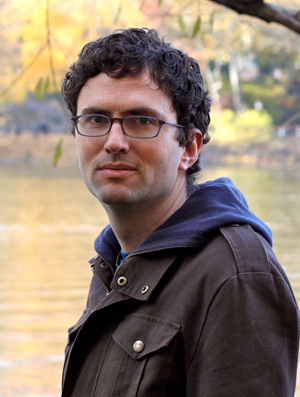 TRUE ADOLESCENTS marks Craig Johnson’s feature film writing and directing debut. He is currently writing a project for 20th Century Fox and preparing his second feature as director, THE SKELETON TWINS, which he co-wrote with Mark Heyman (BLACK SWAN). He holds an MFA from New York University’s graduate film program, where he was awarded a Clive Davis Award for Excellence in Music in Film.
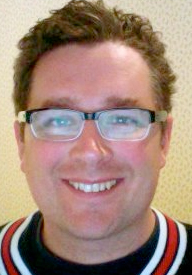 David Geertz has worked in the film business since 1992 and is a partner in Binoir Media, a diversified holding company that has a focus in the content sector and is heavily engaged in building social utilities for the producers to assist them in funding, marketing, distribution and audience participation of independent media based projects. David’s work currently focuses on finding the new sweet spot for ensuring a balanced approach to funding and profiting in the content sector through his newest technology company