
Categories
Uncategorized

Niall McKay on “Ten Do’s and Don’t About Programming A Niche Film Festival”

We have to build the audiences for the things we love.  We vote for the culture we want with our dollars. It’s not enough to help bring beautiful & better films into this world; we have to find the ways to make them social, so that the communities can discover them.  I hold incredible respect for the curators.  I think such activity is part of the producers’ job description.  I have run a screening series now for two years; it may not be easy, but it is rewarding.

For these reasons, I am quite pleased to introduce you to Naiall McKay, who has some recommendations for all of in the arena of niche film festivals — it is a bare knuckle affair.
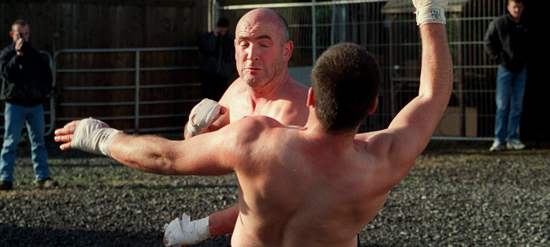
Zero budget Festival Programming: Ten Do’s and Don’ts About Programming a Niche Film Festival.

What had started out as a hobby has taken over my life and become a full time job – but without the pay – of course.  But that’s the indie film biz for you.  Few people are going to make a killing from a small film festival.  This is my third film festival that focuses on Irish films.  I started the San Francisco Irish Film Festival eight years ago then co-founded the Los Angeles Irish Film Festival four years ago. When I arrived in New York last winter, I saw an opportunity to start an Irish screening series to showcase films that would otherwise not get seen in the Big Apple. My objective is to help Irish film and filmmakers make their way in the US. Seemed odd to me that an Irish plumber or bricklayer could arrive in New York and get a job in couple of hours, but Irish filmmakers  have a tough time navigating the US market.

Irish Film is a curious beast. It’s not foreign enough to be considered foreign and not American enough to compete with US independent cinema. In Ireland, local films have a hard time going up against the US blockbusters and have an equally tough time competing with US indie flicks.  Local filmmakers shy away from American’s obsession with the hero’s journey and try instead and follow in the footsteps of European art films. It’s taken time to grow the craft of filmmaking in Ireland. Now however, Irish film is at its most interesting juncture in history. The country produces some twenty to thirty feature films each year and while ten years ago it would have been unusual for an Irish film to be featured in Cannes, Sundance, Telluride, or Toronto. Now it’s unusual if there isn’t.  There’s four Irish films in Toronto this year. Most years, at least one film, usually a short, gets an  Academy Award nomination.

There are ten to fifteen world-class filmmakers who are producing a steady flow of excellent films. Well-known directors such as John Carney (Once) and Kirsten Sheridan (August Rush) have joined forces with lesser-known directors such as Lance Daly (Kisses) and formed a production hub in Dublin called The Factory. Meanwhile, new directors such as Lenny Abrahamson, Ken Wardrop, and Juanita Wilson are producing critically acclaimed films that are beginning to do well in Europe as in the US.

This year, I’ve been fortunate because I will have the New York premiere of the documentary Knuckle, a visceral look at bare knuckle boxing among the Irish Traveller community (HBO are turning it into a dramatic series), the Galway Film Fleadh-winning feature Parked, with Colm Meaney, and The Runway, starring  Demián Bichir (Weeds).  All three films will get be released in the United States in the next few months. I will be bringing all three films and their filmmakers on a three city tour of New York, San Francisco and Los Angeles.  Irish Film New York is co-presented by NYUs Glucksman Ireland House and funded by Culture Ireland’s Imagine Ireland Program, The Irish Film Board and Moet Hennessy USA.  So here are some of the lessons that I have learned about creating a new festival:

Top Ten Dos and Dont’s

1. Do

Know your audience. Like independent film, each start-up film festival needs a base.  The base for the San Francisco Irish Film Festival and for Irish Film New York is Irish ex-patriots between ages 25 and 50.  They are a vastly different audience from the Irish immigrants of yesteryears. Find this core base that will be the foundation of your festival audience. But having said that,  your base will keep your festival alive, but it’s not what will make it prosper.  You’ll need to reach beyond the niche to independent cinema lovers.

2. Do

Program only those films that you want to watch until the end.  What are my criteria?  Films that make me laugh or cry, make me angry, frightened, or sad, films that crawl into a space in my brain and just won’t leave.

3. Do

Create as many partnerships as possible. Partnerships are the key to a low budget and a big success. Where possible, partner with film distributors, cultural organizations, museums, newspapers and businesses. Partnerships are free and they help grow your festival’s reach and presence.

4. Do

Low budget festivals like Blanche Dubois “always depend on the kindness of strangers.” Your festival will get nowhere without lots of favors.  In turn, always treat your festival as an opportunity to provide services to others.  This can mean something as small as taking a filmmaker out for a pint or making sure you introduce a filmmaker to a potential distributor.  If you’re only in this for what you can get out of it, then your festival will be short-lived.

5. Do

Be careful how you define your niche films. Irish Film has become a little tricky in the last few years. I define it as films made in Ireland or with an Irish cast. There are a number of  excellent films that are financed by the Irish Film Board and made by an Irish directors abroad that I’d love to program.  Irish filmmaker Juanita Wilson’s “As If I’m not There,” for example is beautiful film, but it takes place during the Bosnian war so it’s a hard sell as an Irish film. I am not against programming these films but I may need to create a special  program called The Irish Abroad to tell my audience what they are getting.

6. Do

Go to events where your target audience may be and announce your festival. Nothing works better than a personal invitation. Tell them about the rare opportunity they have to attend your festal.  This is by far the best way get your audience.

7. Don’t

Don’t produce large gala events unless you want to spend your time producing large gala events. This will become your job. They generally soak up all the money they earn. They can be useful for building profile but building profile becomes its own job and you want to focus on screenings films.

8. Do

Do be aware that inviting celebrities and stars to come to your festival will cost a great deal of money. They usually fly first class, take limousines and bring their own hair and makeup people. And why not? They are at the top of their game.  But make sure you have an extra $10 K in the kitty jar.  Speaking of the kitty jar…

9. Do

Reduce your budget to zero or as close to zero as possible. Partner and profit share with your festival venue, if possible. Find sponsors who will underwrite specific costs. For example, perhaps they can give you a voucher for your postcard  printer or lend you their PR agency or pay for airline tickets out of their travel budget. Cash donations are hard to come by and all your time will be spent fundraising instead of putting on the festival.  Having said that find a way to pay yourself for your time. [OK, so I’ve not quite figured that one out yet but I’ll let you know.]

10. Don’t

Take it personally. Remember the people who let you down, don’t give you their films, don’t return your phone calls, ignore you pleas and walk straight by you at parties don’t hate you personally. So move on and remember you’re doing this for fun.
Niall Mckay is a filmmaker and festival programer. He can be reached at mediafactory.tv or at irishfilmnyc.com

THE IRISH SCREENING SERIES IS AT THE CANTOR FILM CENTER AT NYU SEPT 30 – OCT 2nd
Categories
Truly Free Film

Kevin K Shah on “Making A Contemporary American Art Film”

We make films to have a dialogue with our audience & communities. Our viewers, and how we connect with them, is such a bit part of the equation, that we spend a TREMENDOUS amount of time discussing the business: how do we discover films? how do we aggregate audiences? how do we achieve a sustainable career? And so on and so on and so on.

The answer always remains the question of “How do we make better films?”. I am a big believer that all filmmakers need to know what they love (and how to strive to achieve it). I am also a believer that audiences benefit from the same knowledge. I know we don’t discuss this enough. It’s personal. It is difficult to articulate. But we must make the effort. It’s worth it. We can build it better together. Thankfully Kevin Shah has stepped forward; someone always needs to get on the dance floor first!

Making a Contemporary American Art Film

Although what constitutes the ‘success’ of any artistic endeavor is entirely subjective, there are some fundamentals that I believe great art films can share. Ted and I briefly lamented that there are few videos on the internet about ‘making an art film’, or aesthetics of cinema and it’s process, or personal attempts to explore Transcendence on screen from a director’s perspective. This is my attempt at scratching the surface through our own experiment called White Knuckles – a feature film by sabi.

Art films often have characters with complex or even unclear motivations, and especially in scenes that don’t depict the characters moving toward a specific goal. Often these scenes are artistic, moody and beautiful — but despite this, we’ve learned often these scenes end up edited out of the final film. An art film’s effect doesn’t stem from specific moments — it stems from how the viewer feels about the journey the character’s take throughout the entire experience (and its resolution). If the scene must say something unique and honest between the lines on the page to foster deep empathy within our audience, then we must get to the heart of what the scene is about (what our character’s central driving motivation is) and communicate it to the cast and crew precisely in order to execute. Only then, can the collaborative team organically shape what springs forth: by being in-the-moment and present to what is happening around them on set, and remaining open to explore surprises or subtlety as it happens.

Directing this experiment was about bringing a well-defined shell of a character to an actor to make their own, and then re-defining the entire story for that specific actor. And together, taking the emerging character on a more authentic journey than scripted to discover greater questions about life, love, and forgiveness. Directing the improvisation throughout this story was more of a spiritual practice than a craft with steadfast rules. Dramatic improv is about collaborating with your actor to find the character’s voice in a safe, family-like atmosphere. It’s not about collecting ‘off-script’ options for the editor.

In order to survive, genuine collaboration is a need in all artistic feature film endeavors today. I truly prefer not to see my vision exactly as it appears in my head (I already have that vision of the story and it’s fine the way it is). When embarking on a new film, I want to work with our team to make something more powerful than anyone could achieve alone. Something that can only be called an “Interdependent Film” because of the family that worked together to make both the process and the result of the experience unique and meaningful.

As White Knuckles enters the world and finds its audience (recently picked up by Vanguard Cinema) we hope it will continue to spark discussion and debate about this parable of forgiveness that ends in a moment of transcendence, captured as honestly as it happened. This ‘making-of’ video contains creative lessons we definitely intend to bring to more ‘genre’ endeavors, and shares our experience to inspire you to take your own artistic journey.

Learn more about The Sabi Company’s artistic & commercial endeavors at www.thesabicompany.com

Kevin K. Shah is a creative artist-entrepreneur / ‘interdependent storyteller’ with several feature films, shorts & documentaries he’s written, directed, produced or been an integral part of. He’s also worked with several studios on high-profile transmedia campaigns including special concepts, webisodes, behind the scenes, mobile content & interactive games. With the feature ‘White Knuckles’, Kevin wanted to experiment with an immersive collaborative experience in order achieve honesty and authenticity in character and emotion. He is presently CEO of The Sabi Company and is currently packaging ‘A Falling Rock’ a thriller & and is in post on ‘Lucid’ a horror-drama he directed. Kevin begins production on ‘Down and Dangerous’ with director Zak Forsman this fall. Found on Twitter @kevinkshah, or www.kevinshah.com or www.thesabicomapny.com
Categories
Truly Free Film

Enzo Tedeschi on “Distributing Films via the Ipad” (aka Tool Review: MoPix)

I don’t know about you, but I am pretty astounded by all the opportunities before us for Direct Distribution. If you recall, I have listed 32 different Platforms and Tools that filmmakers can now utilize. One such tool is the MoPix.

I am excited that the Truly Free Film Community is coming together to try inform each other of what works (or doesn’t) in this plethora of riches. Today, one of the producers from the great experiment in both Free & Crowdfunding, The Tunnel, is here to tell you about the mobile & tablet App building tool MoPix. Ladies & Gentlemen, Enzo Tedeschi:

Distributing The Tunnel as an iPad app using MoPix.

In making and distributing The Tunnel, my co-producer Julian Harvey and I have broken a few traditions. In fact we kinda threw out the playbook, from crowdfunding by selling off the frames of the film, to direct-distributing as much as possible, as globally as possible, and as close to a day-and-date release as possible. Our theory was simple – if our audience could find our film simultaneously on as many platforms as we could muster, the film would have its best chance at success. And one global platform that seems to be growing in audience at a rapid rate is the iPad.

Pricing up the development of a custom mobile app in Australia was discouraging. At $10,000 – $20,000 AUD to get it done properly, that was simply not going to happen on our paltry budget.

We were only a few weeks out from release when we heard about MoPix – and we got excited. These guys had built a platform for iPad, iPhone, and Android that would enable us to create an app to distribute The Tunnel directly via the App Store.

Talking to Ryan Stoner at MoPix, we were able to get in during their beta stage, and in a matter of weeks we had a custom-branded app that did everything we needed it to. The Tunnel was now going to be the first Australian film ever to be , and we were going to be able to do it alongside our other release platforms.

The process from our end was actually quite painless, and involved cropping a few images to size and sending those and the video assets over to MoPix. An iPad app came out the other side.

The benefits for us seemed obvious – the film was presented in a very slick way, completely branded so that it felt like OUR product, not theirs, and we could circumvent the pain that just about every indie filmmaker knows – trying to get our film into the iTunes store. The feature set was simple, but had everything it needed to feature an equivalent to our DVD extras. It also let us add a really slick behind-the-scenes photo gallery, which gave us a point of difference from all the other avenues in which the film was available.

If you think about the marketing and distribution of your film in the long term – which we always try to – App updates also create a way for you to keep your audience active. Soon, we’ll be updating the Tunnel app to include in-app purchases. This feature is great for two reasons. First, it enables us to keep selling content to our audience who have already purchased the app. Someone who has already put money on the table for your film is far more likely to keep buying, than someone who hasn’t invested at all. Secondly, when we push out the update, the act of downloading it to see what features have been added creates another interaction with our audience. It’s another small part of the ongoing conversation we’ve been having with our fans since the beginning – even before we had a film.

And while we’re on the subject of marketing – another thing that an app can do for you brilliantly is combine your marketing and distribution into one.

For our next project, we’ll be going back to MoPix to create an app that, unlike The Tunnel, is free to download. The audience will still need to buy the film in order to watch it, but we will create a free app with compelling media-rich content which basically serves as marketing material for the film, which will then be accessible via the in-app purchasing mechanism. Once again, if you can get your audience engaging with your ‘brand’ – your film – they are much more likely to part with their hard-earned.

I will say though, that being in the beta stage, it’s not a perfect solution just yet. It would be cool to see some more platforms integrated, like logging into GetGlue while they are watching The Tunnel on their iPad. But knowing how switched on the guys over at MoPix are, I’m sure they’re working on it. For now the ability to tweet a photo from the gallery, for example, or post it on Facebook directly from the app works great.

MoPix are currently still looking for films for their beta slate – and even though we haven’t set the world on fire with sales of our app just yet, we’ve sold more than enough units for the endeavour to have paid for itself. All in all it has been very worthwhile.

You can learn more about The Tunnel at www.thetunnelmovie.net
The Tunnel App Store link – itunes.apple.com
Facebook – www.facebook.com/thetunnelmovie
Twitter – @thetunnelmovie

Enzo Tedeschi is co-founder of Distracted Media along with Julian Harvey. Together they wrote, produced and edited The Tunnel – a project whose innovative approach has seen it hit international cinema screens despite being crowdfunded and given away for free online.

Before Distracted Media, Enzo co-produced and edited the controversial independent feature documentary Food Matters in 2008, a film which is still enjoying success around the globe, having now sold over 200,000 DVDs. He produced and cut the epic World War 1 period film Ghosts of War, and the award-winning short The Last One with director Carlo Ledesma.

As an ASE Award nominated editor, Enzo has worked on numerous television series, documentaries and award-winning short films. Recently he edited and oversaw the post-production path on Channel Nine’s observational documentary series AFP for Zapruder’s Other Films.

Categories
Truly Free Film

Video: How The Film Industry Has Changed & Where It Is Going

I gave this interview for the film “PressPausePlay” a couple of years back. It premiered at SxSW earlier this year. I would say it a bit differently today, but the sentiment and bullet points remain the same. I must admit I am a bit surprised, but how much I still say is exactly the same today.

We are still looking for an audience-friendly term for immersive transmedia cross-platform creation. I remain restless to abandon this single product impulse-buy centered entertainment economy.

It’s a short clip. I rev up as it goes on, so give it the time to reach the end. I feel it grows quite hopeful. Good work will come out of today’s problems.

I look forward to watching all the PressPausePlay clips they have put on YouTube.

Categories
Truly Free Film

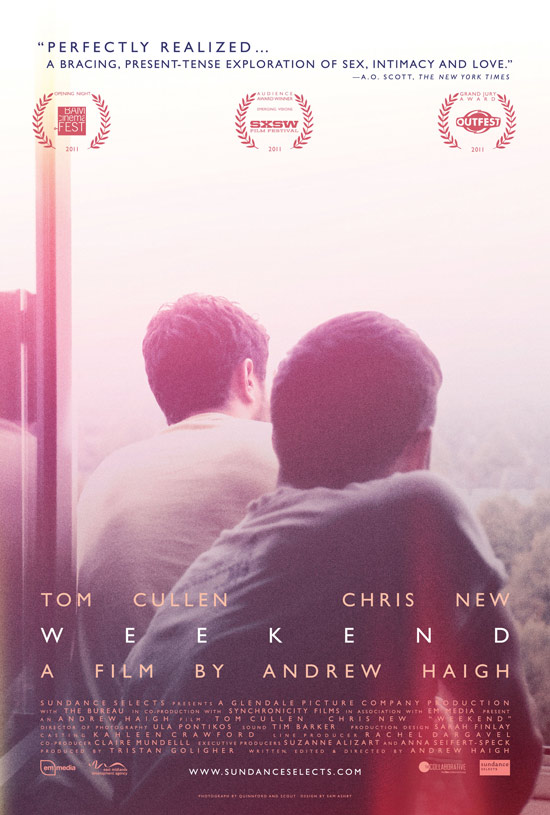
Can Only Indies Make Truly Romantic Movies?

This past Wednesday I screened Andrew Haigh’s WEEKEND for my HopeForFilm/Goldcrest Screening Series. It is a truly romantic film. It may be a gay love story, but in it’s tale of a one night stand that could become something more, Haigh’s has tapped into a longing and hope that I never feel in any corporate filmmaking and is entirely universal. It makes me wonder if when creators are forced to think first about the market, if their work will be deprived of love and romance.

When I select films for my screening series, I write a letter to everyone on my invite list trying to explain why I selected the film. This is that letter and why I think you should go see WEEKEND this very weekend.

Dear film fans,

What is romance really? Where does life differ from what the movies offer us? Can romance ever be depicted honestly on screen? If the screenwriter or director’s hand is too obvious we see the mechanics of the film and it can’t be trusted. Hollywood has relied for a century on the beauty and notoriety of its stars for audiences to make the leap. In the indie world, we rely often on the dialogue, the ideas, the wit to seduce us along with the characters. Sometimes I think it never is honest, but then sometimes a movie comes along and convinces me otherwise.

And what about sex? You can’t really have honest romance in a contemporary film without also having sex portrayed on screen; it is part of the equation after all. How can sex be positioned in an honest way so that we don’t feel taken out of the fiction we are following, and then start wondering what the filmmakers are really trying to say with the way they are portraying it. Representation and signification take away much of the immediacy, and thus the pleasure. I have given up hope that sex and cinema can truthfully collaborate more than once, but fortunately a film occasionally graces us and that proves it can be done.

At the end of the day, what I am talking about is the challenge of portraying emotional truth through physical action and the challenges of story construction on screen. And let me tell you, I know firsthand: it ain’t easy.

It is so refreshing when a filmmaker seems to come out of nowhere, deprived of funding, working truly out of the system and off the grid, challenging themselves, the audience, even the entire system as it is currently structured and delivers something, that despite all the limits and challenges they faced, soars beyond what the corporate or government-supported industry is able to produce. Andrew Haigh has done that with his film WEEKEND. Don’t be fooled, he may make it look easy, he may make it look simple, but this is not that at all. It is a work where everyone is working at their peak, sharing the vision, reaching and striving — and hitting the mark.

Folks often say that a great deal of directing is casting (I don’t fully agree with that) but clearly Andrew has benefited by his choices. The two leads are as natural in their roles as Haigh is in how he uses the camera. All throughout the movie,I forever believed I was watching life as it is led . I don’t think this phenomenon is due just to the high level of acting or the precise casting. It comes from trust, and a three way trust at that: the director with his actors, the actors with their director, and the actors with each other. Whether it is a lack of judgement, or a clear-hearted love, an openness or an understanding, there is an incredible honesty happening between all up on the screen. When one recognizes it, one also recognizes how incredibly rare it is.

WEEKEND is the story of a one night stand that might grow into something more. It happens to also be a gay story, and one that doesn’t shy away or try to play it straight. In doing so, not being shy about the people, the world, and what they do, Haigh aslo captures the depth of its story in a way everyone should be able to relate to. If life is often the challenge of reducing the space between who you want to be and who you are right now — the gulf often between thought and expression — then in choosing to have one character still not fully accepting who he really is, Haigh has tapped into the universality of the specific world he has chosen.

WEEKEND is nothing less than both challenging and refreshing cinema, and it is also a whole lot more.

Categories
Truly Free Film

Shawn Bercuson on “What Filmmakers Can Learn from Tech Startups”

I’ve long felt that one of the most important bridges the Indie Film Community needed to build, was the one into the tech community. I’ve felt the ideas & know how of the tech sector held the solution to our neglected pillars of cinema: discovery, participation, appreciation, & presentation. I still do, but I realize now that I was narrowcasting my reasons.

Truly Free Film and Film Cutlure in general got a great boost last week when Prescreen launched. Audiences and filmmakers both found new ways to connect with great films. What I hadn’t anticipated though, was how the process of this new venture’s launch offered additional insight for filmmakers. Prescreen’s CEO, Shawn Bercuson, offers up his lessons.

Until recently, my knowledge of the movie industry was limited. I come from a tech background and I’m completely addicted to using technology to find better ways to solve everyday problems. Prescreen is the 3rd business venture I’ve been associated with since the inception of the idea through the product launch – with the most notable one being Groupon. We built Prescreen to help movies find an audience they may not otherwise have the ability to reach. Like any movie, starting a business takes imagination, creativity, the ability to raise money, a terrific supporting cast, a deep understanding of your audience and, most importantly, thick skin. (Filmmakers – sound familiar?)

I officially entered the movie business this past February. I’m not going to lie, I quickly became overwhelmed by the information overload and the treacherous landscape that needed to be navigated in order to get Prescreen off the ground. To my surprise, I was delighted to discover the similarities between what we were doing at Prescreen and what the content owners to whom I was speaking with were doing with their movies. I quickly realized that launching a technology startup is eerily similar to producing, directing, and distributing a movie. That said, I also uncovered a few key differences. I’ll do my best to describe two things that I think are worth noting. Also note, these findings are not all encompassing. Many movie industry folks share my views and some techies do not.

Hustle. Here in San Francisco, there is a saying that “The currency in New York is cash. The currency in Los Angeles is celebrity. And the currency in San Francisco is ideas.” Perhaps it’s because it is hard to put a dollar value on an idea or perhaps it is the just the vast number of ideas that exist, but people in the technology business tend to move a few steps faster and work a few more hours than the people in the movie business. There are a lot of tech companies out there and probably a lot more movies. In order for people to discover your business or movie, you must out work your competition and leverage all the tools at your disposal. Keep in mind, people can only consume so much content in a day, month, or year. What are you doing to make sure that your content is the content that people are consuming? Kevin Smith is a terrific example of someone who hustles and uses all the tools at his disposal in order to create signal out of the noise for his movie.

For us at Prescreen, we’re confident in the product that we’re building but we know we still need to leverage our entire arsenal of tools in order to get people to know who we are and use our service. Everyday, we use all the tools at our disposal including, but not limited to, Twitter, Facebook, and email to reach an audience that may otherwise not know about us. We just launched last Wednesday, but soon you will start to see us using or creating tools that help build our audience. Have you heard of the Prescreen TrendSpot feature? Check it out (Click here. To bypass the signup process, click the Prescreen logo. The TrendSpot is the phrase that says “Earn Free Movies” on the left side of our homepage once you get beyond the signup page. Click on it to expand it).

Ecosystem. Don’t get me wrong, people in the movie industry often collaborate and find tons of success, but I’ve heard too many stories about nightmarish relationships that only breed animosity and resentment. What goes around comes around and in a world with this much transparency and access, those relationships are just not sustainable. The technology space, however, is often referred to as an “ecosystem.” We view our industry as more of a living thing with mutually symbiotic relationships than just transactional business relationships. We know that the more people who use each other’s tools, the more chance we have for success.

Unfortunately, to the general public, the term “independent film” often carries a negative connotation. As we all know, this is a travesty. There are too many entertaining, educational, or enlightening stories that never find a home. We need to work together to change the public perception so that we can all benefit. Yes, people can only consume so much content, but there are a lot of people out there and every movie has an audience (some just harder to find than others). 1st time filmmaker, Kenton Bartlett does a terrific job with this YouTube video trying to mobilize his audience to work for him by giving access to a special behind-the-scenes video about his film, “Missing Pieces.”

We started Prescreen to help build the ecosystem within the movie community. Movies are inherently social, but there was no tool that existed that brought real-life conversations about movies between friends to the digital world where we can connect to millions of people around the world who share our interests. Our goal is to help movies find a home leveraging this ecosystem and provide the tools necessary for moviegoers to share them with their friends, coworkers, and relatives.

I’m more excited then ever to be a part of the rapidly changing landscape of the movie industry and help cultivate an ecosystem that will benefit all of us. There are now more tools than ever before to successfully market a movie and put the right content in front of the right people at the right time. Remember, you don’t need to use all of them, just the ones that work for you.

— Shawn Bercuson

Today, Prescreen featured it’s first world premiere with “Missing Pieces“. Prescreen launched nine days ago, and will offer a new film every day going forward.

Check out the trailer for Missing Pieces: