Categories
Truly Free Film

Rachel Gordon on “Tapping into Educational Distribution Part 2”

Yesterday, Rachel Gordon shed some light on how you might make your film viable for the Educational Market. Now as much as we all hope to make a living by making films, I don’t think that is why most filmmakers enter the field. And as thrilling as self expression is, I often hear filmmakers cite another reason for the creative spark: they want to facilitate change. Today, Rachel provides examples of how the process of preparing for the Educational Market can also precisely do that higher goal of moving us towards a better world.

Adding to the idea of using media in education, this post will provide a broad view of integrating media with community change, as well as concrete examples of success.

If you ever watched a film in high school or college, or went to a screening at a local community center, you’ve already experienced media having an impact on a non-theatrical audience. Here is the short description of how that comes about, as well as specific situations from clients I’ve worked with.

The Collector of Bedford Street centers on a retirement-aged Jewish man with an intellectual disability who spends his days collecting money for a variety of charities that request him to do so. It shows him being an active participant in the community, and the mutual care-giving relationship between himself and his neighborhood – he’s able to continue collecting money for charities, and his well being is sustained through surrounding efforts.

This means that the main non-theatrical markets are (each of which will have subcategories): Disability issues, Aging/Gerontology, Jewish studies, Charities/causes, community activism, social work, and I could continue…

Now take one agency, perhaps one of the ones involved with the care of your subject, and get their perspective on your finished product. Show them a rough cut to get them on board and get ideas about who needs to know about what you’re doing. Be willing to give out preview copies to one or more of these organizations in exchange for feedback. Use their feedback in order to forward it to others who have similar interests.

Have a brief questionnaire with simple questions you can use for future reference and quoting such as:

How do you use the film?

What are some of the reactions you’ve seen?

Who do you think should see this?

To get specific, Collector has been used by Kiwanis International to help teach youth about the importance and joys of community service. Inspired by that, for the past couple of years, Roger Williams University has used Collector’s story, including filmmaker Alice Elliott as a speaker, at their student orientation to help demonstrate the positive change that results from participating in community service activities.

Every time a copy of your film leaves your hands, see who it went to and note what type of organization they are coming from. Write them thanking them for support and seek their feedback to build on, and quote as well.

When your film is showing, contact those in your interest groups to notify them, assuming you can invite others to see it. Or, even if you can’t, send out information about why it’s being shown in that community to those same parties. This would include public libraries, colleges/universities, local non-profit advocacy groups, etc. They may not be able to attend, but the screening provides community respect and they may at least check your website in interest.

Another concrete example was an event I recently coordinated for the Massachusetts Institute of Technology. The Women and Gender Studies Division decided to work with their Student Disability Services Department to host a screening of the film Body & Soul: Diana & Kathy. They wanted the subject, Diana Braun, to speak at the event, but Diana was overseas promoting disability self-advocacy in Uzbekistan through the American Documentary Showcase. In order to make a more powerful event, I connected with the local Arc in Massachusetts – a disability advocacy group – who spoke alongside me at the event. After screening the film a lively discussion ensued about how to help ensure the independence of people with disabilities, and what any individual could do in support of disability rights.

Both of these films are under 1 hour long and both have been making significant impact in a variety of communities, and earning income in the process. If they can do it, any film can do if it you’re willing to put in the time and effort.

In the over-an-hour category is In Good Conscience, about a Catholic nun non-violently fighting for gay rights, with which we’ve managed to create public events at universities and churches. Sister Jeannine speaks with the film, along with filmmaker Barbara Rick, and it gets used as a tool to discuss bias, bullying, LGBT inclusion, and religious integration.

Another film over an hour, which also had a theatrical run, that I’m about to attend the American Library Association in support of is The Most Dangerous Man in America: Daniel Ellsberg and the Pentagon Papers. The film is screening during the conference, and Daniel Ellsberg is also speaking there in an entirely separate program.

These engagements take some time to plan, as these institutions need to prepare budgets well in advance in order to prepare travel arrangements, technical support, etc. When an event happens at a university, chances are the institution will take an extra step of coordinating multiple activities with different departments to get their monies’ worth – such as the film or journalism department, schools of Social Work, Student Activities, etc.

It’s also worth noting that films can have a long lifespan in the educational environment, where acquisition and usage are based on theme and research areas. So a film isn’t discarded or forgotten because it’s already been out for 2 years, it can find strong validity in the classroom for over a decade. Creating and maintaining an educational and advocacy agenda can build you a worthwhile audience.
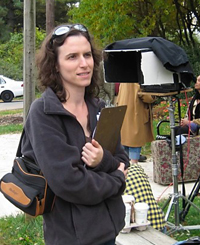

Rachel Gordon is a New York based independent filmmaker and consultant who started Energized Films to help other filmmakers, and distributors, expand the audience of their media into receptive homes in academic, non-profit, and other specialty markets. She’s currently developing a comedic feature about feminine fear of commitment, making a documentary about homeopathy, and speaking to film schools about the importance of teaching distribution to students.
Categories
Truly Free Film

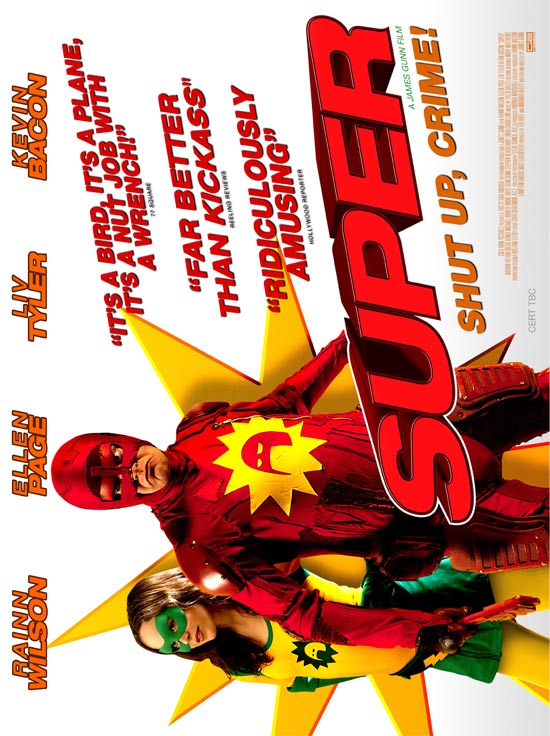
Super UK Poster

SUPER opens in 10 theaters today in UK. We are out on DVD come August 1. Please don’t wait for that, run to see it on the big screen NOW. Thanks!

Categories
Truly Free Film

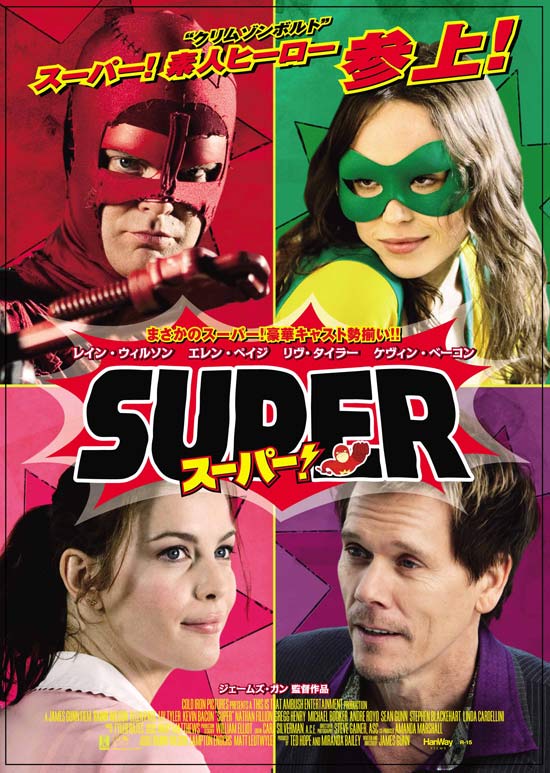
Super Japanese Poster

Categories
Truly Free Film

Rachel Gordon on “Tapping into Educational Distribution”

For Indie Film to thrive, a producer must consider all revenue streams from the beginning. Of course not every project, is applicable to every opportunity, but nonetheless, you want a box to check for each. The Educational Market is one platform that goes unchecked for many filmmakers. Let’s change that!

Filmmaker, and expert on this field, Rachel Gordon graciously offered to share what she knows of this field with you.

I began working with non-theatrical distribution at the National Film Board of Canada over 10 years ago. As a filmmaker, the experience of finding new markets for films that were under an hour, and even animated, was exhilarating as I’d worked on so many films that would never see the inside of a theater.

Educational distribution is broadly defined as any usage of media that is not consumed in a traditional theater, or home video setting. Examples include, but are not limited to: classrooms – both K-12 and colleges, museums, non-profit/advocacy groups, etc. It is not an exact science, and it often takes longer to start seeing returns than people have patience for. If you stick with it long enough, though, you’ll connect directly with an invested audience that will keep up with your projects.

So discussed here is how to make your film an educational tool, no matter what its length or genre, and hopefully pay a few bills in the process. This should not be relied on as your only form of income. Academic environments take longer because people plan courses ahead of time so expect this outreach process to take a minimum of 6 months, up to a year, to hit solidly.

Technical preparation:

1. During DVD creation, provide chapters of your film that are 5-7 minutes long. Don’t randomly pick the timing, use whole thought segments.

2. Disability accessibility features such as closed (or open) captioning and audio description may seem like “extras” but are becoming more necessary as state agencies and educational facilities adopt ADA (American with Disabilities Act) specifications into law.

3. Study guides are highly useful, as your way of helping any audience understand what they are supposed to get out of watching your film. Educators appreciate these as they often lack preparation time and energy.

4. Be prepared to process orders in any way that is convenient for your customers – including check, purchase order, credit card. If you make it hard to buy or use your film, people will lose patience and not ask for help.

5. Be flexible about how the content gets delivered. Current options include DVD, streaming, digital download, closed-circuit/institutional television, and the right for media to be accessed from a central server.

6. Be creative with photos and artwork. DVD covers should include pictures, synopsis, and quotes. If you hand someone a clear case, it’s going to look bland, uninteresting, and less reliable as an educational source.

At the beginning, you want to get some copies out to organizations that have like-minded ideals. Reach out to them and be prepared to send them review copies with such questions as:

How would you use the film?
Who do you think should see this?
What social action goals does this film serve?

Every time a copy of your film leaves your hands, see who it went to and note what type of organization they are coming from. Write them thanking them for support and seek their feedback to build on.

It’s also important to send review copies to the top educational publications – almost every media librarian in the country subscribes to them – university and public libraries alike – and they also peer-review the materials. Give about 3-6 months time for them to get to it. These publications include (but again, aren’t limited to): Video Librarian, Educational Media Reviews Online, Library Journal.

There are academic studies dedicated to any subject you can think of, and they all use media as a tool with which to engage their students because they realize that students are consuming online video content. The academic world extends beyond the classroom to include conferences, publications, and professional development.

It is, and seems like, a long process, but what you get from all of this work are people who do come back and want to continue to use your media to help with their programming. What is also amazing is how positive and supportive educational environments are. Librarians who use and promote your work respect copyright issues, talk on a variety of listservs about content that they find helpful, and are generally quick to respond and answer questions about what is going on in their worlds.

Rachel Gordon is a New York based independent filmmaker and consultant who started Energized Films to help other filmmakers, and distributors, expand the audience of their media into receptive homes in academic, non-profit, and other specialty markets. She’s currently developing a comedic feature about feminine fear of commitment, making a documentary about homeopathy, and speaking to film schools about the importance of teaching distribution to students.
Categories
Truly Free Film

25+ Things I Want To Know From New Filmmakers

When I moderate a panel, I get to ask some questions that aren’t the kind I often get to ask in a regular meeting. The questions are as much, and maybe perhaps more so, for the audience. Still though, I am generally trying to get at something: the how and why of creativity at this time in the world.

I learned a lot from moderating the “New Faces Of Indie Film” panel at Lincoln Center on Saturday June 11, 2011. Yes, in the future when I am involved on a panel I will insist upon diversity, and yes, I will set a limit to the number of people on the panel. But I also learned from the answers folks gave. I didn’t get to ask all of them, but had I, I had the list prepared. These are those questions.

Getting Started

Was there a particular event or time that you recognized that filmmaking was not just a hobby, but that it would be your life and your living?

Is it harder to get started or to keep going? What was the particular thing that you had to conquer to do either?

What advice would you give to someone who wanted to have a life creating film?

What was the most important lesson you had to learn that has had a positive effect on your film? How did that lesson happen?

You are a collaborator. How have you discovered members of your team and how do you keep the relationship with them strong?

You are here at the Universe’s Grand Temple Of Cinephilia. You are here because of your work and how you do it. What are personal attributes that make for a good filmmaker, and what do you do to foster them?

When I wanted to devote my life to making movies, my first decision was NY or LA. How does where you live influence how and what you make, and how do you think NY currently effects your work and process?

The Love Of Cinema

What makes a film great for you? Are there certain qualities that make a film better for you?

What films have been the most inspiring or influential to you and why?

When you get angry at a movie, what sets you off? Are there common qualities in cinema today that you dislike? Is there something you try to subvert or avoid or rebel against in your work?

We are all here presumably partially because we LOVE cinema. How did your love for movies get sparked and what can we — as a community — do to help others discover a similar pleasure?

The Process Of Creating

Generally speaking, when we want to learn about a film, we talk to the director. But those that make films, know how much they are really collaborations. What makes a fruitful collaboration? What do you do to enhance the collaborative process?

It is said that there are only six stories. Maybe twelve. It’s all been done before. And we have seen it all. What do you do to keep it fresh? Is there anything that you can do to subvert the process to keep it original?

We get noticed because of our successes – but we create them on the back of our failures. We learn best from the experiences where it doesn’t work. And yet we still only discuss the success, not the failure. What failures (of your own) have you been able to learn from? How did they change you and your process?

I often say one of the best methods of producing is “engineering serendipity.” Have you encountered serendipity in your work and do you think there is anything that you can do to bring more of it into your creative process? Why or why not, and if so, what is it that you and your team can do?

Films evolve through the creative process – sometimes most dramatically in the editing process. It’s often really hard to reconcile the difference between what we desired and what we achieved. How have you encountered this and how do you move through it?

“It all starts with the script.” Maybe not, but when do you know a script is ready to shoot, and what is your process of getting it there?

Several directors have told me that most of directing is actually casting. Regardless of whether that is true, some actors have “it” and sometimes they need something to make “it” pop. You’ve spotted that “it” and captured “it”. What is “it” and how do you find “it”?

I often wonder why anyone would want to direct. Why would you want to always have 100 decisions in front of you and have over 100 people waiting on your answer?

Film, perhaps more so than any other popular art form, is the compromise between art and commerce. How has your art been shaped by both the money you have had or not had? Do you create with budget limitations in mind?

The Structure Of The Business

Is the film business fair? Why or why not? How do you make the apparatus work for you?

Is it the filmmaker’s responsibility to find and develop your audience? Why do you feel that way?How will you collaborate with your audience, and how won’t you?

What do audiences want? And is it the filmmaker’s role to worry about that?

Is it possible to sell out? What would that mean to you and would you like it to happen or not? What do you do to encourage the professional approach you want?

If I was asked what was the most important advice I could give a filmmaker starting out, it would be “Try to manage your life so that you will feel as good about the film industry in fifteen years as you do now.” In your experience, is that true, and what can filmmakers do to achieve that challenge?

What role have film festivals played in your life so far? Why are they necessary? How do you get the most out of them?

The Changing Film World

When I got started, if your film got into Sundance, it meant people would see it in America, and maybe the world. I used to be confident that my partners and I could get two or more major distribution slots a year. Now that control and scarcity don’t define the Entertainment Economy, but superabundance & access do, how does that change things for creators? There are 45,000 films generated globally annually, and the largest consumption market in the world – the US – currently consumes only 1% of the output. Recognizing that, are you changing the way you work, changing what you create? How? Why? Or why not?

I am a big believer in the importance of social media in many aspects of the film process. Are you on social media and do you use it in your work? Why or why not?

When I got started there were two screens: the movie screen and the television screen. Now there are also computers, tablets, and phones. And screens are everywhere: the home, the bus stop, the elevator, the taxi cab. As a creator how does this effect the stories you tell and how you tell them?

If there is one or more thing you think would make the film industry better, what would it be?

Ethics of Creating

Do filmmakers have any responsibility to culture? Do you feel that being a creative person requires that you give back or tell a particular story or not do something else? Why or why not?

Categories
Truly Free Film

Brendan Fletcher on “An Indie Process in a Conventional System?” Part 3

Today, Brendan Fletcher continues his tales of being a MAD BASTARD as much as the civilized world permits.

4. DISTRIBUTION

Now we were a wild, indie film within another system – the distribution system. But here it began to work for us – we had the bite of an indie, backed up by the experience and muscle of the Transmission strategists and the Paramount sales team. They understood the film, they loved it, and they backed it.

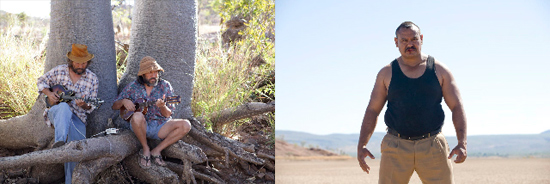
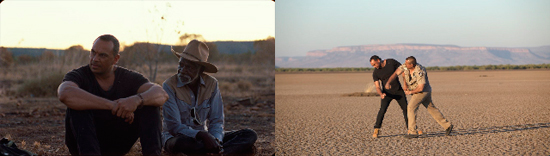
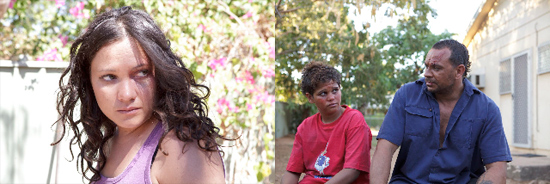
True to the original vision, it was the music and our raw non-actors that continued to be our point of difference, even when it came to the marketing campaign. We built much of the media around the story of the non-actors who turned their lives around by being involved in the movie. And we hosted a sell-out “live event tour” right around Australia before the theatrical release — where we screened the film then the Pigram Brothers and Alex Lloyd performed songs from the movie. It created a fantastic focus for media and a great word-of-mouth “buzz”.

The movie opened on nearly 30 screens here in Australia on May 5 and is now in its sixth week of theatrical release.

The final vindication has been the critical and audience response. Reviews in Variety, Hollywood Reporter, AICN and Screen International all mention the raw authenticity, the rich sense of place and strong performances by the “real” cast and the unique use of music as defining elements of the film. And so many audience members have written/talked to me about the uplifting feeling they have when they leave the cinema knowing the real people’s stories have weaved in and out of the characters they play. Wow — maybe this thing has actually worked?

5. LOOKING BACK?

When it’s all done and dusted, Mad Bastards has done exactly what I hoped a first film could do. It is unique in its voice, while also telling a powerful emotional story. We landed Sundance – and there’s few ways better than that to announce yourself to the world as a first time film maker.

Would I have made a “better” film if I stuck to my plan of a tiny crew, a digital shoot and a lived-in, community process back in 2001? Maybe … I don’t know. It would have probably been more rough and radical – but that doesn’t necessarily mean better. Those seven aching years of development in the “system” drove me crazy, but they did make me a better film maker. That time allowed me to write the less mature films out of my system, rather than actually make them.

If I did make the film back then, I probably would have made MORE films since, whereas I have now only made one. But then again, maybe I would still be repaying the loans I’d taken out to finance my indie dream.

There are rules and systems in place all over the industry for good reason. Exciting new ways of doing EVERYTHING are opening up in every aspect of movie-making and distribution – and so they should. But mess with the formula at your own risk. Play the risk, sure, but understand which way you are going and what you are sacrificing by going that way. And if you are going to do things differently, make sure everyone is on that same page with you right down to the last detail – every crew member, financier and distribution exec from the get-go.

A first-time film maker is in a vulnerable position because you don’t want to rock the boat in case the whole thing suddenly falls over. But you need to be clear and strong about what you will and won’t compromise, and accept the hand that those choices then deal you. What got my knickers in a knot was trying to please everyone — both the hard-nosed system bosses AND the requirements of my own unorthodox process.

I must acknowledge our good-hearted investors. All of them. No one was quite sure what exactly they were buying into, but hats off to them for signing on and sticking with us … we are all proud of what we made, and all the wiser for making it.

To see for yourself, Mad Bastards is available right now on IFC’s V-O-D network and keep an eye our for a limited theatrical run across the States in the coming months, and a November DVD release. It is in theatres now – Miami this week, more to be announced.

— Brendan Fletcher.
Brendan is currently working with Writer/Producer Train Houston on the Jeff Buckley pic “A Pure Drop“.

Categories
Truly Free Film

Brendan Fletcher on “An Indie Process in a Conventional System?” Part 2

Why do anything conventionally these days? How do we make our work fresh? Sometimes it makes sense to rethink it all. Can it ever be done by working within the state-ordained system. Today MAD BASTARD’s Brendan Fletcher continues his exploration of these and other questions.

2. MAD PRODUCTION

Trying to think independently whilst operating within the system had it’s most razor-sharp edge during the shoot itself.

I knew from the test shoots that when our real people starting “acting” they were unconvincing, but when they were just “being themselves” they were great. They resisted learning lines and preferred to just discuss the scene then shoot it, using words that came to them in the moment. And I liked this, because I wanted the script to bend and stretch each day, so that the actors could bring real spontaneity to their performances. I also planned to shoot real events as they happened in the community – hunting scenes, floods, funerals etc – to bring a gripping reality to the film. That was the idea anyway.

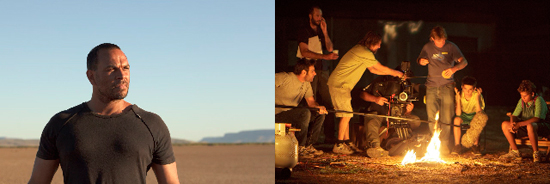
(Dean (TJ) on set; Me looking stressed as we shoot a scene with child performers Lucas Yeeda and Patrick McCoy-Geary)

This would have been fine in the 4 months, micro-crew shoot model, but with a full 35mm crew, a six week shoot and two thousand kilometres of travel to do – this thinking was a serious logistical challenge to our production.

The “big production” we became saw our hand-nurtured non-actors plunged into entirely unfamiliar terrain. The process of call sheets, ADs, catering trucks, make up vans, taking off their own clothes and putting on the clothes of other people was a massive diversion from the authenticity of how we’d done all the tests. Our relationship “like family” was nearly entirely lost amongst a sea of new people that had never been to an Aboriginal community before.

Our process was now almost entirely conventional, but I was convinced we needed to work like we had in the test phase. I still wanted flexibility, but the PRODUCTION ENTITY demanded certainty, long term pin-point accuracy. The departments (I had departments now!) needed information to plan effectively, but I wanted to promise very little so as to keep spontaneous.

We ended up terribly stuck in the middle. A process that was neither fish-nor-foul. The logistical detail the production needed kept changing as scenes would bend even as they were being shot. And the powerful, almost magical, natural performances we captured in years of tests felt impossible to re-create now that we were shooting the ACTUAL film. Our process was as nurturing as a sledge-hammer. I described it as “sending a gorilla out to pick flowers.”

The shit hit the fan. Scenes were invented, scenes were dropped, new characters were introduced and others written out – and I was rewriting into the wee hours of every night. We were getting good stuff amongst it all, but it was hard to “see the wood from the trees” in the eye of the storm.

It sounds mad and it sure felt like it. The investors were unsure whether it was really exciting or a big mess. Some of the crew too. Advisors were dispatched, rushes were scrutinized and my whole approach was called into question by the system itself.

As if all this wasn’t enough, in the middle of the shoot our Theatrical Distributor went out of business in a post-GFC funk. It couldn’t get much worse.

But as they say, the darkest hour is just before the dawn.

3. REDEMPTION

The film is a story about redemption – possible for even the “maddest” of us. It’s funny how the process of making the movie charted that journey in a way too.

Submerged under an ocean of stress and forced to act differently or sink, two things happened:

Firstly, I realized I had to face reality: my indie-dream was over. The only way I would get through was to quit pining for the flexible old model and to embrace the “system” of the larger crew. So, literally overnight, I did.

We quit the improvising and I gave the crew a few unscheduled days off and locked myself away to write the remaining scenes definitively. It was every writers worst nightmare. Days, sometimes hours to write a scene before it needed to be shot. But in the heat of that moment, some good material tumbled out onto the page.

The second major thing I realized was about the cast: my NON-ACTORS after a few weeks of shooting had now become ACTORS. No longer phased by the cameras, lights and big crew … they began to deliver solid performances without me having to clear the set. They began to ASK for rehearsals. They started to WANT to learn the lines because they understood they needed to do that in order to nuance their performances.

(Our “non-actors” became fantastic actors as the shoot went on)

In just a couple of days, everything turned around. And it worked.

The two processes began to merge. As the cast and crew got more confident, we’d do a take as scripted and then we’d do an improvised take. And where time and stock allowed, we’d allow scenes to grow and evolve off the bedrock of the page. Things clicked and everyone could feel it.

Sometimes it felt like the wild indie would be leading the “system”, and at other times the “system” would provide the security that the wild indie needed. It was truly organic, both processes winding around each other, with me as a director in between. In the final film it is impossible to put a finger on which scenes were shot which way (sometimes even for me!) and the result is fluid and connected.

With the rushes displaying more clarity, key investors were won over, and they found the confidence to be patient. They had the grace to allow us a solid 12 weeks cutting until seeing a rough cut, and that gave us the time we needed. From that point on the only way was up.

But even in the edit, the indie-spirit battled convention. I use alot of on-screen music performed by local music legends the Pigram Brothers (think O Brother Where Art Thou). Balancing the needs of narrative drive with my desire to create a unique feeling with the use of on-screen music was a very difficult balance to juggle. It took a long time in the cut to get right, and I know it hasn’t worked for some industry folk – but that’s a price you pay for sticking to a creative direction.

After a healthy pick up shoot, the movie really came together – but we had no distributor! So we had an industry screenings and the next day got the call from Transmission/Paramount.

I will never forget the shaking all over my whole body when Sundance invited us to screen in the 2011 World Cinema Competition. From disaster to Sundance! There, we were picked up by IFC’s Sundance Selects program for North American distribution. Our soundtrack also got picked up and we ran a significant music campaign to support the promotion of the movie.

Maybe not so mad after all.

— Brendan Fletcher
Brendan is currently working with Writer/Producer Train Houston on the Jeff Buckley pic “A Pure Drop“. MAD BASTARDS is starting a limited release run in theatres now – Miami this week, more to be announced. You can also watch on VOD on Sundance Selects.