Categories
Truly Free Film

It’s NOT About Art: The Film Industry Is About People Keeping Their Jobs

Avenue Q reminded us: The internet is for downloading porn. Well, do you need me to remind you that the film industry is for keeping the few jobs in film development, production, sales, marketing & distribution that still remain?

Don’t forget that cats bark; they only meow when people are around. All creatures say what the people want to hear, and another thing when they think the coast is clear. I have a lot of meetings with people who tell me they want to make great films. When I am sitting next to them, it sounds like they are speaking the truth. It’s taken me a long time to see that many of those in the “business” speak a secret language, or at least one the creative community will never understand. The decoder ring is that it is all about the job. Jobs are precious and few, and damned if someone is going to let a movie jeopardize that.

The core principal behind why most people do what they do in the film industry, is employment. Studio execs, agents, acquisition execs, and the like all must act so that they do not lose their jobs. They are not trying to make art; that’s a luxury few can afford. They are not really trying to make money for their company; how is that going to benefit them? They are not dedicated to some higher principal; the daily grind eats any space that such lofty ambitions might foster.

It is risk mitigation and a concern to cover your ass that drives most of the behavior within the corporate structure of film. The logic of most corporately-employed professionals’ actions is blatantly clear if you trace the motivation to this principal. I risk stating the obvious, because not only am I asked regularly, but I also have to remind myself: “why is it so hard to make good movies in this world?” A simple recognition won’t make the pursuit of great work any easier, but it may help you endure the brutality of the struggle. If you base your actions around recognizing this motivating principal of others in our field, you will probably have an easier time.

Not so long ago, some folks recently expressed dismay at the number of sequels on Hollywood’s slates, or the hope for the future of film, but it all makes sense if all anyone wants to do is keep their job. In Mark Harris’ GQ article, “The Day The Movies Died“, my former partner James Schamus points out: “Fear has descended, and nobody in Hollywood wants to be the person who green-lit a movie that not only crashes but about which you can’t protect yourself by saying, ‘But at least it was based on a comic book!’ ”

Harris states: “Give the people what they don’t know they want yet is a recipe for more terror than Hollywood can accommodate.”

I have always liked Alice In Wonderland’s White Rabbit quote “I like what I get” for succinctly summing up most public tastes, but if you combine that with Cultural Gatekeepers fear of unemployment, what do we get? An industry that recycles last years ideas and a public that permits them to do so. It certainly doesn’t create a culture that will live for ages. Sure we get an anomaly or two every year that manages to be truly original and wonderful, but that certainly doesn’t justify the enterprise or the investment. What are we doing? There is another way, and it can generate both art and profits.

I reluctantly subscribe to the notion that change only occurs when the pain of the present exceeds the fear of the future. I also have read studies that show that neglect and the minor irritation can wreck greater havoc than pure trauma. If that is the case, we can’t just let things continue on. We need to identify the symptoms of this job focused industry and reach higher. Since we don’t have John Carpenter’s magic TheyLiveEyewear, how do we spot the symptoms?

What is it that helps people stay employed:

Hire those that are like you.
Hire those that will yes you.
Yes those that hire you.
Do what others in your position will do.
Have a defensive position worked out in advance.
Base new work on other work that has somehow succeeded.
Don’t trust your gut, trust the numbers.
Subscribe to the popular philosophy.
(I am sure you can add to this list. Please do.)

Now let’s do something completely different from all that. Can we change our thinking to aspire towards great work above all else, even at the risk of losing our precious job? Wouldn’t that blow your mind if a studio exec told you that they wanted to make a better movie even if it made less money? What if you didn’t have to direct a successful Batman episode in order to create an original idea? What can we do to help both the creators and the audience demand originality and ambition from the entertainment industry? It’s both a macro and a micro issue, political and personal: I know I have a problem meeting people that are considerably different than me, yet still hold common interests and principals. How do we break out of our small social & professional circles? Isn’t that what the promise of the internet was, and still is? It can be done. I need to work harder. Do you?
Categories
Truly Free Film

Kit Carson on “Jan Harlan — Stanley Kubrick’s Producer”

L.M. Kit Carson, the legend, the man, returns to discuss his recent encounter with greatness, Jan Harlan, Mr. Kubrick’s producer.

Read L.M. Kit Carson’s last guest post for us on David Holzman’s Diary Here.

What you can find out from some semi-private time with Stanley Kubrick’s multi-movie (The Shining, Full Metal Jacket, Eyes Wide Shut) final producer Jan Harlan is…

…you can find out — how totally susceptible Kubrick was to the story-power of music. A special memory kept by Harlan is seeing Kubrick struggling with how to work his movie-making-evoking of the Mystery of the Universe for 2001: A Space Odyssey – Jan (a classical musicologist) suggested trying Richard Strauss’ “Thus Spoke Zarathrusta” in the X scenes. As Harlan puts it: “Stanley got truly satisfied that this piece by Strauss was all he needed. To make the question remain… about whether there might be some deliberation effecting us somewhere in the Universe.”

…can find out – the subject of all Kubrick’s movies in many ways was… Kubrick. All his movie-making choices about why-and-how – mega-personal.

Harlan: “Stanley seized the rights to Peter George’s 1958 tough extreme apocalyptic political novel Red Alert – the nuclear competition between Russia and the United States was a constant Red Alert in Stanley’s mind. He kept warning his colleagues: ‘Feel like I must make a movie here now – because this world-danger is going to go wrong’. But he couldn’t find the voice that worked for this story. Then he got into a meeting with screenwriter Terry Southern who almost unexpectedly joked: ‘The only way for you to make a Kubrick movie here now – y’gotta make fun of this nuke nuttiness. We don’t know anything about what’s really going on in the nukes. So Y’gotta heighten the seriousness of your worry by making it into a comedy.’ And Stanley got it – made his own fears into his unique movie – it feels like he’s on the track of an absurd fairy tale.”

For me this insider-double-insight-combo opens up why you can feel Kubrick so strongly in the surprise unforgettable last sequence of Paths of Glory.

Battled-rattled soldiers packed drunken into a bar – banging their beer-mugs onto the tables bullying the bar-owner. He drags out mid-bar a captured young German girl goading her to sing. Hooting soldiers. The frightened girl begins to sing simply with a trembling voice. The crude shouting fades. She sings more and more near-tears. Some soldiers begin to hum brokenly along with her – and humanity fills the room – in spite of the war-horror outside.

And Genius Kubrick makes you see what he sees – the bar-room transforming. And say more – as you watch this scene, you truly see-and-feel Stanley Kubrick fall in love with the young actress playing the heart-breaking girl – Christiane Harlan. Shortly after the movie-shoot, Kubrick married her – for life. Jan Harlan’s sister.

CINEMA JOVE 2011, the international film festival’s 26th year, honored and celebrated Jan Harlan with the Luna de Valencia award (a stunning crescent-moon-shaped crystal trophy). For his 30-year creative career-work helping making movies with Kubrick. Also for his strong work now curating the archives and exhibitions spreading the brilliant cool of Kubrick in museums and schools world-wide.

With sincere modesty, Harlan raised the trophy to Kubrick: “Kubrick’s films do remain as a valid marker for future generations to look into our lives in the second half of the 20th century.”

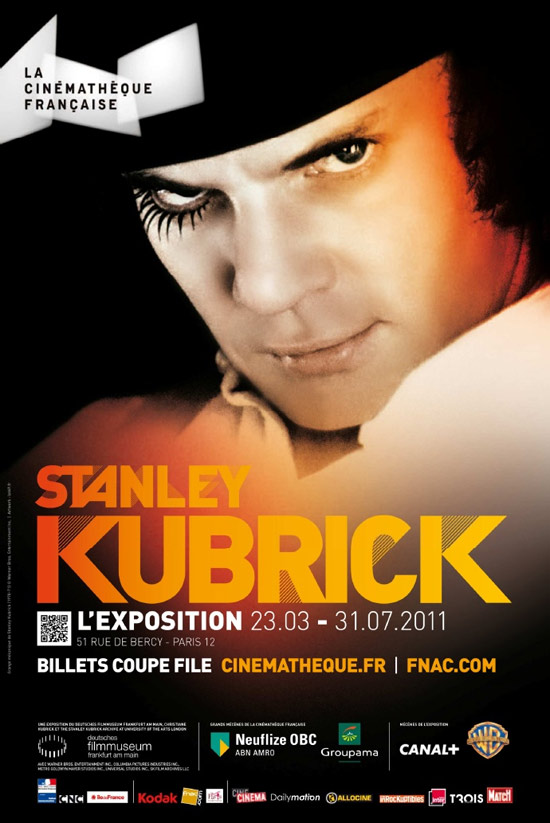
Jan Harlan recommends a special multi-part showcase he helped mount: the French Cinematheque’s current Kubrick Retrospective (March 23rd – July 31st).

CINEMA JOVE Film Festival — End-of-June, 2011 Valencia, Spain

Check this savvy web-site:

www.hotels-paris-rive-gauche.com/blog/2011/03/08/stanley-kubrick-exhibition-paris-cinematheque-francaise

— L.M. Kit Carson

Filmmaker/Journalist L.M. Kit Carson recently jump-started back to his documentary roots – using Nokia N93 & N95 cellphonecams journeying across Africa to record a digital diary docu-series for the Sundance Channel: AFRICA DIARY. This work combines truth and heart in newsworthy reports set to air on the Sundance Channel’s 3 screens – cable-TV; computer; and cellphones – launching in Fall 2011.

Categories
Truly Free Film

Rachel Gordon on “Streaming Educational Media”

Rachel Gordon first posted on this blog about tapping into the educational market, and what we need to do to be in a position to benefit from the opportunity before us. Today, Rachel continues with an update on how that market, like everything else, has evolved during this Age Of Digital Disruption.

Like the rest of the media consumption world, educational uses for films no longer solely occur by watching DVDs. Though non-theatrical forums are still mostly reliant on physical copies to screen, there is a growing trend of streaming media for classes. This is done in multiple ways: using a provided username and password at a designated website, logging into a central institutionally-owned server to watch a film in preparation for an upcoming lecture, or training people in several geographical places at the same time.

Included in this post are collaborative initiatives that benefit both parties – producer and cultural organization – using media. It makes the audience base larger while showcasing progressive agendas and cutting edge ideas. Everyone should think about what kinds of unique projects can be expanded on from even a portion of the films they are creating, or scenes that might have been deleted but still hold value. Admittedly, most of us would prefer to have an entire piece being seen but if a group of people can benefit from isolating a 5-minute clip, this should still be fostered.

Some recent impressive uses of media used by organizations in an online streaming capacity that create social capital and extend human awareness are:

The College of Direct Support began a Film For Thought (FFT) series, utilizing Body & Soul: Diana & Kathy as a tool for training direct support providers, state agencies, and colleges with personalized stories of people with disabilities. Body & Soul: Diana & Kathy is the story of two women with different disabilities – one with Down Syndrome and the other with Cerebral Palsy – who help each other to live independently outside of institutions and lobby Congress for disability rights.

Film for Thought (FFT) Courses are courses built on one film. Their curriculum is designed for learners to connect CDS courses, content, and learning to the main themes and story line of each film chapter. Learners are also asked to integrate this with their work as a Direct Support Professional or Frontline Supervisor. FFT courses will help learners see, hear, and feel how many of the issues are played out in the real lives of people with disabilities. Currently, over 800 individuals have used this course.

You can see more about the program by clicking here.

The Roshan Foundation is a nonprofit organization supporting the preservation, transmission, and instruction of Persian culture. In a pilot project to reach out to new students attending university courses in Asian studies, they decided to use cinema that came directly from the region and collaborated with AsiaPacificFilms.com, a streaming-only service that showcases over 500 films from every Asian and Pacific community worldwide. The foundation took 24 of those films and created a curriculum, with academic introductions, to provide faculty and students located anywhere immediate access to this cultural resource through a designated portal. You can see the creatively multi-layered result by clicking here.

It was a success and now a similar program focusing on Korea is in the works.

Freedom Machines, a film which originally aired on POV, about how assistive technology helps people with a variety of disabilities to actively participate in their communities, was placed on the internal server of Sun Microsystems, in its chaptered sections, for employee education. It was made accessible throughout all of their offices internationally to show how and why disability accommodations in the workplace are necessary. Progress Energy is also utilizing the film as part of its diversity initiative in explaining the complications of barriers in any corporate setting.

The film Monica & David, about a couple with Down Syndrome who gets married which was broadcast on HBO, collaborated with the American Council for the Blind. This unique partnership provided the filmmaker much needed accessibility features for creating their DVD while expanding the audience online to people who were visually-impaired by creating audio description. For the HBO broadcast debut, an audio described version of the film was produced with ACB Radio, who was able to enjoy a free simulcast stream that night. ACB Radio is American Council of the Blind’s free online station.

These examples wouldn’t be on the top of anyone’s lists as initial ideas in marketing plans or distribution strategies, but they’ve all increased public awareness of important causes while providing some extra income, technical tools, or exposure for filmmakers. So I highly suggest keeping your eyes and options open for similar opportunities.


Rachel Gordon is a New York based independent filmmaker and consultant who started Energized Films to help other filmmakers, and distributors, expand the audience of their media into receptive homes in academic, non-profit, and other specialty markets. She’s currently developing a comedic feature about feminine fear of commitment, making a documentary about homeopathy, and speaking to film schools about the importance of teaching distribution to students.

Categories
Truly Free Film

Anthony Kaufman’s MUST READ New Blog: Reel Politik

I have long felt the indie film community has needed someone to write regularly and call attention the various issues that both effect our life as filmmakers, and how film, in all its various forms, effect our life as citizens, societies, and individuals. What an awesome gift for us all that Anthony Kaufman has taken it upon himself to do this. His first post from his re-booted blog, REEL POLITIK, lays out the manifesto:

Anthony Kaufman’s ReelPolitik

Why relaunch my blog with a specific emphasis on film and politics?

Inspired by such declarations of purpose as Dogme 95, the Oberhausen Manifesto, Dziga Vertov’s We: Variant of a Manifesto and Charles Foster Kane’s “Declaration of Principles,” I’d like to outline my reasons below in a little manifesto. I’ve always liked such proclamations. Pretentious and polemical, sure. But they’re also passionate and alive.

So here are 6 reasons for ReelPolitik’s being:

1. Because over the next 16 months, we will enter a contentious period of political skulduggery, with lies, distortions, and propaganda from both the right and the left. And filmmakers, film lovers and the film community need more places to exchange ideas, vent, and respond to the political-ideological formations of that mass entertainment machine known as the movies. As a community, we must also remember that there’s strength in numbers, and if we don’t want the country (and the world) to go to hell, we must stay politically involved.

2. Because we have lost sight of what film can do.

Read the rest here.

Categories
Bowl Of Noses

The World’s Largest Corn Maze

Check this out.  It even has a Starbucks.

Categories
Truly Free Film

Dennis Potter & Adam Curtis On Rupert Murdoch

The brilliant Dennis Potter had one dying wish…
(hat tip to Dan McGuire again!)

The equally brilliant Adam Curtis lays out Mr. Murdoch’s path to becoming the Supreme Satan.
(hat tip to MovieCityNews again!)

Dennis Potter and Adam Curtis have brought so much joy and pleasure to my world. And I leave their work always feeling stronger, smarter, fuller. I can’t say the same for Mr. Murdoch…

Categories
Truly Free Film

Joke and Biagio on “How to Build an Emotional Connection with Your Audience”

Posts about how to use crowdfunding effectively have become a bit of mainstay in the indie film blogosphere. But that doesn’t make them any less crucial. Crowdfunding has become the most-talked about new tool in a filmmaker’s arsenal for getting your movie financed. It’s an intimidating commitment, particularly if you want to do it well. Luckily we all have a community to turn to, a community that has been very generous with their shared knowledge. Joke and Biagio, a husband & wife filmmaking team, collected their favorite & most helpful crowdfunding posts recently — and having included a post from this site SPRANG to my attention. They not only found posts that were useful, but also were then able to recognize what was missing. Today they guest post and fill in one of those gaps: the emotional connection between your crowdfunding campaign and your audience. Thanks guys!

The internet’s a crowded place. Everyone’s promoting something. A product, a cause, a film…

Make your movie stand out from the crowd by connecting with people on an emotional level.

How the Heck Do I Do That?

Below are some best-guess tips from our experience making and promoting Dying to do Letterman, our feature documentary which will qualify for Academy Award® consideration at DocuWeeks™ 2011.

So far, the audience response has been emotional — and beyond our wildest dreams.
In looking back, here’s what we’ve learned.

1. Start With a Project that Makes You Emotional.

Oodles of filmmakers miss the mark on this point.

If the mere thought of the film you’re planning doesn’t make you laugh out loud, bring tears to your eyes, keep you up late at night and bounce you out of bed early in the morning, make another movie that does.

You’ll never move an audience if the project doesn’t move you.

2. Connect To Others With Your Film’s “Story”

We’re not talking about “plot” or “script” here.

What’s the story of your film?

Why are you making it?

What extraordinary circumstances in your own life gave you no choice BUT to make this movie?

From the dawn of time great stories have bonded people, creating a shared human experience. Today those stories are told around campfires, water coolers, and dinner tables.

No one’s going to retell your elevator pitch to their friends, but they will relate an amazing story about a filmmaker they met.

When it came to our story, we were “lucky” (as filmmakers, anyway) to have an emotional behind-the-scenes story.

Before sharing this example, we acknowledge you might not have such built-in emotional circumstances. That’s okay. Find your story that connects with people on a gut level–a story they want to retell to others–whether funny, horrific, inspiring, or unbelievable.

Ours went something like this:

“One of our best friends is a stand-up comedian and he’s always wanted to perform on Letterman. We just found out he has cancer and might only have five years to live. When we called to see if we could help in any way, he told us he’s dedicating what’s left of life to chasing his dream, and asked us to film it. It was a hard decision, but we’re throwing in our life savings and seeing the movie through to the end.”

That story moved us. It moved the people we told. They told others.

Find your story.

3. “Social” without the “media” part…

Social media will be a huge part of promoting your film, but nothing can recreate the emotional connection made between two real people.

In person.

No computer in the middle.

Find any excuse to personally introduce yourself to your potential audience.

In our case, during the filming of the documentary, we went out of our way to shake every person’s hand, learn their name, and thank them for their involvement…even if they were just casual passers-by.

At every film festival screening we walk through the line before the film starts, introduce ourselves as the filmmakers, and sincerely thank people for coming to our movie.

We now know many of them by name, and they actively keep in touch on Facebook and Twitter, as well as our blog and the official site — the perfect time for “social media” to step in and help out.

4. Share Your Emotions On Video

Allow your potential audience access to your life by posting regular video updates on your filmmaking journey. (This is something we started far too late.)

Be real. No one wants to support a “too cool for school” filmmaker. People support those they can relate to. Show you’re as vulnerable as the people you’re reaching out to every day (as long as you’re genuine.)

It’s probably no coincidence that the day this video went up we raised about $10,000 for our Kickstarter campaign. We almost didn’t put it up because it was a little embarrassing.

Clearly, that would’ve been a costly mistake.

5. Swag vs Mementos

me·men·to/məˈmenˌtō/

Noun: An object kept as a reminder or souvenir of a person, place or event.

swag /swag/

Noun: Not a memento.

How many film festivals have you been to where you’ve been hit with buttons, mugs, pens, tee-shirts–you name it?

Some swag is clever. Some isn’t. Most you’d never give a second thought.

Rather than spend big money on swag, spend mucho time coming up with a creative, inexpensive item your potential audience might actually hold on to — even cherish — in the years to come.

It’s not easy.

In our case, after weeks of brainstorming, Steve Mazan (subject of Dying to do Letterman) said, “You know, I was dying to do Letterman, I wonder what everyone else is dying to do?”

He then came up with our “I’m Dying To…” buttons.

They’re blank in the middle, and Steve personally writes people’s dreams on them with a sharpie. We street team days before the movie plays (and by we, we mean the two of us, Steve, and whoever else we can con into it) and give people their “dream buttons” along with a flyer listing our screening times.

People wear the buttons, strike up conversations with complete strangers about their buttons, all the while connecting their own dreams back to our movie.

We credit those buttons with our numerous sell out crowds, standing ovations, and a more amazing launch to our Kickstarter campaignWe’re Not Psychologists

We’re just indie filmmakers who want others to be as passionate about our movie as we are every day.

Over the years we’ve been lucky to work on many different types of film and TV projects, but we’ve never had such enthusiastic audience response and participation until now.

The difference?

People are connecting to our film emotionally.

Work hard to achieve that, and your film may be one of the lucky ones that breaks out.

We’re hoping Dying to do Letterman proves to be one of those films.

We get emotional just thinking about it.


About Joke and Biagio:

Wife and husband team Joke and Biagio are best known in the unscripted world for executive producing “Scream Queens” on VH1, “Commercial Kings with Rhett and Link” on IFC (currently airing Friday Nights at 10pm/9 central) and the upcoming documentary series “Caged” on MTV. Other credits include “Beauty and the Geek” and “Oh Baby, Now What?” The duo earned their documentary wings under acclaimed filmmaker R.J. Cutler (“The War Room,” “The September Issue”) and honed their reality TV skills working with luminaries like Mark Burnett. Their company, Joke Productions, Inc., is growing fast. They blog and tweet about making film and TV at www.jokeandbiagio.com and @JokeAndBiagio.

About Steve Mazan:

In the decade since starting in the great San Francisco comedy scene, Steve Mazan has played clubs, colleges and corporate events across America. In addition, to reaching his dream of performing on David Letterman’s show, he’s been a repeat guest on Craig Ferguson, Byron Allen and the Bob & Tom Show.

But of all the shows Steve has done, he remains most proud of the many trips he’s made to the Mid-East to perform for our troops. As a former Navy Submariner, Steve knows how much those men and women sacrifice for our country, and how much they need our support, and someone to laugh at.