
Categories
Truly Free Film

Karin Chien on “What American Indies Can Learn From Their Chinese Counterparts”

I am dismayed at times how sometimes our local indie scene feels so repetitive and lacking creative ambition. We remake successful formulas, and only rarely break new ground. I know I am guilty of this too. I wonder how we can break out of this cycle, and what are the forces that contribute to this sad phenomenon?

It was such pondering that led me to profess on twitter that I wanted to learn more of the global microbudget film scene, to see what others are doing, and what we all could learn from each other. Producer/distributor Karin Chien was among those that reached out to me, to share her knowledge and experience — and it does start to show us a real alternative.
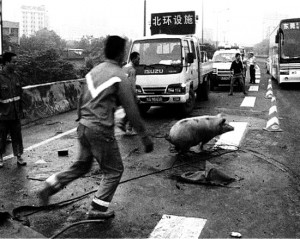
Let me start by making a provocative statement – in my three years of distributing and working with Chinese independent filmmakers, I’ve experienced greater creative freedom than in ten years of producing independent film in the US.

For most of us, Chinese independent cinema is an unknown. A film like Zhang Yimou’s HERO, financed with Chinese state backing, about Chinese empire, and made by a party-line director, is sold here as arthouse fare, distributed by Miramax. Subtitles are enough to qualify a film as “independent cinema” in America.

So let’s begin with a redefinition. The films I work with are made outside the state studio system and without official government authorization. These are films that do not submit scripts or finished products to censorship committees. These are also films that cannot obtain official distribution or official funding in China. These films are often referred to in the West as unauthorized, underground filmmaking. The Chinese filmmakers call it independent cinema.
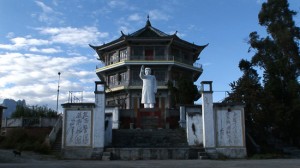
So how do you make films outside the system in China? You fly under the radar or work on the margins. Films are made on microbudgets, with cast and crews consisting of friends and family, shot with digital cameras, edited on laptops, and fueled by passion and a singular vision. In their domestic market, most of these films will only be shown at independent film festivals, where filmmakers sometimes hawk DVDs after screenings. Some filmmakers experiment with uploading films onto YouTube, some count on European sales to recoup their budgets, some rely on grants to finance their next films, and some even find angel investors. A tiny percentage will pierce the mainstream consciousness, but all of them will strive to make another film.

Sound familiar?

But here’s where American and Chinese micro-budget cinema diverge. Because we still believe in a one-in-a-Blair-Witch chance, most American indie films willingly play the Hollywood system. The carrot of theatrical distribution and financing motivates even micro-budget films to favor rising stars when casting, adjust scripts for wider audience appeal/product placement/cameos, or tell stories in genres that American and international audiences watch in droves. (As a producer, I’m fully guilty.) In short, commercial considerations influence nearly every aspect of American independent filmmaking, even at the $25,000 budget level. There are those who escape these burdens and make uncompromising films, but they are the exceptions.

In Chinese independent cinema, our exception becomes their rule. When you take the domestic marketplace out of the equation, what becomes the impetus for filmmaking? Not only trained filmmakers but poets, painters, and journalists are turning to digital video as an aesthetic, social, political, or personal tool. Painters like Xu Xin (KARAMAY) and Hu Jie (THOUGH I AM GONE) wield video cameras like a well-honed brush: within the digital image, they are preserving and observing China’s recent history, showing us events that cannot be taught in schools or spoken about on the news. Artists like Huang Weikai (DISORDER) and Zhao Dayong (GHOST TOWN) are making groundbreaking films that rewrite the rules of cinema because they weren’t taught those rules in the first place.

By choosing to work outside the system, Chinese independent filmmakers are shut out of monetized domestic distribution. No theatrical, no TV broadcast, no home video (pirated anyways), no Internet VOD. Here’s a thought: if there was absolutely no chance your film would receive commercial distribution in the US, would you still make your film? What would it look like, and would you cast/write/shoot/edit differently? And if that freed you to take creative risks, would that be irresponsible filmmaking or would it be truly free filmmaking?

I don’t mean to dismiss the very real and very diffuse oppression that Chinese independent filmmakers can face. The temptations of wider audience, greater financing and theatrical distribution are as strong in China as anywhere – they have lured many a filmmaker away from independent filmmaking and into the state studio system. But for those who choose to create independent cinema in China, they have chosen to operate on the margins of a large state apparatus, without guarantees of freedom of speech, freedom of movement, or freedom of production. Yet they have also generated a space that allows for maximum creative freedom. Somehow, in the midst of all this repressive state authority, independent filmmakers are producing the only free media in China. It’s a startling realization.

Given the production parallels to our own micro-budget filmmaking, it’s hard not to extrapolate the comparison. In the US, where capitalism long ago co-opted the language of independent film (see Warner Independent Pictures), it’s a small miracle that any film is made outside the Hollywood system. Anyone who’s ever tried to cast a film with professional actors can attest to this. Perhaps in China, because the machinery is so clearly labeled STATE, it’s a more visible force. Here, the multi-national corporate apparatus is omnipresent.

For the last three years, my dGenerate Films partners and I have been distributing Chinese independent cinema around the world, mainly in the US. We send revenue to independent filmmakers in China every fiscal quarter, and that feels good.

But our revenue is small compared to what filmmakers receive from European distributors. The greater international film community has set up shop in Beijing so they can catch these films first. American industry and audiences would do well to pay as much attention. We will not only learn something about China, but perhaps also about creative freedom in independent filmmaking.

— Karin Chien

Ted’s Note: The New York Times got in on this discussion with a great article on how local Chinese filmmakers navigate the system over there. Kim Voynar at MovieCityNews took the conversation in another direction looking at how some of Karin’s questions have resonated here in the US in filmmakers work.

Karin Chien is an independent film producer based in New York City, the recipient of the 2010 Independent Spirit Producers Award, and producer of eight feature-length films, including CIRCUMSTANCE (2011), THE EXPLODING GIRL (2009), THE MOTEL (2005), and ROBOT STORIES (2002) which have won over 100 festival awards and received international distribution. Karin is also the president and founder of dGenerate Films, the leading distributor of independent Chinese cinema to North America and beyond.
Categories
Truly Free Film

“Not Dead Yet” Jon Reiss on The Tremendous Rise Of The PMD

I posted my query last week whether we could truly build a class of TrulyFree / Indie marketing & distribution experts. Many people believe this can happen naturally. I think we need a unified industry effort to make this happen at the speed the all the great movies being generated these days need. Some beg to differ…
Yet, DIY/DIWO “guru” Jon Reiss has been witness to many of the efforts from this new breed, dubbed PMDs. Although, he and I agree on the need, we disagree on the term (but why squabble over semantics?). People need their films to connect with audiences. Audiences need to connect with each other, and films are a wonderful way to accomplish this. Can we hope that the market and filmmaker need & desire will solve our needs? Or do we need an intervention to solve this crisis? Jon has a front row seat to all that is happening, and today shares his observations.

I believe the amount of comments that Ted’s post last week (“Can We Create The Future Of Indie Marketing & Distribution—Or Is It Already Dead?”) indicates that this is a vibrant area of independent film and is in no way dead.

It is only 2 years since I coined the term Producer of Marketing and Distribution in my book “Think Outside the Box Office” and I continue to encounter people either working as PMDs such as Joe Jestus who is the PMD for a film production company; Amy Slotnick who functioned as the PMD for “The Business of Being Born” (she received producer credit for her work) and did outreach for “Red State”; Stephen Dypiangco who recently served as the PMD for “How to Live Forever” as well as the PMD for the Oscar winning short “God of Love”; Michele Elizabeth Kafko who is the first IMDB credited PMD for “Revenge of the Electric Car”; and Errol Nayci, who is a PMD working in the Netherlands. And there are more. Adam Chapnick of Indiegogo/Distribber told me that he gets several calls a week from people stating that they are “the PMD for _____ film”. I recently consulted with The Scottish Documentary Institute who via funding from Creative Scotland is hiring a staff PMD to work with all of their films.

I believe that the concept is taking hold because of the need for the concept. With an explosion of films (and media) in the past five years, side by side with the disruption of traditional models of media distribution, content creators of all kinds have been faced with the need to distribute and market their own work. But also they are privileged now to have access to a worldwide audience for a very low cost that was previously closed to them. However, many artists do not have the time, desire and/or skill set required to handle these new responsibilities and to fully take advantage of the opportunity. I don’t think there is an argument that if filmmakers are now responsible for distribution and marketing, then there needs to be new team/crew members to handle this new work – hence the Producer of Marketing and Distribution. There will need to be a number of other people working under or coordinated by the PMD just as there is a Line Producer for production who supervises the various production departments. Really in the best of all worlds the PMD starts with the director, writer, producer at inception and works hand in hand with all aspects of the filmmaking process – and hence the “Producer” of marketing and distribution.

But even though the need might be recognized, it is another issue for filmmakers to allot the resources to fulfill this need. I believe more and more filmmakers are allotting financial resources to distribution and marketing, realizing that no P&A genie exists or that raising P&A after the fact is starting too late. When I was in the UK recently, it was heartening to see that agencies in the UK are allowing film funds not only to be used for distribution and marketing, but also to be used for alternative distribution models that incorporate a PMD. I applaud film funds that support the distribution and marketing of independent film, but I feel that it is important for these funds to free filmmakers from an antiquated system of traditional distribution and to allow them to experiment with new models.

For territories without such funds (or for those without access to these funds), filmmakers need to find a way to fund it themselves. What is important for filmmakers to realize is that connecting to an audience can be as, or even more, expensive than making your film. Musicians who have had to deal with a changing distribution and marketing landscape for longer than filmmakers, have already realized this and recognize that it is a fact of being an artist. Many musicians also have people who help them distribute and market their work. Topspin has a team of staffers who do this work – and they are called “producers”. Musicians pay these producers to plan and execute their distribution and marketing. The sooner we as filmmakers follow the lead of our fellow artists, the better.

The flip side of having resources, is having a pool of talent to do the work required. As I indicated above, a growing talent pool of people skilled as PMDs is emerging. I do feel that organizations such as Sundance, IFP and FIND can do more to push this along as can film schools. I welcome the creation of a PMD Lab, just as there are directing labs, screenwriting labs etc. The IFP Filmmaker Lab, as the first completion, distribution and marketing lab, is a first step in this direction. This lab emphasizes distribution and marketing from day 1 and a number of the teams bring on PMDs. Ted and I also started to develop an interdisciplinary curriculum combining courses from film and business schools. Until this process becomes more uniform, it will take place on individual films. Sheri Candler and I have started training PMDs on specific films.

The shift towards a new paradigm is slow, frustrating and fraught with pitfalls, and will mean a mindset shift for artists which is painful to some, but I personally see more cause for hope than for despair. Assistance from schools, labs and funds would be great and would speed the process along – helping many artists in the process, but in no way are the new concepts “dead”. The purpose of creating the role of the PMD was to formally name this needed position within independent film so there would be a pool of people trained to help facilitate that process. I know the concept will not die because there will always be people who are too driven to create work and will seek out help to connect that work to an audience.

Jon Reiss can be found on Twitter and Facebook. His new book co authored with The Film Collaborative and Sheri Candler “Selling Your Film Without Selling Your Soul” launches at IFP Week September 19th, 2011. His forthcoming book on the PMD will come out in 2012.

Categories
Truly Free Film

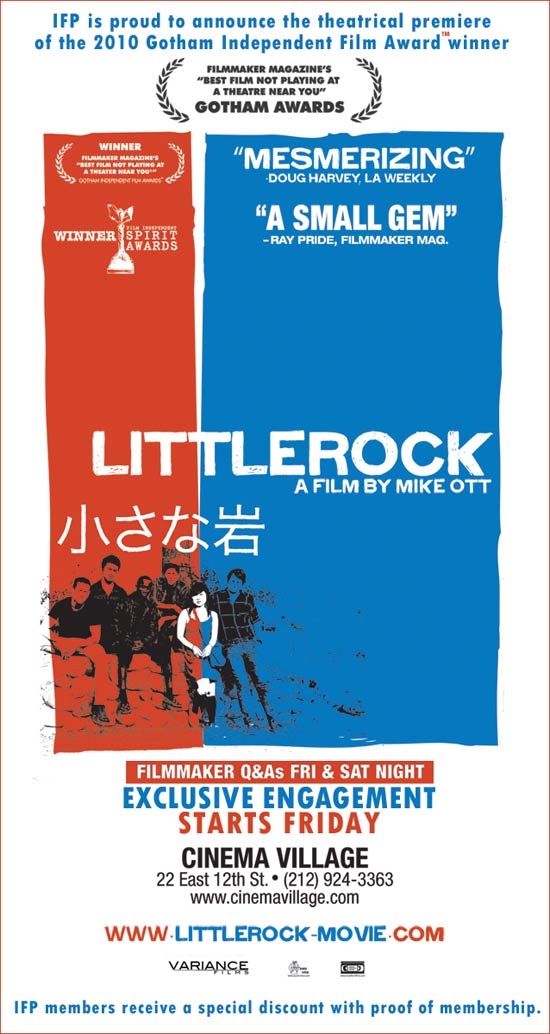
LITTLE ROCK Is That Rare Indie That Consistently Defies Expectations

Truly Free Indie Film lovers get a rare treat this weekend; that is IF they are in NYC. I got to screen MIke Ott’s LITTLE ROCK for my HopeForFilm series at Goldcrest earlier this year, and am pleased to see that it opens today at Cinema Village. Mike will be there in person on Friday and Saturday. Don’t let his modesty mislead you: this kind of thing is not easy to achieve — as natural as he makes it look.

When we screened it at Goldcrest, I wrote the following:

I have something I would like you to consider: How do films defy expectations? They have to create such expectations first, right? And then still surprise you but also ideally make everything feel inevitable and part of the underlying concept. It is no easy task and so few films are able to do it these days. But we have one for you that does.

Mike Ott’s LITTLE ROCK was all of that — right up and through its end. I suspected things to come that didn’t and was given consistent pleasures that I didn’t even know were on the menu. Road trips seem to have become uncommon ground for indie films for some reason, but Ott’s trip was all about taking me to somewhere unknown and doing it in a very quiet way. We are brought into the world, almost becoming one of the characters in the process, so personable is the filmmaking approach.

Winner of the Gotham Award for Best Film NOT Coming To A Theater Near You and the John Cassavettes Indie Spirit Award, the film has has had no shortage of acclaim. Ott’s tale follows a brother and sister from Japan to Little Rock; we are never quite sure where they are heading or what they are looking for, but getting lost has always been part of the journey–and maybe all of the plan. Perhaps it’s improv’d, perhaps scripted, it all seems real with a deep connection to place. Cast with locals, unfamiliar faces, and non-professionals, Ott’s actors, like all other aspects of the film, feel entirely authentic, forever beckoning you into their circle.

It may not seem like a lot goes on in Little Rock, but Ott and his characters walked away with some part me, leaving me glad for the giving and happy for having been able to dwell there for each and every minute.

Please see it this weekend. These are rare films. We must vote for the culture we want with our dollars.

Categories
Truly Free Film

Can We Create The Future Of Indie Marketing & Distribution — Or Is It Already Dead?

We speak of the need to utilize PMDs (aka Producers of Marketing & Distribution) on Indie/TFF movies these days, but how do these people get trained (not to mention, paid for)? Where do they learn their skill sets? Two or three years into this DIY Indie Movement of sorts, can you name more than three or four people (at best) who do this? Isn’t this the missing piece? How come we all aren’t doing more to train these folks?

Two or so years ago, Jon Reiss and I developed a pretty extensive proposal for a Marketing/Distribution Lab. Our goal was to make it long term, six months to a year, with films in all different stages participating. We brought it to most of the indie film support organizations, and got a great response. Tribeca, Sundance, IFP, and FIND all said yes. Well they said “yes, but…”. Financing it, maintaining it, and in one instance, monetizing it, were unsolvable issues too big for each for them to truly take on. IFP committed to bringing Jon in to speak to their lab participants, so not all was for naught, but the problem remains. Everyone recognizes it. Where will the people who can do the M&D work well come from?

On the agency level, I hear the problem amplified. Their clients, filmmakers, can make excellent movies at a very low out-of-pocket price point, but how can the movies get out and find audiences. Creators who have any regular work can not usually make the commitment to push their work out to audiences, let alone build vibrant communities. And often the agencies don’t want them to, as it is perceived to “devalue” the clients if they go the DIY route. They need to find reputable and ideally prestigious entities to take on the film, and hopefully not in a manner that takes the rights forever and has little hope of upside.

Sundance has made great strides under new Executive Director Keri Putnam to not only recognize that most independent film won’t find a traditional corporately-backed distribution home, but also most shouldn’t even opt for that. Sundance’s Artist Services is the first real step The Industry has taken to help build a true Artist/Entrepreneur class. Through this lens we can see a real creator middle class being born, not dependent on building their work to appeal to the widest audience, not self-censoring from the start, but recognizing that every option is theirs, if they are willing to take responsibility for their work.

But their lies the rub: are artists willing to take responsibility for their work yet? Is it even what is best for them? Twenty years in to being led to believe that great work will always not just find an audience, but also make money for all concerned courtesy of the golden hand of distribution entities, can we even glimpse what an alternative approach may bring?

I encounter the problem with myself. I know what I need to do to truly prep a film, but have a hard time allocating the labor and expense to it. I can imagine a better life where I distributed the majority of my films. Yet, how do I shift my priorities when I feel that my top skill set is in the development and production of feature length movies? Really, what I would like to do is supervise talented up & comers on the marketing and distribution of my films — but I can’t trust my work to total newbies. And I don’t see a supply of PMDs coming out or up the pipeline and ladder.

Is it enough to hope that the producers that are pushed into or opt for the DIY or Hybrid approach are the ones who will build those skills and turn to that type of producing, if they enjoy it and are successful — much the same as other producers focus on financing or packaging or development or physical production? Can we rely on partnerships developing between those who focus on it and those who focus elsewhere in producing pipeline? One can hope that this develops, but if I had to wager a guess, at the very least it is a ten year wait for such a natural progress, and that is ten years of not only good movies not being seen, but the entire chain of distancing from audiences and communities that will be indie’s ruin.

In the studio world, there are producers more focused on marketing and distro than any other part of the process, and they are very successful at it. But Indie Film is a different calling, and a far different reward structure. Those of us in it, have chosen it fully because of the content, and are not compensated well for that choice. Fees for indie producing consistently have dropped over the last five years, requiring working producers to take on more jobs and commit less time in the process. The focus on marketing is something those in the indie world simply cannot afford to do.

So what is to be done? I could be wrong, but I think pure economics prevents a PMD sector from developing naturally in the indie world. Intervention is required. Starting out, I recognized I wanted to be a “creative” producer, but could not get a job remotely in that area for the longest period. Production skills were what was valued in NYC — and still are. I was fortunate enough to have paying script reading work (in addition to my production stuff) that exposed me to some of the process and players — but that wasn’t enough to earn a living on. To get development work I had to first save my money, and then sell myself cheap in the dead production months to producers who were happy to find there was someone willing to be exploited. I eagerly agreed, but it was the only way open.

The newbie producers coming out of film school understandably look to make movies, and the desire to make the next one is never as strong as when you have just wrapped the prior — you can feel your skill set at it’s peak power and it wants to play in a new field.

We’ve known we need new blood in the distro field for decades, but as the previous crew won’t (and some shouldn’t) yield their seats at the table, there has never been much incentive for folks to try to step in that direction. The new generation has taken over international sales, but there is no equivalent in domestic distribution. Glen Basner who runs Film Nation, one of the true leaders in international sales. He was my assistant and for the longest time resisted the move into sales — despite everyone at the company recognizing it was his calling. He was drawn to the lure of creative producing. Now he gets more movies made than most producers combined, and earns a far better living too, but it wasn’t something that happened over night. He was fortunate to have great mentors in the sale business and a corporate structure that allowed for it. I can think of several others in his field that have a similar story. To foster similar innovation, growth, and success to that of the international sales arena that Glen and his compatriots have delivered, we need a structure in the marketing and distro world that can actual facilitate it.

We simply don’t have the time to hope that a natural process of film by film growth will yield the new breed that we desperately need. I don’t think it can be done without incentivizing producers to venture in that direction. They need to know that they will not only be expanding their skill set but also gaining prestige, connections, and opportunity. It won’t just come naturally. People show their best when you can give them a path that promises the best view. They need a lab and other incentives. Where will the funding and leadership come? Can we get them to act before it is too late? Will the community recognize this as a real need and act to make it a reality?

Categories
Truly Free Film

Ed Burns On Learning To Love To Engage With The Crowd

I have truly enjoyed my collaborations with writer/director/actor Ed Burns. We started working together on his first film and did the next two together. Although we didn’t make a movie together after that, our get together share-sessions over beers have always been both fun and informative. It’s been truly inspiring for me, to see how he keeps learning — and having fun doing it.

In both watching, working and hanging out with Ed, you quickly see that he really enjoys and respects people. He knows everyone’s name quickly on his shoots and never forgets he too was once a production assistant who never knew if he’d have a shot at making his own movies. It is not a surprise that he has not only embraced social media, but found excellent ways to integrate it into his creative process. I reached out and asked him to share a little bit of how he learned not just to love the crowd, but to embrace them as a community that he is but one part of.

At Ted Hope’s suggestion a few years ago, I started using Twitter to engage with my audience more directly. Ted spoke to me originally about the idea of cultivating 500 true fans…and then quickly amended that to 5000 true fans. The thinking was if you could amass an army of people who enjoyed your work, they could serve as connectors and influencers on your behalf. With my last film “Nice Guy Johnny”, a great part of our success had to do with my Twitter followers getting out there and spreading the word. In fact, when I asked them to help get “Nice Guy Johnny” to the iTunes rental chart “top ten”, we immediately saw a spike in rentals and drove the title to number 6 on the chart over the course of 2 days.

When I sat down to flesh out my next script idea (which eventually became my movie, “Newlyweds”), I immediately put it out on Twitter, to gauge the interest of my followers. Given the positive response, I then asked them a number of questions during the writing process. I asked for suggestions of character’s names, and funny or interesting scenarios that happened in the first couple of months of marriage. We asked them to write one of the last lines of dialogue in the film. While I didn’t end up using any specific line, their ideas shaped the final scene. Lastly, I then asked their help in coming up with a title of the film. I had come up with a title, “Newlyweds in New York”, and we had an alternative title, “Triangles Below Canal” and asked the Twitterverse which they preferred. “Newlyweds in New York” won, but a few had suggested to drop the “of New York”, which my producer Aaron Lubin had been fighting for as well.

Given what a good time we had in engaging the audience, when we were in postproduction, we wanted to do something that might help reward “the true fans” and we decided to hold 2 contests. The first contest was a song contest. We asked unsigned artists to submit a song that we would place in a scene. We received over 250 submissions and eventually my producer and my editor Janet Gaynor and I picked the winning songwriter, Patrick McCormack, an unsigned 22 year-old artist from Philadelphia, who was then invited to the Tribeca Film Festival closing night premiere of “Newlyweds” and got to see his song used in front of an audience of 1000 people.

The next contest we held was our poster contest. We needed a poster we were going to use at the Tribeca Film Festival. So again I went out on Twitter and made the request. I only told the audience a little bit about the movie and asked them to submit any poster ideas they had and post them on my website and let the fans vote on which one they liked the most.

We had a few dozen submissions and David Ayllon, a 20 year-old artist from New Jersey, won with his clever image of 1950’s car leaving a wedding, trailed by the tin cans strung to the bumper….as well as the newly wedded couple, tangled in the web of string, a hint at troubles ahead.

— Ed Burns

I asked Ed a few questions as I not only want to learn from his practice, but want to share it with all of you.
Did you use the poster it generated for your primary poster? Why or why not?

The poster for Tribeca was used just for the Film Festival, but also has been made available to purchase on my website (www.edwardburns.net). But we always viewed this poster as a teaser poster, knowing that whoever purchased the film for distribution would have their own ideas about how to market the film and what the one sheet would look like.

How did you use the other posters?

There was a second poster that I personally fell in love with, that also happened to be in the top 5 vote-getting posters, but we made tee shirts of that poster, and they are available on my website as well.

Did you use other services to announce or host the poster contest? Were you satisfied with them if so, and then who?

Indiewire helped announce both the poster and the song contest. The contests were also picked up by a number of indie film blogs

Did you supply fans with scenes from the movie in advance?

No, we only gave them a 140 character description of what the film was about.

How long should the contest be open?

We didn’t enter this with any real plan or structure in place. And quite honestly, we were surprised by the number of submissions and the quality of the work. So we kept the contest open for as long as the followers seemed to want it. And then the voting stage was a couple of weeks.

Would you do it again?

Not only do we plan to do something like this again, but we have plans with the next film to try and engage the audience even more in the screenwriting process and even casting and location scouting and wardrobe as well. We are thinking about contests in all of those areas.

What would you do differently if you were to do it all over again?

Not a thing.

Categories
Truly Free Film

Video: The Art Of Immersion – How The Digital Generation Is Remaking Hollywood

A little while ago I got to participate in a great discussion at Google, centered around Frank Rose’s must-read book The Art Of Immersion. Joining Frank and I were Chris Di Cesare, Director of Creative Programming at Google Creative Lab, i Paul Woolmington, Founding Partner of Naked Communications, and Susan Bonds of 42 Entertainment. If you want to know where it is all headed, I suggest you read Frank’s book and listen to our talk, posted below.

Categories
Truly Free Film

Elise McCave on “The First Annual PUMA Creative Impact Award”

It is hard to find a better example of corporate sponsorship than the PUMA Creative Impact Awards. Not only does it publicize and support an important group of films, but helps support outreach and social change. With the right support, not only can we make better films, but we can change the world. I can hope that more corporations learn from PUMA’s example and develop such opportunities; I certainly have a few ideas if they want some help.

I asked Elise McCave who helped put together this important partnership to tell you a bit more about it.

Last week, Channel 4 BRITDOC Foundation Director Beadie Finzi and I travelled from Soho – the London one – way past the equator, beyond even the Tropic of Capricorn to Durban for their International Film Festival. This huge and high-spirited festival is definitely a product of Africa; the film programme featured films and filmmakers from the continent, the panels began in their own sweet time, and the parties saw us dancing together in circles under tents by the beach. Now that’s a festival!

Whilst there, along with marveling at how a South African winter can still be warmer than an English summer, we announced the 5 films selected as Finalists for the first annual PUMA.Creative Impact Award.

The Impact Award is just one part of our partnership with PUMA.Creative (part of PUMA’s CSR division PUMAVision). This long term partnership, which will celebrate its first birthday in October, has seen the establishment of a series of exciting awards providing financial support, creative counsel and industry recognition to international documentary filmmakers, whose creative storytelling highlights social justice, peace or environmental issues.

By the time we trade our babygrows for dungarees and the partnership graduates from infant to toddler we’ll have given away 40 PUMA Creative Catalyst Awards, early-stage development grants, to filmmakers from across the world. We are already beginning to see the fruits of our labour: Dragonslayer, one of the first Catalyst Awardees, is winning award after award in its festival run, having already picked up the best documentary feature and best cinematography gongs at SXSW and best international feature award at Hot Docs.

The most high profile of the awards, however, is the PUMA Creative Impact Award, which has been designed to honour the burgeoning work being done at the intersection of documentary filmmaking and social change. The Award shines a light on the work of all filmmakers slugging it out in this field, but in particular on the remarkable group of 5 filmmaker-turned-campaigners who have been selected to be finalists. And from this group one will ultimately be rewarded with a €50k prize, to be split between the filmmaking and outreach & engagement teams, so that their work can be continued.

So, who is in this impressive group? Well, we really are very proud to announce the 5 Finalists for the Award are…

The Age of Stupid directed by Franny Armstrong and produced by Lizzie Gillett

Burma VJ directed by Anders Østergaard and produced by Lise Lense-Møller

The End of The Line directed by Rupert Murray and produced by Claire Lewis and George Duffield

The Reckoning: The Battle for the International Criminal Court directed by Pamela Yates and produced by Paco de Onís

Trouble The Water directed and produced by Tia Lessin & Carl Deal

These five titles are remarkable, in the first instance, because they are exemplary pieces of filmmaking. Thrilling, engaging and moving works of independent nonfiction filmmaking, they share between them Oscar nominations, awards from a slew of major film festivals – Sundance, IDFA, Mumbai, Berlinale, CPH:DOX, Silverdocs and scores of others – not to mention millions of viewers and plaudits from the critics.

That the filmmakers have, on top of that, not only managed to cover some of the most urgent issues of our times, but then committed themselves and years of their lives to somehow changing the current world order is actually a little overwhelming.

These are visionary filmmakers who have managed, frankly, to pull off the audacious…

The team behind The Age of Stupid launched a global carbon-cutting campaign in 46 countries, with over 100,000 individuals signing up alongside corporations and government departments. They also coordinated over 7,000 local carbon-cutting events in 188 countries for their “Global Day of Doing”.

Burma VJ reached an estimated 30 million viewers, inspiring a new generation of Video Journalists and independent journalists within Burma at the same time.

Meanwhile, The End of the Line team raised £6m to launch a Foundation dedicated to creating a global network of marine reserves, and had a significant impact on the buying policies of supermarket and consumer brands.

The film team behind The Reckoning distributed, for free, screening kits to over 600 NGOs in 78 countries, to raise awareness of the International Criminal Court. The film was also used extensively in education programmes, including a workshop which brought together 700 educators from 70 countries representing a network of over 25,000 high school teachers.

Trouble the Water has been used repeatedly in strategic political campaigning; including raising a 20,000-strong letter campaign to the speaker of the House of Representatives. It also triggered a major lobbying effort by 400 campaigners who travelled to Washington DC for training, advocacy and action.

And these are tip-of-the-iceberg highlights. Phewf.

The arrival of the PUMA Creative Impact Award is well-timed. With social change work around documentary film on the increase, and yet with the medium’s full potential still largely untapped, an award such as this – which calls attention to the most ambitious and successful projects in the field – acts as a very public benchmark for what can be achieved. These projects have raised the bar for the better and are the very best advert for the power of film to inspire people to act.

From our patch of London, we’re committed not just to applauding the films and filmmakers — we also want to evaluate and measure the effect they have. We’ve now produced two full evaluation reports on The End of the Line and An Inconvenient Truth, with the pitter-patter of mini-case studies on the way. The report on An Inconvenient Truth set out to measure the social return on investment created in the UK by the blockbuster climate change film as an example of an important social justice film whose true value has never been measured. If you’d like to know more head to britdoc.org/evaluation.

For the coming few months, however, we will have to eschew the temptation to dance in circles at tropical film festivals and publish groundbreaking evaluation reports – for we have a winner to find, and a spangly Gala to throw…

The winner of the inaugural PUMA.Creative Impact Award will be announced at our Gala on October 11th in Mayfair, London, but we salute them all for the impact they have already had.

The Age of Stupid (2009)
Director: Franny Armstrong
Producer: Lizzie Gillett

The Age of Stupid stars Oscar-nominated Pete Postlethwaite as a man living alone in the devastated world of 2055, watching “archive” footage of our time now and asking… Why didn’t we stop climate change when we had the chance?

Burma VJ (2008)
Director: Anders Østergaard
Producer: Lise Lense-Møller

Armed with small handycams, undercover video journalists in Burma keep up the flow of news from their closed country despite risking torture and life in jail. Their material is smuggled out of Burma and broadcast back via satellite.

The End of the Line (2009)
Director: Rupert Murray
Producers: Claire Lewis & George Duffield

The End of the Line, is the world’s first major feature documentary about the devastating impact that overfishing has had – and is having – on our oceans. The film provides a dramatic expose of those in power who are taking advantage of the seas with catastrophic consequences on the world’s fish supply.

The Reckoning: The Battle for the International Criminal Court (2009)
Director: Pamela Yates
Producer: Paco de Onís

A David and Goliath battle of titanic proportions unfolds as International Criminal Court Prosecutor Luis Moreno Ocampo faces down warlords, genocidal dictators, and world superpowers in his struggle to tame the Wild West of global conflict zones and bring perpetrators of crimes against humanity to justice.

Trouble the Water (2008)
Director-Producers: Tia Lessin & Carl Deal

An aspiring rap artist, trapped in New Orleans by deadly floodwaters, survives the disaster and seizes a chance for a new beginning. Celebrating community resilience in the face of massive government failures, Trouble the Water raises searing questions about race and class in America.

Related Links

BRITDOCbritdoc.org
PUMA.Creative Impact Awardbritdoc.org/impactaward
Evaluation pagesbritdoc.org/evaluation

The Age of Stupidwww.spannerfilms.net/films/ageofstupid
Burma VJburmavjmovie.com
The End of The Lineendoftheline.com
The Reckoning: The Battle for the International Criminal Courtskylightpictures.com/films/the_reckoning
Trouble The Waterwww.troublethewaterfilm.com

Monica Rorvick (DIFF), Isabel Arrate (IDFA), Owen Martin (PUMA.Creative) and Elise McCave (C4 BRITDOC Foundation)
