Ted Hope DIY Days from ZAFFI Pictures on Vimeo.
Categories


Ted Hope DIY Days from ZAFFI Pictures on Vimeo.
This is PGA’s wording for providing the credit:
A transmedia narrative project or franchise must consist of three (or more) narrative storylines existing within the same fictional universe on any of the following platforms: film, television, short film, broadband, publishing, comics, animation, mobile, special venues, dvd/blu-ray/cd-rom, narrative commercial and marketing rollouts, and other technologies that may or may not currently exist. These narrative extensions are not the same as repurposing material from one platform to be cut or repurposed to different platforms.
On Baseline Research Blog is an article entitled “DIY Doing You In” (thanks to @Shanipedia for tipping me off to it). The author, Jeremy Juuso, states:
to have a decent shot at breaking $1 million in lifetime box office, your Q2 specialty film needs to open at better than $15,000 per weekend venue. The bad news is, if you’re engaging in a self-release or service deal, this will be a very tall order, as only 5 such films in all of 2009 managed to open so.
Yesterday’s Federal Court decision is a serious setback for net neutrality and the efforts to maintain equal access to content on the internet. It is a setback for both consumers and creators, and a threat to innovation in general. It also underscores the importance of court appointments. In short, it seriously curbs the FCC’s power and its ability to set the agenda for an open and free internet and the hope of media democracy.
The NY Times reports:
A federal appeals court ruled on Tuesday that regulators had limited power over Web traffic under current law. The decision will allow Internet service companies to block or slow specific sites and charge video sites to deliver their content faster to users.
Wondering what you can do?
FreePress notes:
The FCC needs to “reclassify” broadband under the Communications Act. In 2002, the FCC decided to place broadband providers outside the legal framework that traditionally applied to companies that offer two-way communications services, like phone companies.That decision is what first put Net Neutrality in jeopardy, setting in motion the legal wrangling that now endangers the FCC’s ability to protect our Internet rights.
But the good news is that the FCC still has the power to set things right, and to make sure the free and open Internet stays that way. And once we’ve done that, the FCC can ensure that Comcast can’t interfere with our communications, no matter the platform.
SaveTheInternet has a good overview here that links to a letter you can send to the FCC.
After that, if you haven’t already, please join and follow Public Knowledge, Free Press, Electronic Freedom Foundation, and Save The Internet.
Chris Dorr returns today with another guest post.
Much of the most important innovation on the web today occurs within what some call the Golden Triangle.
The three sides of this triangle are social, mobile and real time. Though the poster children for this triangle are Facebook, the iPhone and Twitter, this innovation extends far beyond these three companies.
This triangle is creating a major shift in how people experience the Internet.
Today’s guest post is from producer Smriti Mundhra. I confess I have been slow in my posting and should have run this last week!
If the sun came out in New York City this past Saturday, I didn’t see it. Instead, I spent the day in Columbia University’s Uris Hall with about two hundred fellow filmmakers participating in The Conversation, an all-day conference about the future of independent film funding, marketing and distribution. There was a lot to talk about.
The program for The Conversation consisted of panels, discussion groups and breakout sessions, each featuring both indie fllm stalwarts (Eugene Hernandez, Scott Macaulay, Bob Hawk) and new media trailblazers (Lance Weiler, Arin Crumley). But it was Ira Deutchman, CEO of Emerging Pictures and professor at the university’s graduate school of film, who dropped the first bomb in his opening remarks when he quoted a businessman with whom he recently had lunch: “Film? That’s not a business, that’s a hobby.”
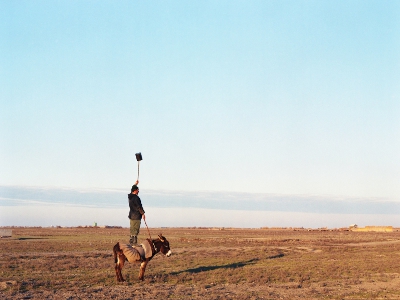 Today’s guest post is from Afterschool’s director Antonio Campos.
I met Babak Jalali in the summer of 2006 when we were both accepted into the Cannes Residence. We then spent close to 5 months living in a glorious Parisian apartment working on our scripts, me on Afterschool, Alexis Dos Santos on Unmade Beds, Fien Troch on Unspoken, Sebastian Lelio on Navidad, and Babak on Frontier Blues. Though we are all very supportive of one another in the Residence, we were all nervous about showing one another our scripts until the very end. I think both Babak and I both had the feeling that we liked one another’s scripts but weren’t sure how it was all going to translate to screen. And when did see each other’s films, we were all pleasantly blown away.
