

Two weeks ago Jennifer Fox shared with us some of the lessons she learned crowdfunding (1st six here, next 14 here). Since then, she has gone down in the record books for both the number of donations and the amount thereof. If they gave records for quality as well as quantity she probably would have gotten those too.
Jennifer continues her path of profound generosity with another wave of the demystification wand to show how it was done. It is not magic; it’s hard work — but it can be done, and learned from. The best part is, this ain’t all. There’s still more coming next week! Thanks Jennifer.
It was only last week, but I have to admit: I have a bit of nostalgia for
those heady last days of our Kickstarter campaign. Now when I open up
my computer and press gmail, I stare at the few new emails
despondently. I wonder if I will ever wake up again to hundreds of
Kickstarter messages on my computer screen announcing donations. Even
our supporters have written to say they miss the daily excitement of
checking our site to see if – and by how much – the dollars rose.
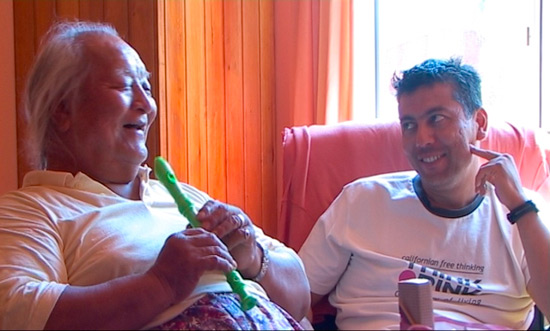
I am reminded of something one of the protagonists of MY REINCARNATION and son of Namkhai Norbu, Khyentse Yeshe, said to me in an interview once:
“Whenever you try to do something difficult, you fail and fail and fail, until you succeed.”
When Yeshi first said this, I didn’t relate at all. The word “failure”
is very un-American. In fact it is something almost extinct from the
American business and political vocabulary. (Have you ever noticed that
no American president has ever failed at anything?) But Yeshi is
Italian and being so he is more comfortable with a wider spectrum of
experience. The more I thought about what he was saying, the more I
realized he was right. It is a very good description of our Kickstarter
campaign: We failed and failed until we succeeded (at the first goal
$50,000) and then we failed again and again until we succeeded and
surpassed our second goal of $100,000. The main thing we did as a team
was to take our failures as key pieces of information, pointing us
towards what to work on next.
Midway through our campaign my cousin, Ken, sent me an article from Tech Crunch,
spouting the success of the new crowd-funding platform, but also
stating that 43% of the Kickstarter projects fail and never reach their
goal. Reflecting on this together in our team helped us recognize some
of the pitfalls when we hit them, and change course so we could
ultimately succeed.
Now that the dust has settled, here are our 9 additional tips (13 more
to come) that we learned doing our campaign to add to our previous 20
(from “Hope for Film” Post 1, Post 2, and Post 3):
21. Kickstarter Is Not For Sissies:
No one can prepare you for the amount of work a Kickstarter campaign
involves. Don’t start your campaign until you make the time, mental
space and have enough pressure on yourself (meaning financial need) to
do so. No one fundraises because they have nothing else to do.
It is the same advice I give to young documentary filmmakers when they
ask me should they make their new film idea? I always say, “If
you can walk away from an idea, do so immediately, because making films
is too hard. Only make the film that you can’t walk away from…”
Same with Kickstarter, if you have any other means to raise money, do
so, because it will be easier. Kickstarter is all encompassing. You
have to be ready to make your campaign your J-O-B.
22. Not Every Film Is A Kickstarter:
One of the first questions a journalist asked me at the end of our
campaign was: Is every film right for Kickstarter? The answer is
absolutely not. But evaluating what will be successful on Kickstarter
is probably very different from the way most broadcasters or
distributors evaluate a potential film.
Kickstarter definitely works best when a clear-targeted audience can be
identified for the project, classically called “niche audiences.” These
audiences are perfect for web based projects because ostensibly you can
identify and reach out to every person with similar interest around the
world. Niche audiences tend to be very devoted to their subject and
therefore passionate about wanting to see a film about their issue,
subject, pastime, or obsession.
In our case, the film MY REINCARNATION
works on two basic levels: First, it is a classic father-son story,
that everyone can recognize, which is why many broadcasters have
already signed on to air it. But this is too general for web-based
fundraising; you can’t find that group and target it (because it’s
everyone). So in this case, the second storyline is crucial:
Since the film is about a Tibetan Buddhist father and son, the Tibetan
Buddhists were an obvious niche to target.
But unbeknownst to many outsiders, the Tibetan Buddhist community is
not one entity. It is divided into little groups of supporters backing
each school and teacher. It is hard to get those not directly
connected to a teacher or school to support a project outside of their
frame. We had to start shifting our campaign and write each
sub-group differently to address this problem. We positioned the film
as a film for all Buddhists, in any school, in fact, anyone interested
in religion. Get to know the sub-groups within your niche and
experiment with the language that best speaks to each group within the
larger whole.
23. The Magic Number:
Our team agonized over how much we could succeed in raising for MY REINCARNATION.
The fact that you don’t get your funds unless you make your goal loomed
heavily. We knew that most people seemed to set their target between
$3,000 and $15,000 on the site. But we had a huge deficit ($100,000)
and this was our last ditch effort to reduce it. If we set the goal too
low, it would only be a drop in the bucket. On the other hand, if we
set the goal too high, we might not get any funding at all. We
estimated that we could comfortably raise $30,000, so we pushed up the
tension and put our goal at $50,000.
Once we made the $50,000 goal in half the time (46 days out of 90) we
felt safe, no matter what we would get the donations, but then we had
another problem: How to reset the goal to keep going? First thing
we did was put new copy on the front page saying the new goal was
$100,000. But that raised a credibility issue. Some who
previously donated wrote to me and asked why we needed more?
In reality, we had always written that we needed to raise $100,000, but
were only going for half. We even said that in a perfect world we
needed to raise $140,000 to 170,000 to include US theatrical
distribution. But that didn’t register to many of the people
donating. It took a lot of emailing and Kickstarter Updates to
clearly explain the situation. I would say the campaign lagged for a
while as it turned this bend and we had to work very hard to reset
people’s minds toward the project.
24. How Many”Web-Days” Is Right For Your Campaign?:
Another nice fact I learned after we finished our campaign came from
one of the Kickstarter staff members, asking me why we decided to set
our time limit at 90 days. She wrote:
“90-day campaigns actually have the lowest success rate of all
durations (with about 30 days typically being the most successful). How
did you find that 90-day duration to work for you?”
This is a perfect example of naiveté working for us. Our team didn’t
realize that shorter durations have higher success rates. We were still
in the old model: More time is more opportunity. We thought that
$50,000 is a lot of money to raise and we were afraid of the time
pressure. Our longer campaign did give us time to reset the goal midway
after achieving our stated amount of $50,00 to $100,000 and then to
find a way to lead people to picking up the challenge a second time.
But it was just that – almost like two campaigns.
What I learned (see previous Tip # 20)
is that web time expands in a way I couldn’t have imagined. Ninety days
could have been a year the way we lived it, how hard we worked, and the
amount we accomplished. To function a campaign has to keep
momentum, which is why less time is easier to handle and stay
strong. Human beings want to follow. If the campaign is
doing badly, people stay away. But if they see the numbers
rising, they want to jump on the boat. Better to have a short
fast-rising campaign than a long campaign that moves little. The
time limit pushes people to make a decision. Push the people
closest to you to act quickly and to help the ball rolling as soon as
possible.
25. Define Your Real Goals – It’s Not Just About Money:
When we started this campaign, if you asked me what I wanted from
potential supporters, I would have bristled and said, “Their money,
stupid!” But I have to say as the campaign evolved, I realized I wanted
and needed more than just money from contributors.
As I mentioned in a previous post, we developed the idea of a donor level called, Outreach Partner (previous Tip #15)
for people who couldn’t give any more than $1. In the beginning we
thought that many people who can’t give money, can get involved by
blasting their friends. Later, I realized we wanted everyone to
do this, and in fact giving more money sometimes made people more
invested in the project than those who couldn’t give much. So
now, in the aftermath of Kickstarter I would say I have different
goals. I want contributors:
– To participate in the campaign in every way they feel they can.
– To feel they have a stake in the film achieving it’s fundraising goal.
– To take up the cause of the film and the message of the film as their
own by passing the news about it onto their friends, relatives,
co-workers, the world…
– To care enough about the film to donate more than once (if necessary to make the goal and they can afford to do so.)
– To become a soldier for the future of the film, so when the film goes
into distribution, the person wants to help it get out in the world
(see next post’s Tip #41).
26. Fundraising Is Not A Passive Act:
This might seem obvious but I have started to notice the number of
organizations that have the button “Please Donate” on their website. It
is sort of the “flypaper” approach: if someone passes by, they may get
caught. In a modern world, where our attention is being competed for
from everyone and everywhere, I doubt many people just happen to press
that “donate” button. Do you?
Running a Kickstarter campaign has made me realize that fundraising
only works if you actively go out to the potential donors and grab
their attention by talking to them directly in a compelling way,
whether virtually via email, facebook, twitter, by phone or Skype or
god forbid, in person.
While doing MY REINCARNATION,
I donated to a few other campaigns, but sometimes when I read their
Kickstarter updates, I wanted to write back to them and ask: “Do you
think that post makes me want to engage more? Does it make me donate a
second time?” I remember reading one filmmaker’s update, announcing the
campaign had made their goal, but that with 3 days left to spare, it
was still possible to donate again. There was nothing in the letter
about why I should give more: What would it buy the film? Why would it
make me feel better than I did the first time I donated? I didn’t anti
up nor did many others. If there is nothing for me to gain – either
through what I will tangibly get, or as a Patron of the arts, in my
desire to help get the film further, I will never give again.
27. Words Are Everything – What Is Your Message?:
In our team, we constantly evaluated our success and changed direction
from each evaluation. One of the very simple things we did was evolve
and adapt the way we wrote about the film in response to what we
learned. We kept rewriting and rewriting our pitches to hone in on what
worked. We also wrote different pitches for different audiences –
Buddhist, Filmmakers, and General/Family population. From years
of watching political campaigns and my own experience with fundraising,
I learned that words are everything.
In the middle of our campaign, I was at my brother’s Passover with my
cousin Ken, a successful entrepreneur (the same one who afterwards sent
me the Kickstarter business article mentioned earlier). I overheard him
talking to my Uncle about this crazy new company that was making
millions, getting people to give them money without any equity in the
final product. He spoke about it like a Ponzi scheme. To my surprise,
he was talking about Kickstarter. Of course, as an artist I never saw
crowd-funding this way. Artists throughout history have survived
through patrons; Kickstarter, and platforms like it, are modern,
democratic forms of arts patronage where people donate money to get art
made. But listening to the way my cousin saw it made me realize that
one of the key hurdles of any crowd-funding campaign is to figure out
how to frame the request.
I slowly began to realize that the word “donation” was the wrong word
to use in a campaign like this. First we changed the word to “Support,”
but even that was not far enough. Finally, we changed it to
“Participate.”
It must be clear that you are making an exchange with your supporters:
they give you money and you give them back something of equal value.
The question to consider is exactly what are you giving back?
28. Start With The SUBJECT of Your Email:
If your emails aren’t being read, you don’t have a prayer in hell of
doing an Eblast, list-serve, based campaign. One of the things I
started to think about is what gets me to open an email. The more
I thought about it, the more I realized that I only open mass mailings
when I think I will receive something: perhaps a new idea, new video
tidbit, new advice, new stories, etc. I noticed the emails I
don’t open are those that say “UPDATE” or “March News” or “Bulletin
#23.” The description in the SUBJECT of your mass email
matters. It had better be interesting; we all know how little
time each of has to read our 6,482 emails per day.
What makes a sexy SUBJECT heading? That of course depends on your film
and your target audience. But it is worth thinking about it with the
same concern you think about your film’s title. There are many
ways to hook someone’s attention: A SUBJECT can be so strange that you
want to open it up to see what’s behind it or it can promise something
inside that the reader wants to read or see. The imagination is
limitless. Also beware that a good SUBJECT can be right for one
target group and not another, so tailor as you go.
There’s a simple test to see how well your SUBJECT headings are doing.
Most mass email services (we use Vertical Response) have an analytic
report where you can see how many emails have been opened and which
links have been pressed. It’s good to get in the habit of using
this as a way to get feedback so you can up your game.
29. So What Are People Really Getting From Participating in Your Campaign?:
I really believe success depends on reframing the campaign from
“taking” to “giving.” First, you select and curate “incentives” which
are gifts that correspond to each donation level and to the film
itself. (See previous Tip #6). This of course gives the contributor the
feeling that he will receive something concrete. However, this is only
the tangible thing people “get” from your campaign – and I would argue
less important. There are so many intangible things people receive from
being part of your film’s Kickstarter Campaign. I think it is important
to be aware of them, so you can build them in your offer:
– They become part of an artistic endeavor outside of their normal
life. One German man wrote me that as a tax accountant he felt little
creative excitement in his life. Suddenly, participating in our
film, he felt a lot of newfound creative joy. He became very active on
our Kickstarter, donated three times, blasted his friends, sent out a
mass email urging all who had previously given to double their
donations, and came to a screening at the Munich Film Festival and met
me.
– One of the things donors “get” is contact with the creator. I wrote
personal mails to everyone, especially in the first three-quarters of
the campaign. We corresponded often throughout the campaign. Since I
was traveling I encouraged people to come to screenings in their
territory and introduce themselves.
– In a world that is increasingly disenfranchised, supporters get to
join a team or group that has similar values to them. They become
part of a community doing something good for the world.
– Supporters are able to get their political and social values out into
the world in the form of the film. They no longer feel invisible and
ineffective as many do in the modern experience. If the film
succeeds, they have succeeded too.
– Many talk about offering donors the chance to participate in the
glitz of filmmaking by getting their name on a film, being invited to a
screening, and meeting the filmmaker. The glitz seems less important
than I would have thought, but nevertheless it is one of the incentives.
Giving something back is also the reason why I began to write longer,
more serious posts. I tried to write stories that let people into the
filmmaking, fundraising, distribution, and festival process. Little
written gifts to thank people for participating in our journey.
Every project is different, but the key is to begin to identify what
you are giving so that you can frame your campaign that way. No one
wants to give without getting back. Too often in fundraising campaigns,
we appeal to people’s selflessness, which rarely works. Even on a
Buddhist film! What does work is appealing to their positive needs and
positive desires.
Stayed tuned for the next – and I will try to make the last – 13 Tips for making a kick-ass Kickstarter Campaign!
— Jennifer Fox
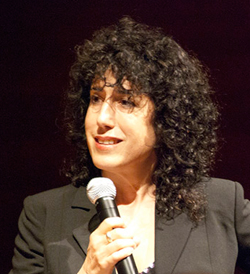 Jennifer Fox is an award-winning filmmaker and educator known for her ground-breaking features and series, including BEIRUT: THE LAST HOME MOVIE, AN AMERICAN LOVE STORY, FLYING: CONFESSIONS OF A FREE WOMAN and MY REINCARNATION. She recently co-wrote the half hour television pilot, THE GOOD EGG and is developing the feature script, THE HORSE’S TALE. She has executive produced many films, including LOVE & DIANE and ON THE ROPES. Fox is the film subject in: TO HECK WITH HOLLYWOOD!, CINEMA VERTE: DEFINING THE MOMENT and CAPTURING REALITY: THE ART OF DOCUMENTARY.
