Categories
Truly Free Film

Where The Tax Credits For Film Are In America These Days

Tax credits and subsidies for the film business are job stimulus. As a producer asked to ALWAYS squeeze a buck, I simply won’t shoot my films where the tax credits are not. Luckily I live in the wise and wonderful state of New York, that has one of the best tax subsidies for film and television any where in the world, not to mention the BEST talent pool in the universe too.

But it’s not the only place to go. The Incentives Office offers a clear MUST READ review of the state of the union of where to go for how much.

I received this email from The Incentives Office today. You should visit their site to receive such emails yourself.

Although many states have curtailed or terminated their incentives programs, others have expanded or enhanced their programs. There is still a substantial amount of money available – to find it:

THE INCENTIVES OFFICE TELLS YOU WHERE TO GO…

Alabama – $6 million available now, with new funds will be available on October 1st. $10 million annual cap.

Alaska – $50 million is available. Alaska has no caps on talent or projects, but requires a CPA audit to sell their 30-44% credits.

Colorado – $500,000 remains for their 10% rebate.

Connecticut – no annual cap. Regulations have tightened up for this (up to) 30% transferable credit.

Florida – (film only – see below for television). Only Florida resident cast and crew qualify, plus FL goods and services.

Georgia – 20% transferable credit, plus 10% uplift for logo (totaling 30%), requires audit/tax return. New sound stages, lots of post facilities. No annual ceiling.

Hawaii – refundable credit of 15% to 20%, requires a tax return. No annual cap.

Illinois – only resident cast and crew qualify, but Chicago is a major production center. Transferable credit of 30%. $100,000 per hire cap, but no annual ceiling.

Indiana – $2.5 million remains for the remainder of this calendar year.

Louisiana – top choice of producers, transferable credit of 30%, plus 5% bump for resident labor. The state redeems credits at 85 cents after CPA audit, or they can be sold (brokered). Many films now in prep or pre-production, so crew is getting strained. No annual ceiling, and three great stages.

Massachusetts – 25% transferable credit; state redeems at 90 cents. No caps or ceiling, and the credits are easy to sell after CPA audit.

Mississippi – a rebate of 25% for materials and non-resident crew, 30% for resident crew, $1M per hire cap. “The Help” was shot in Mississippi. Not a lot of crew depth, but growing. New sound stage in Canton. Costs are low, and the state is eager for production. $18 million is available.

Montana – refundable credit of 9% to 14%. No annual cap.

New Jersey – $14 million available, but half of this will be gone very soon, as earlier shows complete their submissions. 20% transferable credit, sellable after the CPA audit.

New Mexico – annual allocation is $50 million, for this 25% refundable credit which requires a NM tax return. First come, first served; if funds not available when you apply, you wait a year. Depending on total amount, credits awarded over 1, 2 or 3 years.

New York – fiscal year started July 1st, so new funds are available. Below-the-line credit of 30%, payable over 1-3 years with filing of NY state tax returns.

North Carolina – refundable credit of 25%, $1M per hire cap, and project cap of $7.5M. NC requires a tax return. No annual ceiling.

Pennsylvania – Some funds remain, but not for long. However, applications are stil being accepted, as films may drop out of the queue, freeing up funds for new projects.

South Carolina – $14 million currently available for their 10% to 30% rebate.

Texas – The incentive has now been raised to 15% for video game production. The previous rate was 5%. Only Texas resident cast and crew qualify, plus TX goods and services.

Utah – $11 million of fully refundable credits at 25% (with tax return), $3 million for 25% cash rebates (up to $500,000 per project).

West Virginia – $10 million annual cap, $10 million available. 27-31% credits.

AND WHERE NOT TO GO (FOR NOW)

Arizona – program was allowed to sunset, new legislation was defeated.

Florida(television only) – funds for the TV queue are exhausted, and without new legislation, new application will not be accepted.

Missouri – the film commission was not funded.

Idaho – program is not funded.

Iowa – program has been terminated.

Ohio – all funds gone until next fiscal year. Applications are being accepted in case something drops out of the queue

Oklahoma – no funds available until fiscal 2013, which starts July 1, 2012. Applications will be accepted beginning January 1, 2012.

Oregon – a good program, but they are out of funds until July 1, 2012.

Washington – program was allowed to sunset.

Wisconsin – allocation of $500,000 per year.

OTHER LOCATIONS TO CONSIDER

California – all funds allocated. Applications will be accepted starting June 1, 2012, for the next fiscal year, which starts July 1, 2012.

Michigan – Funds currently exhausted, but $25 million via a grant becomes available October 1, 2011. $2M cap per hire, and qualifying rates vary from 30-42%.

Minnesota – $1 million has been allocated; please contact the commissioner for details. Rules and requirements will change – no additional information is available.


Categories
Truly Free Film

How Much Does An American Indie Producer Get Paid?

Even if we are not in it for the money, it does not mean we shouldn’t be rewarded fairly for our knowledge, labor, services, expertise, relationships, and talent. It doesn’t happen much. If you are either starting out or already at an expert level, what can you expect to earn producing in the American Indie Film Industry, circa 2011.

It is often said by financiers that one of the problems with the film biz is that producers do not have enough “skin in the game”. They frequently think that the services Producers provide may not be worth the price they pay. I beg to differ, and I think if they feel that way they are working with the wrong producers.

I think a fair rule of thumb of what to pay for an expert producer, is five percent (5%) of negative costs, subject to a cap based on precedent. If one is not a true producer (i.e. there and responsible for everything from beginning to end), then one is not deserving of that full fee.

But you don’t start there. You need to work your way up to that fee.

So…

What does an indie producer get paid on a film?
2-5% of “budget” — depending on experience.

What is a fair initial salary?
2%: $50K for $2M, w/$25K increase per $1M increase in budget

What kind of cap is fair?
cap at $150K until 5 films produced
cap at $250K until you have a hit
cap at combined director & script fee
increase the cap if you are coming off a hit;
5% of negative cost, up until a budget level of $40M, with balance going on backend.

What does a producer fee mean in terms of earning a living?
Well, to answer that you have to answer a few other questions:

How long does it take to get a project made?
5.5 years (generally speaking)
development 2years
packaging 6 months*
financing 1year
production/post 1year
distrib/mktg.fests 1year

What is the annual take-home for a film
Annual starting producer salary for a $3M film (2%) = $10,900 /yr
Annual starting producer salary for a $5M film (2%) = $18,181 /yr
Annual starting producer salary for a $10M film (2%) = $36,363 /yr

Annual experienced producer salary for a $3M film (5%) = $27,272 /yr
Annual experienced producer salary for a $5M film (5%) = $45,454 /yr
Annual experienced producer salary for a $10M film (5%) = $90,909 /yr

The hard reality is that the American Indie Film Biz average budget is probably below $3M these days. It is the range I expect most of my movies to be in these days. Recognizing what it costs to live in NYC, it looks like one might need to produce 5 -10 features a year to make it work. It doesn’t leave much room for a hands-on craft-oriented approach to producing. A volume business is generally thought to be the antithesis of quality. Content can’t be king if no one is willing to pay for it. Clearly at these fee levels producers have a tremendous amount of “skin in the game” because the only way this could equal a career is if one is betting on the upside of the backend and winning.

Categories
Truly Free Film

Nayan Padrai on “Why We Call It DIRECT DISTRIBUTION Instead Of DIY”

Semantics and symbols carry a lot of weight. I think it matters to get the terms & images right, but it is not easy. The importance is precision is easy to see though. People don’t recognize their desire until they can name it. That desire then won’t spread, unless it is widely appealing. I think several of our phrases still aren’t right: transmedia, PMD, & DIY — to name a few. They either aren’t user-friendly, inaccurate, or diminish the value of what they are trying to name.

It was with great pleasure that I came across someone trying to do something about it.

WHY WE CALL IT “DIRECT DISTRIBUTION” INSTEAD OF “DO IT YOURSELF” (DIY)
By Nayan Padrai, filmmaker of “When Harry Tries to Marry”

Recently, I posted a comment on Ted Hope’s blog Can We Create The Future Of Indie Marketing & Distribution—Or Is It Already Dead? where I suggested that independent producers start calling the process of independently releasing films Direct Distribution instead of DIY (which isn’t too far from DUI). Ted was kind to offer me space to expand my views on the subject.

I recently co-wrote, produced and directed the feature film “When Harry Tries to Marry”, which was produced by our company 108 Production and released by our newly formed distribution company 108 Pics. We like to call the process of releasing our first feature film “Direct Distribution” and I’ll share with you some pertinent details to encourage this liberating correction in terminology.

Rahul Rai as Harry

While walking the calorie/money-burning treadmill of submissions to festival and indie distributors, my producing partners and I started work on a game plan to distribute our film directly. We reasoned that the only entity that stood between the film and viewers was this mystic movie God known as the film distributor. Well we had a production company, so why couldn’t we start a distribution company too?

So we asked folks what do these movie distribution companies really do, aside from throwing expensive yacht parties at Cannes? A) They acquire films (we have the film), B) they have an infrastructure that includes a marketing team, bookers C) create deals to output to home video and VOD and D) Most of them anyway use outside international sales agent for foreign markets. We’re from originally from India so naturally we thought, what if we just outsource those processes and infrastructure needs to specialists (to reduce our overhead), while being the client (distributor). The concept is similar to a rent-a-system, or service deals (which need millions in spends) but we didn’t want to handover control of the process and all the money to another company. We wanted to be involved in every stage of the process, while building experience and knowledge for the future. So it was decided that we would be the distributor and launched 108 Pics. But a distributor also (hopefully) has money to do all that is necessary, so we raised a second round of financing, rolled up our sleeves, donned PMD caps, and put a bulls-eye on a release date.

Naturally, we made some missteps along the way but by knocking on enough doors, and speaking with other producers, we came across folks who had years of expertise in marketing and distributing indie films. It was a team that spoke every day, and had weekly calls to decide a variety of issues.

Some of the most experienced folks in the business are involved in collective facets marketing and distribution of “When Harry Tries to Marry”:

Marketing
• Marketing and distribution strategy: Matthew Cohen Creative
• Trailer: Zealot
• Key art: XL
• TVCs: Kinetic Trailers
• EPKs and Music Videos: Dreamline Pictures
• Online marketing team: Brigade Marketing
• Publicist: PMK*BNC
• Music publicist: Flipswitch PR
• Media agency: Callon
• Social media marketing: Advantage and Naqeeb Memon – who worked on Mooz-lum
• Online Sweeps: CFA Promos
• Website: Design Mechanics

Distribution
• Theatrical booking service: Alerion Services
• Foreign territories: Cinemavault
• VOD and Digital Downloads: Gravitas Ventures and Warner Bros Digital Distribution
• Home video: Viva Pictures
• Soundtrack: TuneCore and CDBaby

The above establishes that the term DIY is a fallacy, an ego booster, and makes for nice sound-bytes at seminars, or tag lines to sell books to aspiring filmmakers, but no essential process of filmmaking is so isolated that you can do it (all) yourself. (Unless Ikea starts a-ready-to-assemble kit for marketing and distributing films.)


Stefanie Estes and Rahul Rai in When Harry Tries to Marry

If you are making a film and able to sell / license it to an (in-direct) distributor, great for you. Start writing your next script. But if you are like the 95% majority of Indie filmmakers, please accept that marketing and distribution is now a part of the job, but luckily you don’t have to DIY it. Start your own distribution label (of course raise this money during your production finance stage itself), subcontract pieces of the workflow to enthusiastic and knowledgeable people, make your own output deals for now and the future, and embrace the free-market model of Direct Distribution.

Some may argue, that it’s all the same with different names but DIY is really just mind-set predisposed to failure IMHO. Direct Distribution not only sounds better and more respectable but its the accurate definition of the process of marketing and releasing independent film, which we Hope ☺ everyone will start using with a lot of confidence.

By the way, When Harry Tries to Marry is currently on Video-on-Demand everywhere across North America including iTunes


Nayan studied screenwriting at the School of VIsual Arts in NY. He became a co-founder of one of the largest South Asian media, entertainment and marketing conglomerates in the U.S. He left the company after running it for ten years to return to his true-passion, filmmaking. His debut film is the award-winning, and crowd pleasing “When Harry Tries to Marry”. Nayan is currently writing his next film.

Categories
Truly Free Film

Are you ready to ride DARK HORSE?

Perhaps you have already heard….. We are taking Todd Solondz’s latest film to Venice, Toronto, Deauville and a few other festivals. This is Todd’s 1ST film without a rape, molestation, masturbation, or anything truly icky. Well… If it wasn’t for the language I think we’d get a PG rating. We don’t anticipate having it in theaters in the US until springtime, but I do have a few things related to this pony to amuse you along the way (and even more to come).

What’s it all about? Well…
Thirty-something guy with arrested development falls for thirty-something girl with arrested development, but moving out of his junior high school bedroom proves too much. Tragedy ensues.

Who is in it?
Justin Bartha, Selma Blair, Zachary Booth, Mia Farrow, Jordan Gelber, Aasif Mandvi, Donna Murphy, Christopher Walken, and others.

Who were some of our brilliant collaborators?
I produced it with Derrick Tseng. Nick Quested was our Executive Producer.
Cinematography: Andrij Parekh
Production Design: Alex DiGerlando
Editor: Kevin Messman
Casting: Ann Goulder & Gayle Keller
Costume Design: Kurt and Bart
Production: Craig Shilowich (Craig was our Assoc. Producer, Production Mgr. AND Post Supervisor — how awesome is that!).
Poster: Andrew Percival and Mojo
Sales: Penny Wolf / Goldcrest Films

Where can you see it? Well come to Venice. It’s really beautiful there.
Official Premiere In Competition Screenings
Press & Industry Screening – Sunday, 4 September @ 19:30h – Sala Darsena
Official Screening – Monday, 5 September @ 22:15h – Sala Grande
Public Screening – Monday, 5 September @ 22:30h – Palabiennale
Press & Industry Screening – Tuesday, 6 September @ 11:45h – Palabiennale

I know Venice is expensive, and we are all under budget restraints so maybe you can come in Toronto?
PRESS & INDUSTRY 1 SCOTIABANK THEATRE 2 SATURDAY, 10 SEPT 3:00PM
PUBLIC 1 VISA SCREENING ROOM (ELGIN) SUNDAY, 11 SEPT 2:30PM
PUBLIC 2 ISABEL BADER THEATRE MONDAY, 12 SEPT 4:45PM
PRESS & INDUSTRY 2 SCOTIABANK THEATRE 2 WEDNESDAY, 14 SEPT 7:45PM
PUBLIC 3 ISABEL BADER THEATRE SATURDAY, 17 SEPT 6:45PM

Okay, maybe travel will be a bit hard, but there’s still ways to hop on the ride…
Our first clip:

Yes, our first trailer will be forthcoming.

Todd on Twitter (although he doesn’t use it).
http://twitter.com/#!/toddsolondz

Our Facebook Page:
http://www.facebook.com/darkhorsemovie

Our IMDB Page where you can add it to your Watchlist.
http://www.imdb.com/title/tt1690455/

Some blog posts I like where you can see how Todd is responsible for all of indie film and all of the cool poster designs of recent years.

Want more? Well, I have had the pleasure of collaborating with Todd many times in many ways through the years. I love this film. It is both pure Solondz and something that represents a leap in his art. And it is really really a lot of fun — and truly emotional. It surprises me in new ways with each viewing. When we are awarding the “Cinematic Treasures” medals, Todd should be an early recipient.

Categories
Truly Free Film

How Does Everyone Expect Filmmakers To Promote Movies?

Filmmakers know that Indie Films are sold on their back. Filmmakers know that it benefits their films and their careers to promote their movies. Filmmakers also recognize that they spend on the average two years developing their films, generally unpaid. And filmmakers also realize they are asked to spend eighteen months to two years promoting and publicizing their films, ALSO UNPAID.

If we don’t figure out a way to pay for these crucial services, the indie film biz is doomed. Even more so, if we don’t find a way to weave this recognition into the discussions with sales agents, distributors, and talent representatives, we are covering up one of the necessary truths.

I try to help my movies in every way I can. I think all producers and directors do that. Well, okay 90% of them. I think sales agents and distributors see that. I think they do likewise. Well, okay, 90% of them. But I don’t hear it in their conversations or actions with me.

It is not easy to go back to relationships one has built over years and say “what I just told you was doable, and is industry standard, well now we can’t do it.” “I know you are used to getting it this way, but that is the old way”, “Indie film is the new theatre, in that you do it for love and art and not money — but yes others make money at the same time”. Nor do I like going to those, like GC, who have given beyond what the deal was, and saying “I need you to do more” or “I need you to give again”. Believe me, I wouldn’t do it, if I did not have to. I put my reputation, relationships, and financial well being on the line all the time.

And I know the sales agents and distributors do likewise. I recognize all that they do, and I hope you know I appreciate it. But it doesn’t change the realities of the situations we are in. Nor does it ease the conflict when they take me out for that rare nice dinner and I know it — like ten others that I won’t participate in — are going to get charged back to my movie.

Some films are more difficult than others. It’s that curse when you deliver a film that gets into competition at one of the A List festivals. Okay, it is a wonderful curse, but in some real ways, A list festival acceptance is very much a curse. There are costs involved that one just doesn’t expect will ever get paid back.

It is even harder nowadays when the producing and directing fees on such films don’t pay you enough to live. Maximum producing fees on indie films are generally 5% of the budget — and most earn less. Frequently writing/directing fees are tied to the producer fees. And we spend about two years minimu developing, packaging, financing a film. Add a year to make it, and for the director 18 months to two years promoting it. That is five years of work. On a $3M movie (if one can be as fortunate enough to raise that kind of money) that breaks down to a whopping $30K/year salary. That is less than my Mom earned teaching community college 35 years ago. No wonder everyone needs a second job. Luckily for producers, we often can find a way to make a film each year, and still try to handle the other 4 or so films that are either in development or release. That is not the same for directors. They only get to do one film at a time.

If I had a distribution or sales company, I would build in a percentage fee so that the director could afford to do publicity, but that’s just me dreaming the world could be different.

I have to tell my directors a hundred million times or so that we don’t have the money for what they need to do the work I and others request of them daily. What is a producer supposed to do when a director’s request is directly related to work on the film, but the budget or sales cap doesn’t allow for it. If the film doesn’t pay it, it will come out of the director’s and my pockets, threadbare as they are. I contextualize the situation clearly for my collaborators so I know they wouldn’t ask if it wasn’t necessary. The people I choose to work with are generally not demanding or greedy personalities. They are trying to find ways to survive and still do the work required.

Yet the industry says they can’t pay for it. I know everyone values the work. So where does this leave us? Don’t we need to find a better way?

Why aren’t the sales agents and distributors and PRODUCERS and the talent representatives trying to find a way to do something about it? The culture and business we love depends on it. We are all in this together. Isn’t it time we spoke openly about it?

As we head into the Fall Festivals, a lot of people are going to be frustrated, disappointed, and resentful because we keep ignoring all the elephants in the room.

Categories
Truly Free Film

Is So Much Choice Really Any Choice At All?

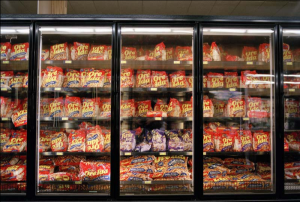
So many people want to “keep their options open” as opposed to actually committing themselves to something they really believe in. We fill our shelves with 1001 variations and some people think it is freedom, but doesn’t it just obscure the real problem that we haven’t committed to what we really want?

(image via Flavorpill & Brian Ulrich)

Of course having extremely limited choice is far from freedom too.

Categories
Truly Free Film

Must Read On MovieScope: Michael Gubbins’ “Face The Music”

I have had the pleasure of participating in two think tanks sessions with Michael Gubbins of the UK. He’s a fun and thoughtful advocate for the change that needs to occur in our industry, if we want to survive. As he points out today in his article in MovieScope “Face The Music”, ten years after the release of the iPod, has the film biz really learned anything from it’s sister, the music industry?

In MovieScope, Michael points out:

….film, where there has been a polarisation of the global blockbusters at one hand and ever-smaller art-house releases at the other. A fine film with critical acclaim can still struggle to find any traction in the market. The independent sector will struggle with the critical mass of sales to create a business model, and an on-demand world of easy access to the whole history of film at the push of a button looks likely to make life tougher—if not impossible—for a significant proportion of independent producers.

The ‘Experience’ Business
One of the ironies of this era of ubiquitous access has been the increased emphasis on those areas of the business that were supposed to be killed off by it. For music, the growth area has been live performance. Estimates suggest that easily the largest proportion of those who work in the music industry are working in festivals and concerts. It is also the area which is continuing to attract significant private equity, bringing impressive returns on investment.

Live is not a direct equivalent of theatrical; the cinema is tending to act in recent years as the marketing platform for the profit centres of DVD. But it does suggest that in a world of instant perfect copies available on demand, there is increased want for the exclusive and authentic. In music, this is not just about live performance, but about merchandising and memorabilia.

Film has some of these same opportunities, not just in cinema but in much of the under-exploited metadata of production that may have value to consumers. These rely on a direct relationship with audiences and the retention—or at least a bigger interest—in rights, particularly given that the European Commission seems increasingly against territorial rights and licensing based on national borders. It also suggests the need to reassess the windows of exploitation…

We need to work harder at our solutions. It is not going to come from a series of individual efforts, or even a national campaign. If we care about the culture of film, the studios need to support the independents, we need to embrace experimentation with business models, throw off the liability of legacy, and truly improve the experience for audiences. We need to become a real community and not just a bunch of different, somewhat related enterprises.

Read Michael’s full article here on MovieScope.