
Categories
Truly Free Film

Guest Post: Rob Mills “Online Distribution: 10 Lessons from Dynamo Player”

It used to be that indie filmmakers generally made their films for an audience/market of 6-10; those days their audience was the buyers at the film festivals. Those days made life simple: filmmakers had two responsibilities — make your damn movie and then surrender. The idea then was that distributors would distribute the work we made. Several years ago folks started to realize that this model covered less than 1% of the films made in America (forget about the rest of the world).

Solutions have been developing for the other 99%, both in terms of how to connect and engage with an audience/community, and how to actually earn revenue in the process. One of the most promising of the bunch is the Dynamo Player, and today we have the co-creator of the platform, Rob Millis, to guest post on how to make it work for you and your work.

Hundreds of filmmakers now use Dynamo Player to offer online rentals on their own sites, Facebook pages and across the web, but of course some films are selling much better than others. After a year of working closely with filmmakers, I want to share some distribution lessons that should help you reach your audience and sell your film directly. This is it, live and in action:

We began developing Dynamo Player after years of doing DIY distribution for our own work. We wanted to upload HD videos of any size, set our own price, publish them on any web site, and make it easy for viewers to pay with systems like PayPal and Amazon. Frustrated that nothing of the kind existed, we began designing Dynamo Player, which now includes almost every feature on our initial wish list, including:

  • unlimited file size and video length
  • no setup fees or other up-front costs
  • unlimited bonus content, so you can include all the video extras on your DVDs, or bundle multiple films for sale together
  • set your own price and access period (99¢ – $11.99; 6 hours to 30 days)
  • geoblocking by DVD region, continent or country
  • adjustable streaming quality, including 720p HD
  • immediate and transparent accounting, with payouts upon request
  • filmmakers keep 70% of every purchase with no hidden fees
  • With these features we’ve tried to provide the simplest, easiest way for filmmakers to sell their films directly online. But sales still depend on engaging with your audience and making it easy for them to watch your film. With that in mind, here are the top 10 lessons we’ve learned that should help you get the best online sales possible:

    1. Make it easy and obvious. People come to your site because they want to watch your film, so help them do that. Dynamo offers viewers instant gratification with easy payment, and the best way to take advantage of that is to present the film well. Make it big and beautiful, with a simple page layout and a high quality thumbnail image that fills the player screen. And however tempting it may be, save the poster, t-shirt and DVD sales for another page.

    2. Include a Preview. Dynamo lets you add a preview video to the player, so viewers can watch your trailer before paying. If you already have a preview on your film’s web site, you can simply replace it with the Dynamo Player to give viewers the same preview and add the option to immediately purchase the film itself. A good trailer will always lead to better sales, and there is no good reason not to take advantage of this feature.

    3. Sell it! In order to take advantage of online distribution, you need to take it just as seriously as you do any other distribution. Consider the thousands of hours and dollars spent promoting public screenings and DVD sales, often to keep just a small fraction of the purchase price. You keep 70% of every purchase with Dynamo, so it’s worth your while to drive viewers to your site and make it easy to pay for your film.

    4. Online Sales Require Online Buzz. Find your audience online and engage them! Facebook has great tools to spread the word (see the next item to build an app for your film), Twitter is a great way to engage directly with likely viewers and longtime fans, and Tumblr let’s your film spread rapidly with just a little bit of promotion. Participate in online discussions and join online groups, reach out to influencers and reviewers, and make it very easy for them to watch your film by simply going to your site.

    5. Build a Facebook App! A custom Facebook app lets you promote your film to all of your followers and fans, engage in active discussions with them and encourage social promotion. One of our filmmakers, Mike Busson set up the first movie rental on Facebook (yes, before Warner Brothers!), and he was kind enough to write a detailed guide so you can do it too: http://bit.ly/PPV_FB

    6. Publish Everywhere. Dynamo Player is great for selling your film on your own site, but it’s also great for selling your film elsewhere. Anytime you have an opportunity to write an article or blog post about the film, embed the player in that post. Whenever someone else writes a review, let them know they can include the film right on their site, even in the middle of a review. Potential viewers can immediately pay to watch while they are still excited about doing so, and this is great for reviewers, because it keeps readers on their web site. This article on Kevin Pollak is a perfect example: http://bit.ly/pollak_dynamo

    7. Relationships Beat Affiliates. Everyone gets excited about affiliate deals, and they may work fine for other goods, but they rarely get real results for film. The simple fact is that nobody is going to promote your film effectively unless they truly love it and would promote it anyway. Reaching out to your fans directly and asking them to spread the word is far more likely to engage dedicated evangelists. Your fans will typically appreciate your personal thanks more than any pittance they’ll receive from a few individual sales.

    8. Sales happen on weekends. Every Friday night our sales numbers get a bump that continues until Monday morning. To take advantage of this, reach out to your audience on evenings and weekends when they are deciding what to do that night. Sending emails to your audience at work during the week may result in traffic to your site, but it’s unlikely they’ll settle in with a tub of popcorn at their desk.

    9. Bonus Material. Dynamo lets you include all of the video extras you would normally put on a DVD. Outtakes, behind-the-scenes footage, director commentary and extra trailers all add to the value of your film. You may even want to offer the film on it’s own at one price, and then bundle it with extras at a higher price. And of course if you have several films you want to combine for a single price, this is the way to go.

    10. Pricing Is Key. The best sales results for feature films have been $1.99 to $4.99, with a major drop in sales above and below those prices. 99¢ is great for short films, but at 99¢ your masterpiece feature may appear to be nearly worthless. Meanwhile anything over $4.99 has a hard time competing with the sea of Hollywood blockbusters available for rent at much lower prices.

    When considering all of these points, it’s worth looking at some examples of great web pages that incorporate the video player. Each of the films below uses Dynamo a little bit differently, and may influence how you choose to promote your own film.

    The Ray Kurzweil documentary, “Transcendent Man”:
    http://transcendentman.com/watch-now/

    Oscar-contender “Gone Fishing” with bonus content:
    http://bit.ly/gonefishingPPV

    Documentary “Cowboys in Paradise” on Facebook:
    http://on.fb.me/CowboysFB

    I hope these examples and the 10 tips above help you reach your audience and increase sales. If you haven’t tried Dynamo Player, you can easily sign up at http://DynamoPlayer.com with no obligation or exclusive contracts, and we will be happy to help you in any way we can.

    — Rob Millis

    Rob Millis is a co-creator of the online distribution platform Dynamo Player (http://DynamoPlayer.com). He is also a former documentary and web series producer, and longtime champion of independent media.
    Categories
    Truly Free Film

    Guest Post: Mike Ryan on “Let’s Celebrate The ‘Collapse’ Of The Indie Film Bubble”

    Is it necessary to earn a “good” living creating ambitious work? Should it be enough just to get the opportunity, to hear the calling, of making films outside of the mainstream commercial industry? Can we ever give enough thanks and appreciation that we don’t have to weld, lift, push paper, or aid in the killing of civilians and instead can inspire, instill hope, develop empathy in others? I struggle with this, as you know, and am thankful that friends and collaborators like producer Mike Ryan join in this discussion, as he does below.

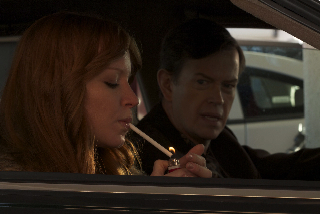
    Dylan Baker and Lauren Ambrose in “THINK OF ME” currently in post production

    Ted, We’ve talked about this before, you seem to refuse to accept that the “collapse” of the indie film bubble was a good thing. It actually for me is a cause of celebration and has actually renewed my love of the fiction feature drama.

    The years between Clerks and Hamlet 2, though they also produced many great films like American Splendor and Old Joy, were years in which corporate aesthetics undermined the whole indie film medium. Now that the profit mongers have left the space we are seeing less twee crap like Juno and Little Miss Sunshine. AS for the issue of making a living from non corporate sponsored art…what would Ida Lupino, John Cassavettes, Kenneth Anger and Oscar Michieux say? They struggled their whole careers, they are my indie godfathers , not the grab the cash and run to Hollywood soulless hacks which Sundance produced in those ‘glory’ years.

    The struggle for financial stability is a given in all arts in which you are attempting to speak honestly in a manner that is in opposition to corporate “popular” commonly accepted aesthetics or themes. I talk about our ‘troubles’ to my friends in the Jazz industry and they raise an eyebrow and say ‘welcome to the real world”. There are living Jazz legends who produce masterpieces throughout their life for whom financial struggle is just part of everyday existence. The record label owners, the club owners, the artist reps, in jazz they all struggle , not to make profit, but to get by financially so they can continue to work in the field.

    Success is being able to do the job full time. AS for what one might need to live then it sounds like you are comparing your yearly income needs to what you got in the ‘old days’. I look at what my family members make as public school teachers, cops and social workers, in NYC, and I cannot complain. In fact if I were to complain I would talk about the ridiculously low pay NYC cops and teachers get, and their job is way more important and harder than mine. So, I don ‘t compare my income level to what someone made from films five years ago, I compare my self to what friends in the Jazz, Dance and teaching fields make. I think we all need to face the reality that film was once the popular equivalent to rock and roll medium and now it is more equivalent to jazz. Consequently if you can’t commit to the vow of poverty that those fields require then your expectations are unreasonable and out of line with the whole purpose of ‘truly free film’.

    Mike S Ryan has produced 14 films in the past seven years. He currently has Kelly Reichardt’s MEEKS CUTOFF in theaters and Todd Solondz’s Life During Wartime is about to be released on DVD. Last year he shot two films, LOSERS TAKE ALL and THINK OF ME that stars Lauren Ambrose, Dylan Baker and Penelope Anne Miller. He is currently in preproduction on two films that are about to start

    shooting in May.

    Categories
    Truly Free Film

    Guest Post: Rodney Evans on “Building Communites & Embracing New Models”

    Why do we wait so damn long for our projects to come together? Do we fetishize “permission”? Is it akin to waiting for Prince Charming or the like? Is patience really a virtue for creative endeavors? Have we fooled ourselves into thinking we can depend on anyone other than our family, friends, and collaborators? In telling how he is putting together his latest project, filmmaker Rodney Evans sums up a feeling many filmmakers know too well: “Enough of the bullshit, the jig was up.”

    I have never been big on career strategizing. I tend to follow where my passion leads me and trust my gut instincts. After several years and endless meetings on a larger period film ($1.5m – larger in my world) I started to crave the idea of doing something contemporary on a really small scale with the minimal resources that I had immediate access to.

    This idea was also sparked by my experience at the Binger Film Lab’s Director’s Coaching Program in Amsterdam (binger.nl) where I managed to shoot a 10 minute short film in 8 hours with a 3 person crew and 2 actors. This short BILLY AND AARON, part of the larger period film DAY DREAM, premiered at Tribeca last year and has played 25 film festivals since then. It was a startling reminder of how little was actually needed to make a good film that you could be proud of.

    Coming from a documentary background where I was used to working as a one man band it felt very natural to be working this way and would be an asset to certain types of stories. With the experience of shooting the short fresh in my mind I had been back in NYC for a couple of weeks in the summer of 2009 and was invited to a production of a play called THE HAPPY SAD by my friend Ken Urban. I had seen an earlier reading of the play at Playwrights Horizons and found it genuinely funny and profoundly moving while also dealing with topics like open relationships, internet hook-ups and fear of commitment that I saw playing out around me in so many of my friend’s lives (and my own). These issues seemed so prevalent within my circle of friends but were so rarely dealt with in films in any kind of realistic or meaningful way. I immediately saw its potential as a film and when I mentioned that to Ken he told me he had already begun adapting it into to a screenplay. After reviewing each draft and giving my feedback, the third draft really struck home and I knew I had to direct it. It would still need focusing and more revisions to fully transform from the stageplay into a film but the essence of it was there.

    With the finished screenplay in hand it became time to think about how we would raise the necessary production funds to get the cameras rolling this summer. After a great info session hosted by Yancey Strickler at the Kickstarter headquarters the idea of crowdfunding started to feel like a viable option for starting the fundraising process. As I walked to the subway with a filmmaker friend we discussed how difficult it can be to ask for the resources that you need to make work and that for artists at a certain stage in our careers (beyond emerging but not yet mid-career) we both had the feeling that we should be pretending that there was enough support from grants, foundations and traditional industry resources to make our films. We needed to get over the shame about the fact that these resources were not forthcoming and start pursuing different models. Enough of the bullshit, the jig was up.

    I think for filmmakers of color who are not interested in doing genre material but more focused on pushing aesthetic boundaries while still also being emotionally engaging, the deck was stacked even more against us. Instead of going to the same doors over and over again only to find them closed for the umpteenth time I decided to utilize Kickstarter to reach the communities that tend to embrace my finished work and actually see it as a reflection of a personal experience that they rarely get to see on screen. In short, I was going where the love was.

    It is now day 8 of our 30 day Kickstarter campaign and we are 25% of the way there and it has been a lot of work to get this far. (Ted: I wanted to post this last week but was in Beijing — so now the time is even shorter!) It’s taken 3-4 hours of email outreach per day plus the help of friends and supporters in spreading the word virally. My laptop and I are closing than ever before and we still have 22 more days to go! I see this effort as larger than myself though and it points the way towards more community-based models for filmmakers to use in order to get work produced and distributed.

    A great source of inspiration over the past few months has been the distribution efforts launched by Ava Duverney with her first narrative feature, I WILL FOLLOW. Here was a self financed, microbudget feature with impeccable writing, acting and directing from an African-American filmmaker who decided to stop waiting for someone to give her permission to make a film. The African-American Film Festival Releasing Movement or AFFRM (https://www.facebook.com/affrm) is the distribution model she created with much success by pooling the resources and organizing power of the largest African-American film festivals in the country. It was great to witness the large turnout on her opening weekend to support an independent filmmaker’s vision all fueled by grassroots, inexpensive marketing techniques. It’s a new successful, community-based model that works. It got me thinking about how so many of the sources and inspiration for the stories that I tell come from relationships and experiences that I see around me on a daily basis. How could those communities be brought into the filmmaking process to tell alternative and original stories?

    As an educator I worked at a non-profit organization called Reel Works (www.reelworks.org) from 2009 to 2010 where I taught a documentary lab for at-risk teenagers. I currently teach in the Film and Media Arts Department at Temple University in Philadelphia 3 days per week. Over the years I have been greatly inspired by the process of helping young people to tell their vital stories and by the bravery and daring they exhibit during the process before anyone tells them what they can and can’t do. These are qualities that I absorb from them and also try to nurture as I help guide their films to completion.

    With my microbudget feature THE HAPPY SAD centering on alternative, risk-embracing twenty and thirty-somethings looking to expand “proper” notions of romantic relationships it seemed like a no-brainer to incorporate these students into a collaborative filmmaking process since they showed similar traits and qualities in their own lives and artistic practice. It seemed like a natural extension of the dialogue that had begun in the classroom with students able to receive course credit for hands-on experience in feature filmmaking. It’s a model that merges my roles as an educator and indie filmmaker while also providing students with their first foothold in the industry, working side by side with experienced professionals. It seems like the right production model for this film and exemplifies a lot of the ways that I have been rethinking the means and methods of filmmaking.

    I used to pour all of my passion and energy into one project that I would focus on for many years until it got done. As I evolve, I have learned the value of not placing all of your eggs in one basket but having 2-3 different projects of different size and scope so that I can continue to make work under different circumstances. I think directing skills like most other skills atrophy when not put to use so this is a way to stay nimble and keep exercising those muscles while providing opportunities for emerging film professionals as well. I mentioned this new project and its trajectory and production model to a filmmaker friend. His email response (posted below) made me feel less alone in my quest for new models in the face of an industry that has collapsed but also never functioned as a support mechanism for our work in the first place.

    “I think we came to similar moments, as I’m planning to shoot a lower budget film this summer also, and I just had to put the long simmering project on the side for the meantime. We are too old to wait around forever, and I think we have to be creative daily as filmmakers to figure out how to keep making films.”

    So here’s to an adventurous summer of collaborative filmmaking. Nothing ventured, nothing gained.

    To support the Kickstarter campaign for THE HAPPY SAD go to:
    http://www.kickstarter.com/projects/1309653304/the-happy-sad-from-the-director-of-brother-to-brot

    — Rodney Evans

    RODNEY EVANS wrote and directed BROTHER TO BROTHER which won the Special Jury Prize in Drama at the 2004 Sundance Film Festival. The film was nominated for 4 Independent Spirit Awards in 2005 including Best First Film, Best First Screenplay and Best Debut Performance for Anthony Mackie.

    Categories
    Truly Free Film

    A “Career” In Indie Film? Better Have That Second Job Lined Up…

    I don’t want to discourage anyone to not pursue their dreams. I just want to encourage people to do it in a realistic manner. On the other hand, I also don’t think anyone should live their life dedicated to being safe and secure. We do need to pursue and push for better things. But then again, I also don’t think anyone should be reckless in that pursuit. Cracking the code about trying the impossible (aka a life in the arts) is a back and forth proposition, and success is often based on good timing as much as merit.

    If you ask me, pursuing a career in Indie Film these days requires one to have an alternative money stream to pay the bills, and there lies the rub.

    Categories
    Truly Free Film

    Lettter To The Under-Appreciated Producer (aka One & All)

    Do producers ever get enough love? Is our work acknowledged for what it is? I hear from other producers, and when they speak openly and honestly, they often say no.

    It’s not a constant song, but it is a refrain I know quite well. It is not self-pity. Producers don’t wallow, but still t happens so much: a producer — sometimes a stranger to me, sometimes a close friend — tells me their experience of making their film, their labor of love. The movie comes out, and now it is only about the director. They were once so close, virtually married or the bestest of best friends, but now, it feels like they never really knew each other.

    This is my letter to the under appreciated producer; maybe it is the letter I wish someone sent to me.

    Don’t be so hard on yourself! You worked to make it better. That effort is what we all need allies on, and you gave that to that film and the world is better off for it. Remember that.

    Who knows whom the work will touch and why? You improved the truth of the characters and their world. We can’t get things to where we really hope that they really need to be, without all the steps from all the directions, over and over again. You made it better, but they didn’t see. You made it better, but they forgot where it once was. You made it better, and only you now know what else it could have been.

    Sometimes it seems like it is to no avail, but sometimes it is quite the opposite. Yet, we the audience, we the creators, we still all overlook what has occurred. Don’t expect those that were with you to be any different. They have moved on and are looking for something else. They needed you when, but now they need something else.

    Recognize your contribution and hold it close to you — even if it was something you tried to give to another, and they failed to acknowledge it. That’s what it’s going to be again, and again, and again and again and again. You know the truth. Try to let that be enough.

    There won’t ever be anyone to truly appreciate your gifts other than your family and those that love you. That sucks. And it’s wonderful too. Truly.

    Do it for yourself and those that recognize it — sometimes it will filter through to the bigger world, but don’t expect it to.. Don’t expect, or even ask or hope, for those that you directly gave it to, to notice. They won’t. Don’t expect those around the film, to be any different either. They aren’t interested in your contribution; they are thinking now about how to keep their job or find the next one. It’s the film biz after all!

    We who know you, love you and know who you are and what you did. Ah… if only that was enough! The world has changed for what you’ve contributed, but everyone’s focus is elsewhere. Live and comfort in the secret of the truth that you know. Let it be. Move on.

    Categories
    Truly Free Film

    Guest Post: Audrey Ewell “Until The Light Takes Us case study: DIY and DIWO International Release”

    What do you do? You have no money but KNOW your film has an audience. Even sometimes with great content, the world conspires and leaves us all alone, just meat for the vipers. Often, a good movie is not enough to make it in this world. Faced with surrender or the long hard road, it’s then that the real filmmakers, the ones passionate about their babies, are willing to sharpen their claws and dig in.

    Audrey Ewell first guest posted with the now legendary “Younger Audiences & Creators Tell Old Fogies To Shut The F Up!”. She has continued to be a generous contributor, sharing her knowledge and experience in both making and distributing her work. Today’s guest post is a case study in DIY/DIWO distro. Read on!

    Until The Light Takes Us, a documentary about black metal (a violent music scene from Norway) premiered at the ’08 AFI Fest in LA. We spent the next year playing festivals and turning down terrible offers. It was a hard time for film, and a terrible time for docs, as you may recall, but no time would ever be so hard that I’d be willing to take a $10,000 MG on an all-rights deal, with a 25% back-end that we’d probably never see anyway, or a 25K all rights offer from another distributor who wouldn’t guarantee theatrical or even DVD. We didn’t want to just get shunted to the VOD ghetto to sink or swim without any support.

    By the summer of 2009, confident that the film had a sizeable and reachable audience, we decided to keep our rights and do it ourselves.

    INITIAL BUDGET: zero dollars. This was before people were talking about working distro dollars into your budget. It had never occurred to us that we’d go DIY; ours was an award winning film with a passionate core audience and enough headline grabbing content (murders, suicide, church arson, nationalism, Satanism) that we thought our floor was a little higher. But a mix of bad economic timing and a treatment some buyers thought was too “arty” limited offers. We knew we had to take a DIWO approach – doing it with others. The others we had at that point were our fans. And thankfully, they showed up.

    SOCIAL MEDIA AND ORGANIZING: Remember Myspace? When we got back from Norway, where we’d filmed for two years, we actually set aside time every day to send out 300 invites/messages to likely fans. We built up about 18,000 fans there, and then watched as everyone stopped using the site. Then Myspace randomly deleted our page anyway. That sucked, but was a good lesson. We don’t own social media pages – so have a lot of them. But we’d at least gotten the word out to those 18K people. One of those fans offered to make us a facebook page. I said sure, and we now have over 200 of those; more than half are fan-made. I encouraged fans to make pages for their city, as I think it gives them more of a sense of ownership and involvement with the film’s success there, and because they know their community better than I do, and are already part of the audience, so it becomes peer to peer marketing. BTW, you can now do on Twitter what we did on Myspace: just follow people you think will be into your film, or who talk about similar films.

    THEATRICAL DIY: We put out the word that we were taking the film on tour. We told fans that we needed 3 things to bring it to their city: 1) a list of the indie/arthouse theatres near them 2) calls/letters/visits to those theaters to request the film 3) commitments to flyer and blog for us.

    Our fans happen to rock, so we got the help we needed. I booked the film into 12 cities, either one-offs or weekends – I billed these screenings as sneak-peaks, wary of over-playing markets that we’d want to hit with longer runs. (And I avoided NY and LA.) The screenings were a success. My partner Aaron Aites and I did our first one in Austin during but not part of SXSW. A risky move. Our amazing new friends at the Alamo Drafthouse were kind enough to clear a midnight screening with the festival (fair warning: if you go this route, you risk pissing off the festival unless it’s cleared with them). Since Aaron’s band Iran was playing that year, we piggybacked our travel arrangements, got press lists from friends, and promoted it to film and music fans alike. A perfect fit. The screening sold out. Next stop: Seattle International Film Festival. I mean, we weren’t technically in it… but that didn’t stop us getting some of the indie film write-ups that were in the air. We booked a few late nights at the Northwest Film Forum – sold them out. One kid told us he’d driven 5 hours to see the film, not sure if he’d ever get another chance. We did Q&As, then headed to Portland for more of the same.

    We continued with non-piggyback screenings, with lots of sold-out shows. We tried to hit the right balance with press – enough to get the word out, not so much as to have shot our load if we made it back later with a longer run (which was always the end-game). Toward the end of our solo bookings, we decided to just go for it in San Francisco, a market where we knew we had a huge audience – we booked a week with a museum screening series and went after press. We were about to approach distribution services to take over, so we wanted to show we could perform over longer runs. And we did. Variance Films came on about a week later, and the first thing they did was get us moved over to the Roxie, continuing our SF run.

    DISTRIBUTION SERVICE, THEATRICAL DIWO: We then raised a P & A budget of 25K off the strength of those solo screenings and having Variance onboard. $25,000 dollars: AKA “nothing,” to distributors. And we started our formal US and Canadian theatrical release.

    Variance handled bookings, ads and co-promotions, we managed street teams and did nonstop interviews, and also brought on co-promotions through our music contacts. A very deserved shout-out to Emma Griffiths at EG-PR who took on this indie doc about a foreign music scene and worked it like crazy. We also eventized many of our screenings: we launched in NY with a party at the Knitting Factory where Dave Pajo of Slint/Papa M, Kyp Malone of TV on the Radio, and some of our other indie rock friends played (btw, our film is about metal – this did not impress the core audience terribly much, but we had a secondary audience that we wanted to reach, and we also had a second NY launch party a few days later which was all metal bands). We continued to open runs with giveaways, bands, parties. For our Canadian premiere, the film was projected onto a giant screen made of ice, outside, in the winter (fitting our film’s aesthetic and subject matter). Elsewhere, fans flyered like crazy, set up FB pages for their town, blogged, talked about it on forums. We only ran print ads when theaters demanded it. People came out. Our opening weekend per screen avg in NY was over 7K . Sadly, we only had one screen here, the indie loving Cinema Village.

    We grossed about 140K overall, in 35 cities. We paid back the theatrical investors, with a little extra on top. Toward the end of our run, the film went up on the Sundance Channel’s broadcast schedule, and theaters backed off. By then we’d drastically expanded our fan base and found distribution partners for DVD, VOD, Digital, TV, etc with Factory 25, Gravitas, The Sundance Channel, and Dynamo on our own website (since we kept non-exclusive streaming). I like retaining some control over this thing, and I like having partners, so this is the best of both worlds, and it was brought about largely by our theatrical success.

    KNOWLEDGE TRAVELS (AND SO DID WE): In fact, it worked so well that I repeated this process in Europe. I set up a three week screening tour (mostly at festivals and arts venues with cinemas) from London to Krakow, met contacts who facilitated us selling the film to a German distributor, and then took everything I’d learned and theatrically distributed the film in the UK in the spring of 2010. That made a profit, and we then self-released a very profitable DVD there. We later sold digital/VOD rights to a UK company.

    The rewards of all these DIY and DIWO releases were great: the film has a much higher profile, my partner and I have fantastic contacts and relationships with great companies and venues and people all over the US and Europe, we’ve grown our own audience, (with street team captains who I know by name and keep in touch with because they’ve become a part of my world), and had utterly amazing experiences. The downside is that I stopped being a filmmaker for two years, and became a distributor, promoter, sales agent, community organizer, online work-bot; it was 18 hour days, 7 days a week, and it was completely exhausting. Now at the end of it, I’m glad I did it, but I can’t wait to make a film again!

    I hope this is helpful info for some of you who are doing this now or are thinking about it. I’m happy to clarify anything in the comments.

    — Audrey Ewell

    Audrey Ewell is a filmmaker living in Brooklyn, NY with her partner Aaron Aites and their three rescue animals. More info on her current film can be found at http://www.blackmetalmovie.com

    Categories
    Bowl Of Noses

    Nature Is Wild: “The Northern Lights”

    What an incredible world we live in!

    This is not special effects. This is just how it is, sometimes.