Categories
Truly Free Film

Kobi Shely on “FilmDIY — The Filmmaker’s Guide To The Interweb”

filmDIY – The Filmmaker’s Guide To The Interweb

As always, it all started from my own personal experience and an eagerness to overcome frustration. I’ve been producing and directing films since 2000. Many of them were broadcast in TV channels around the world, some of them won prizes in film festivals. But my true love, both as filmmaker and viewer, was movies made for niche audiences.

As an Israeli based independent filmmaker, I used to rely on public funding, which is quite developed here, much like in Europe, especially compared to the system in the US. Receiving $60,000-$100,000 for a movie just by preparing a written proposal and a short trailer can get your movie project started, but there are drawbacks: competition is fierce, and you have to abide by implicit tough rules regarding both your movie topic and the way you make it.

When I chose not to obey, the answer from film funds was always negative.
There’s not much one can argue about when trying to define ‘artistic considerations’, even when you know that art is a personal choice. But since I owned a post production facility, and a production house, I could allow myself to make my own movies from time to time, even without public support.

Then in 2007 I decided produce a film about Apple fanatics, a DIY effort that I’ve put to the test. I wanted to make a movie I was passionate about knowing it will never get government support. Finally, we produced MacHEADS totally independently from pre-production to distribution. Back in 2007 it was not the traditional route to skip film festivals and go straight to digital distribution. The stigma back than for going digital, was “straight to DVD” strategy, admitting you couldn’t find a distributor to buy your movie, not something every filmmaker wants to be associated with. iTunes movie service started only in 2008. We knew we could get more audience to see our movie the digital way, so we went for it, and we were right.

From Tel Aviv in my studio apartment I was marketing and distributing MacHREADS to the world. No film festival could have achieved the same buzz created on the Internet. At some point I made a decision not to apply to film festivals, paying $50 to a small film fest didn’t make any sense.

We premiered the movie on iTunes and MacHEADS became number one in its category and number 8 at the 2009 top 50 documentaries. Hulu made 285,867 views (and still counting) And also became number one top movie in all categories/ Than the Netflix deals came and Snagfilms, and was finally broadcast on CNBC.

My personal experience with digital distribution was quite a learning experience. A lot is unknown to filmmakers even today when stats are coming out and the “wall of fear”, as I like to call the terror that agents and distributors are putting on filmmakers not to share information (They do that with contracts signed for secrecy) Is slowly overcome by many filmmakers who are sharing information with one another.

We made some fatal mistakes with distributors agents, a small distribution company in Spain sold us the idea that they will know what to do with our film. It turned out they had no clue what is the film subject and how to get distributors to buy the film not to mention they had no idea what iTunes is. We suffered with a contract for 15 years without the ability to get out. The world distribution rights were sold to the Spanish agents, and that hurt us a lot, I can’t even start to think about the damage done to MacHEADS financially. Our digital distributors in the US at FilmBUFF did their part and did what ever they could to promote MacHEADS to every digital platform and also pitched in with marketing.

In the end MacHEADS success and failure depended on my marketing efforts. Had the film been on iTunes without me pushing the movie in every possible effort, it would have never gotten the same response. So if you like it or not, filmmakers today are their own distribution and marketing managers, so why in the world would you give up your rights to get it on iTunes or even Netflix? This is where and why I set out to found filmDIY — a digital distribution platform for indie filmmakers that will give filmmakers control over the digital distribution means, and get rewarded financially as they should have been in the first place. I wanted to offer the indie film community the best possible solution I can give them.

VOD portals are not new, but we were thinking about our colleagues. The main problem with any indie sales platform is still discovery. Without marketing effectively your content won’t be discovered. So we are not settling on a distribution tool only, we are also putting an emphasis on marketing.
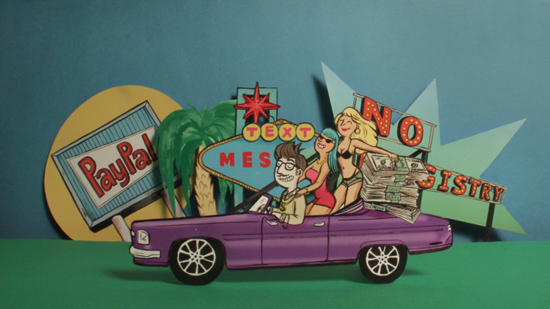
Here are some of filmDIY functions

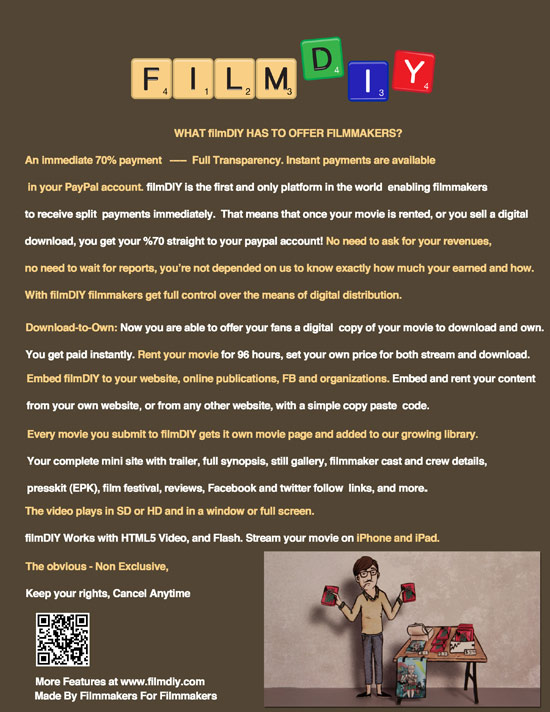
• Filmmakers receive their payments immediately — there’s no need to wait for reports or ask for a money transfer or a check. Each rental or purchase creates automatically a transaction in the filmmaker’s PayPal account. We take 30% — which covers also the cost of streaming and support. The issue of transparency is our core function. We are the first service to offer automatic split payment, it’s as if the filmmaker has his own VOD tool at his disposal. We encourage filmmakers to test us and see for themselves. All they need to do is send us their PayPal email address and we create a demo to showcase the service.

Rental and Download to Own — those two options are available for every movie. Download to own is an interesting tool, most times people rent a movie and than decide to buy also a digital copy to own, so filmmakers have more opportunities for revenues.

• Filmmakers set the price. We recommend on prices, but the final decision is made by the filmmaker.

• Personal profile page for each filmmaker, which makes it practically a mini-site for filmmakers.

• Handling all technical aspects of encoding, image optimization, costumer support etc. — As we found out, many filmmakers don’t want, or are afraid of dealing with those things. In addition, we ensure this way a unified look to the movie pages.

• Infinite distribution — a Watch Now banners can be embedded in the filmmaker’s website or in any other website. Payment and presentation of the movie are done in the hosting website, which makes it a White Label for filmmakers who want to sell the movie from their own website. In addition we help filmmakers create a Facebook app to rent movies from their fan pages.

• filmDIY is also a place for viewers to find more content, we are marketing filmDIY.com not only for filmmakers but also for audience. That’s why each movie page has reviews, festival screenings, still gallery and all the information needed. Joining filmDIY means you get more chances to get your movie the possibility to be exposed to more people.

• We are also developing an automated mechanism which matches together relevant movies to analyzed content in partners’ websites. It’s more or less the Google Ads of movies (where movies are the equivalent of ads). In this case, the partner website will receive its own share, which will further help the filmmaker distribute her movie.

Why did we choose to specialize in the indie market? — First of all, it’s often overlooked by investors, and large media companies, because it’s so fragmented. We believe this to be a mistake. True, marketing niche content is challenging, but the audience is loyal and is happy to help by spreading the word. The second reason, which is totally emotional and therefore the strongest, is that we’re indie filmmakers ourselves and simply love it.

We are not resting and always developing more solutions for indie filmmakers. The industry is in a dynamic process of technology change, and filmDIY is always on the look out to incorporate new and exciting models. We are now working with investors on a truly revolutionary system that we believe will break the current way of distributing films.
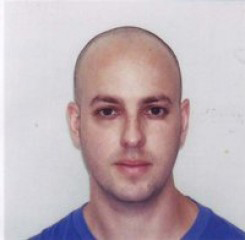
Kobi Shely Co- Founder. In January 2009, Kobi Shely launched the documentary film MacHEADS on iTunes. The buzz was immediate and overwhelming. MacHEADS generated over a millions hits on YouTube and Dailymotion. It was a No.1 documentary on iTunes, Hulu, Snagfilms, Amazon VOD and finally on CNBC. In the months after the digital launch, Shely soon came to realize that he would be the last to benefit from the profits party, and he wanted to be the first, so he co founded filmDIY.
Categories
Truly Free Film

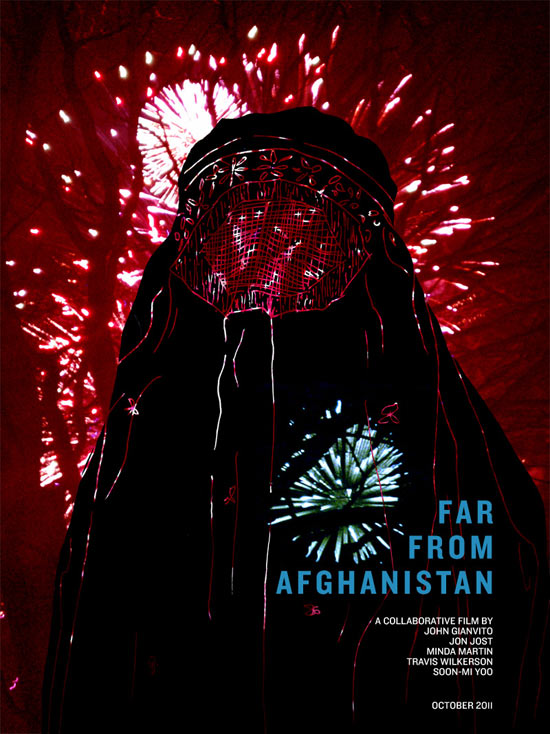
John Bruce on “Far From Afghanistan: Mission, Means, and Movement Building”

I think it is more than three years ago now that I first spoke of Truly Free Film. My hope then, as it is now, that artistic, social, and political motivations would harness the new technologies and it’s tools to usher in a transformation from a mass-market driven entertainment economy to a community-based approached to media and art. The examples of this are still few and far between. I remain very optimistic nonetheless, and am heartened by all of what “Far From Afghanistan” represents.

Far From Afghanistan: Mission, Means, and Movement Building

“If today I choose to make films it is to remind myself first and foremost that there are a lot more important things than films,” says filmmaker John Gianvito.

Last week, amidst a media brush fire of images from Occupy Wall Street and obituaries for Steve Jobs, the unfortunate 10-year anniversary of the start of the war in Afghanistan “passed quietly at the White House”, as TIME magazine barely reported. Meanwhile, streaming for free online Far From Afghanistan: The October Edition, presents work-in-progress segments from the forthcoming film Far From Afghanistan, October 6 through October 12, only.

Inspired by the 1967 film, Far From Vietnam (Loin du Vietnam), John Gianvito conceived of Far From Afghanistan as a project to bring together some of the boldest, most politically-progressive US filmmakers. The final version, to be completed in 2012, will also include contributions from native filmmakers throughout Afghanistan. Together they will utilize a mosaic of approaches, and explore issues of shared responsibility, history and memory, in a concerted effort to help accelerate resistance to the war.

Contributing segments to Far From Afghanistan: The October Edition, are John Gianvito, Jon Jost, Minda Martin, Travis Wilkerson, and Soon-Mi Yoo, with a special prologue by Rob Todd and Pacho Velez. From inside Afghanistan several Afghan filmmakers working as part of the group Afghan Voices also provided material.

Operating as a true collective, the filmmakers along with producers Steve Holmgren and Mike Bowes, platform producer John Bruce, and production coordinator Matt Yeager supported one another and enlisted dozens of others in order to make manifest this idea, without the hierarchy or procedure typical of most film development and production. “Putting together this film from scratch in about six months was a massive challenge. It would not have been possible even a year or two ago I think, certainly not in the same way. Working with no budget and with a team who were literally traveling around the world throughout production, we relied heavily on different web technologies to keep things moving… we used Vimeo to host cuts where we could provide comments, transferred final files through Dropbox rather than physically mailing drives, and had regular Skype calls to check in,” says Steve Holmgren.

Exposing selections from a film to audiences before the usual route of a major festival premiere is risky business. Traditional distribution cycles can take many months and sometimes years. Far From Afghanistan as a project has greater goals, beyond successfully navigating business-as-usual distribution channels. With the October 2011 10-year anniversary of war upon us, our mantra became “sooner rather than later”, and thus we made the choice to actively participate in, and ideally spur more, vital dialogue that needs to occur in order for people to better grasp the issues, and move collectively toward greater responsibility and resolution. Further, we hope to foster partnerships and collaborations with individuals, groups, and organizations at home and abroad. Most centrally, the project plans to connect with and provide assistance to humanitarian organizations with aligned missions, both in Afghanistan and domestically.

Far From Afghanistan: The October Edition streams online for just a couple more days. You can watch it on www.farfromafghanistan.org and also on www.fandor.com. Support the project on Kickstarter.

John Bruce is the platform producer for Far From Afghanistan, and works as a strategist for .John Bruce spent over a decade working in feature film and television production for NY-based independent producers. He is currently a strategist for Forward Mapworks, serving media ventures and organizations with social and environmental missions, and is the platform producer for Far From Afghanistan.

Far From Afghanistan: The October Edition brings together some of the best-known political filmmakers from the US, along with contributions by Afghan media makers from inside Afghanistan, in a special online event streaming segments from the forthcoming film Far From Afghanistan, during the week Oct 6-12 to mark the 10-year anniversary of the war.

Categories
Truly Free Film

My Upcoming Speaking Appearances

I have a few things coming up in my efforts to help save Indie Film. I get tired just looking at the list.

It would be great if you could join me. I need the help.

10/15 & 10/17: I am headed to London for the Film Festival and screenings of my films DARK HORSE and MARTHA MARCY MAY MARLENE. I will definitely be at the first two screenings of Todd Solondz’s film. Unfortunately I will be missing COLLABORATOR’s East Coast premiere at the Hamptons Film Festival that weekend (but I have a bunch of directors on new projects to meet over in the UK, so…) and Todd Solondz’s Masterclass & DARK HORSE screening in Abu Dhabi, but I can’t be everywhere I want to be at once, yet…

Tuesday 10/18: I will be presenting Sophia Takal’s impressie first feature GREEN as part of the HopeForFilm Screening Series at Goldcrest. I will be leading a Q&A afterwards. And then enjoying some wine with all attending.

Wed. 10/19 Tiffany Shlain’s film CONNECTED opens next week. I will be at the 5P show for a short Q&A after the show Wedneday Oct 19 in NYC at the Angelica. There are a lot of great folks lending a hand with their expertise at other screenings. Check it out here.
And order tickets here: http://www.fandango.com/angelikafilmcenter_aaeci/theaterpage?date=10/19/2011

Sat Oct 22nd, I expect to be doing something at the Flyaway Film Festival in Pepin, Wisconsin. COLLABORATOR’s there too.

On Oct 25th, I will be interviewing Geoffrey Fletcher (PRECIOUS) for the Harvard Alumni Arts, Media & Entertainment organization Harvardwood — and it’s open to the public. Order tickets here:
http://www.harvardwood.org/events/event_details.asp?id=184787

Fri Oct 28th, I will be giving an address to the Sloan Foundation Film Summit.

Sat Nov 5th: And of course there’s my first EVER stateside Masterclass with Christine Vachon on Nov. 5th at the Cantor Film Center at NYU in NYC. There’s one week left on the Early Bird Discount. http://killerhope.eventbrite.com/

Categories
These Are Those Things

One Of The Best Short Films EVER!!!


Frank Film, Frank MOURIS, 1973 by shortanimatedworld

I can’t believe I have lived so long without having encountered this film before. It won an Oscar in 1973 for Best Animated Short. Even with the commercial interruption and poor resolution it made my list of Best Shorts ever. What’s on your list?

Categories
Truly Free Film

Collaboration 101: Working With Your Partner (In Life And On Set) — Part 3 of 3

The last two days, Sophia Takal and Lawrence Michael Levine have been sharing how they have navigated both a personal and professional collaborative relationship. For me, my curiosity about their process was sparked when I watched Sophia’s GREEN, a feature that moved, impressed, and scared me. I look forward to collaborating more fully with my wife on our movies (albeit only behind the camera), but watching Sophia’s film, I knew I had a lot to still learn about the how to of the dual pursuit.

I will be presenting GREEN in a little more than a week from now at my HopeForFilm screening series, and it is not a film you should miss. GREEN premiered at SxSW this year and deserves to travel far and wide. It has lodged itself into my memory. If you haven’t been following Sophia & Lawrence’s very revealing conversation this last three days, I suggest you travel back in time and start from Thursday’s post and read it one sitting.

Thursday, PART ONE: The Empress and Fat Friend 2007-8
Yesterday, PART TWO: Gabi On The Roof In July, 2009-2010
Today, PART THREE:

Green, 2010

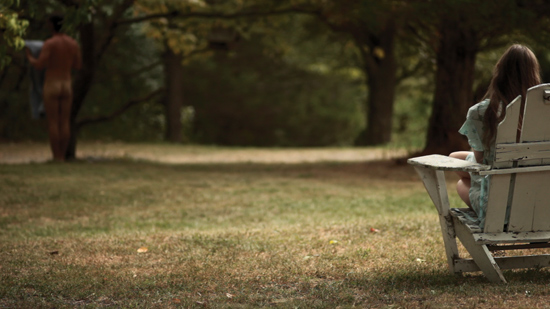
Sophia Takal: With both Lawrence and myself sufficiently emotionally traumatized by the experience of making Gabi, I decided I wanted to direct a movie myself. I wanted to shoot Green as a way of getting back to ‘the work’ after a year on the festival circuit. I wanted the film itself to reflect my experiences shooting Gabi, my fears, my jealousies, my irrational, unjustifiably terrible behavior. And to do so I decided to cast my boyfriend and our new roommate (and extraordinary actress), Kate Lyn Sheil, as boyfriend and girlfriend.

Lawrence Michael Levine: When Sophia came to me with the idea to do Green, my first reaction was absolute terror. The script was about a couple that moves to the country, where they meet an attractive neighbor. When the man in the relationship becomes friendly with the neighbor, the woman in the couple becomes psychologically unhinged due to her feverish jealousy. The story, however, wasn’t the problem. The truly frightening thing about the project was that Sophia intended for me to play the “ romantic” lead opposite our best friend, roommate, and Gabi co-star Kate.

Ultimately, Sophia got me to do the project by repeatedly promising not to get jealous and claiming she’d matured since the Gabi shoot. I probably wasn’t as difficult to convince as I should have been. I thought the part she’d written for me was great and that the movie would be excellent as well. Also, I’d really enjoyed acting with both Sophia and Kate in Gabi. Mostly, I knew that Sophia and I had become increasingly dedicated to our work and that if we didn’t learn to function together on set we might see each other less and less. Interestingly enough, though there were moments of strife between us during Green, they usually weren’t triggered by Sophia’s jealousy. Despite the fact the Green featured some “erotically charged” scenes between Kate and I, Sophia handled the shoot remarkably well.

ST: For Green, I insisted on an intimate set (only 5 people on set at a time including the actors), no time pressures (if we did not finish it this summer we would just come back next summer), an extraordinarily low budget and, as a result, no hopes that could be crushed. I insisted that I was the one in charge, to get the final say, to be the director. And then I turned to Lawrence and asked him if he thought that was okay. And then I turned to Lawrence and asked if the shot made sense. And then I turned to Lawrence and asked how to articulate what I needed from his own performance. And then I yelled at him for interfering.

LML: Sometimes things were a little dicey because Sophia wanted to be the boss, but wasn’t quite as experienced (i.e. old) as me. She would ask me for advice and then get mad at me for giving it. There were also times when I overstepped my bounds. On one occasion, I gave Kate a note without checking with Sophia first. I’m sure there were others, but basically our ability to work together had improved.

ST: Estimated Number of Fights:
Pre-Production: 0(!)
Production: 9 (the biggest one being an argument about which was funnier: Lawrence eating an apple or putting lotion on his legs)
Post-Production: 5

That’s a huge drop in arguing. If that were some real statistic, some dead statistician would probably be really excited.

LML: I’m lost.

ST: It means we argued less.

LML: Well, the shoot was much shorter.

ST: FUCK you! Just kidding.

LML: We did fight less. Looking back on the past three years, we have worked together practically non-stop. I think we have a lot to show for it. I’m proud of what we’ve accomplished, though I have to admit that sometimes I’m amazed our relationship is still intact.

ST: How did we pull that off? Well, a lot of discussion. A lot of rules. A lot of honesty and a lot of pain, truthfully. Tensions flared up, for sure, but all film sets are tense. Why would this one be different? What mattered was that we learned, through (sometimes brutally painful) experience what our limits were. It was okay for Lawrence to kiss another girl as long as he only paid attention to me in between takes. It was okay for Lawrence to suggest a shot for a scene, but only if I asked him first. It was okay for him to suggest a cut, but only if he realized I had the final say. Maybe it sounds uptight, maybe I sound like the most intense, obnoxious person in the world. But what I gain working with Lawrence is so absolutely invaluable: a partner, an ally, someone who challenges me, who forces me to reach beyond, who sees how far I can go and who will not let me slack off or give up. It’s worth all the rules, all the arguing, all the pain. In the end, I have found someone who can love me, push me, encourage me, demand the best of me, trust me with his work, and in a pinch, record sound for me. It’s totally worth it.

Sophia Takal wrote, directed, edited and starred in the feature film GREEN which premiered at SXSW in 2011 and won the SXSW/Chicken & Egg Emergent Woman Narrative Director award. She produced, edited and starred in Lawrence Michael Levine’s GABI ON THE ROOF IN JULY. She was named one of Filmmaker Magazine’s 25 New Faces of Film in 2011. 

Lawrence Michael Levine wrote, directed and starred in the feature film GABI ON THE ROOF IN JULY which played numerous festivals, won a number of awards and is currently available on VOD, iTunes, Amazon.com, etc. He produced and starred in Sophia Takal’s GREEN. 

Categories
Truly Free Film

Collaboration 101: Working With Your Partner (In Life And On Set) — Part 2 of 3

Yesterday, in an effort to determine whether “Can A Couple Truly Collaborate Creatively (And Survive?)” we started to look at the origins of the collaborative filmmaking team of Sophia Takal and Lawrence Michael Levine — who just so happen to be entangled romantically too. Today, they share a bit about what they went through when they embarked on their first feature, Lawrence’s GABI ON THE ROOF IN JULY. They are as honest and forthcoming about their process, as they are in their filmmaking itself. As I said yesterday, “Whether you aspire to work with your significant other, or just collaborate well with your team, the back and forth and growth that Sophia and Lawrence have committed themselves to, can all teach us a few things.”

Part Two of Three
Gabi on the Roof in July, 2009-2010

Lawrence Michael Levine: Though making The Empress and Fat Friend had encouraged us to entertain the idea of making a feature, we still weren’t sure we’d be able to do it. I’d saved up a little money over the years, but I wasn’t sure how far that was going to take us. I was really into ensemble films at the time, which are more expensive – more characters means more locations, company moves and mouths to feed. I was also concerned that many of the early micro-budget films were alienating to audiences because they were poorly lit, so I felt it was important to improve on that which I didn’t think was possible for the amount of money I had. Fate, however, soon put an end to these concerns. Sophia was cast in a national television commercial that paid very well. As soon as she got her first residual check for the commercial, we went to work on the film that ended up becoming Gabi on the Roof in July.

Since Sophia and I were going to be paying for the movie ourselves, we decided that we might as well make exactly the kind of film we wanted to make. Both of us were pretty inspired by Mike Leigh at the time, so it seemed like an interesting idea to study his techniques and apply them to our own life experiences. That meant casting the actors first and developing the characters and story in collaboration with them. We gave ourselves six months to cast, rehearse, and generate the shooting script and then another month to shoot the film.

The rehearsal process for Gabi was simultaneously one of the best and worst times of my life. Artistically, I had never been more satisfied. The cast we managed to pull together was of a caliber beyond our wildest expectations, but the countless hours I spent away from Sophia with the other actors and with my co-writer, Kate Kirtz, took their toll on our relationship. Sophia’s sense of isolation, I think, was compounded by the fact that, as part of the rehearsal process, I required the actors not discuss their characters with one another. No actor could know more than his or her character would know. That meant that when I came home at the end of the day, I could not discuss what I had been working on with Sophia, which further fueled her jealousy and paranoia. This state of affairs was tough on her, so she made it tough on me.

Sophia Takal: Well, yeah, because essentially that process meant spending hours home alone waiting for you to get back from traipsing around the city with beautiful girls like Amy Seimetz and Kate Sheil, while I sat at home waiting for you. Then when you got home once you got home I couldn’t talk to you about where you’d been and what you’d been up to.

LML: Right. That’s what I just said.

ST: Different emphasis.

LML: Fair enough. The shooting of Gabi was equally divided between periods of artistic fulfillment and extreme tension. Working with the cast and cinematographer, Aaron Kovalchik, was a joy; however, due to our inexperience and lack of funds the set was in a state of constant chaos. Since most of the cast and crew were working for free, Sophia and I couldn’t take out our frustration on them, so we took it out on each other.

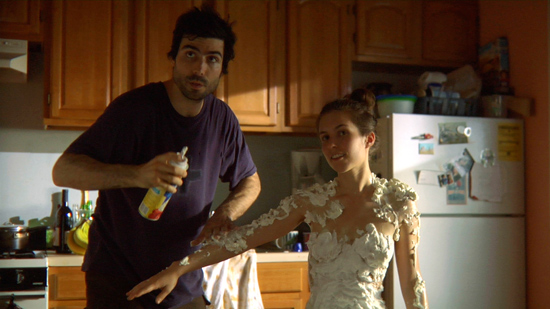
ST: Yeah. We took all of our anxiety and turned it in on each other. A psychologist would probably look at our behavior during that period of time and grimace. It was bad. One of the things that sucked the most was that we decided we couldn’t afford an AD, so I was the de facto AD, which meant I had to be the person on set to keep things moving, but I was also the star of the film so I would be rushing Larry and the DP while, for example, I was covered in whipped cream in between takes. It was awkward.

LML: She would be rushing me and then she’d have to step into a scene and I’d have to be a kind, supportive director, after she’d just been hassling me about time. It was rough.

ST:

Estimated Number of Fights:
Pre-Production: 65
Production: 52
Post-Production: 18 (one in which Lawrence threatened to throw the computer out the window if I did not make the cut he – the director – wanted)

LML: Though many of our shooting days were filled with awful moments, I think the worst point in the shoot was when I had to do a love scene with Brooke Bloom while Sophia crouched behind the camera attempting to hide the fact that she was weeping profusely behind a pair of giant sunglasses. Why she chose to be in the room at that moment, despite my protestations, I’ll never know, nor will I ever fully grasp how she convinced me to do her next project, Green.

ST: In the end, though, we made a movie. A movie that at certain points neither of us thought we could pull off and sometimes still wonder if we did. But we did it together and despite all the arguments we were, at times, the only people who believed in each other.

TOMORROW: We conclude with Part Three, As Sophia Takes Charge On Her Own Feature…

Trailer: GABI ON THE ROOF IN JULY:


Sophia Takal wrote, directed, edited and starred in the feature film GREEN which premiered at SXSW in 2011 and won the SXSW/Chicken & Egg Emergent Woman Narrative Director award. She produced, edited and starred in Lawrence Michael Levine’s GABI ON THE ROOF IN JULY. She was named one of Filmmaker Magazine’s 25 New Faces of Film in 2011.
Lawrence Michael Levine wrote, directed and starred in the feature film GABI ON THE ROOF IN JULY which played numerous festivals, won a number of awards and is currently available on VOD, iTunes, Amazon.com, etc. He produced and starred in Sophia Takal’s GREEN. 

Categories
Truly Free Film

Can A Couple Truly Collaborate Creatively (And Survive?)

Jealousy is great fodder for creation. Our hunger for love puts stress on us even once we have found it, earned it, and secured it. Love is both incredibly deep and incredibly delicate. It is strong and it is fragile. We can make movies about love until the end of time, and not even scratch the surface.

Indie & Truly Free Film are both currently awash in collaborative filmmaking teams. Some are siblings, some are friends, and at least one of them is a couple: Sophia Takal and Lawrence Michael Levine. When I saw Sophia’s GREEN, I was incredibly impressed and moved. Not only does Takal tackle the subject of jealousy straight on, she does it by also starring in it with her boyfriend/fiance; just to complicate things, their roommate, plays his lover. I understand creative challenges, but know I have a lot to learn when the creative challenges the personal. I asked Sophia and Lawrence to tell us a bit about how their collaboration came to be. Whether you aspire to work with your significant other, or just collaborate well with your team, the back and forth and growth that Sophia and Lawrence have committed themselves to, can all teach us a few things.

PART ONE (OF THREE): The Empress and Fat Friend 2007-8

Sophia Takal: Lawrence recently read Marshall Fine’s biography of John Cassavetes. Apparently, Cassavetes and Gena Rowlands never spoke about their relationship in public because they were afraid of the evil eye, so I think we’re both sort of nervous to do this. Also, neither of us have really blogged before. I briefly started a blog about bad haircuts (www.badhaircutblues.blogspot.com). Lawrence did a blog post once and “Ted Nope” made fun of it, so he took it down.

Lawrence Michael Levine: Yeah, that was humiliating. I find internet culture extremely frightening — I know people will make fun of this, but I guess you have to push on through. Where to start?

ST: I met Lawrence when I was in college. He was a TA in Andrew Sarris’ movie musicals class. I got a C+. I barely spoke to him during the semester.

LML: Yeah. Sophia and I could easily not have met. As a grad film student, I was one of the two T.A.’s assigned to an undergraduate class she was taking, but she wasn’t in my section. The other T.A. graded her papers and ran the discussion group that she was in. When the other TA had surgery, for a few classes I ran both discussion groups at once, but it was in a large auditorium and apparently Sophia sat in the way back where I couldn’t see her. I think she told me she slept and/or “surfed the net” and barely noticed me. Supposedly, the rumor amongst her classmates was that the other TA had missed the classes because of penis reduction surgery, which is amusing, but neither here nor there for the purposes of this post. What might be more germane is the fact that we met at the other TA’s apartment, when he threw a party at the end of the semester. I thought she was extremely beautiful and incredibly funny. Sophia spent most of the night talking to my friend, but she and I did talk for a bit and we must have exchanged emails or something because we kept in touch.

ST: We pursued a casual friendship, mostly e-mail based (sending each other recipes for latkes, quoting Jay-Z, and making plans to meet but rarely following through).

LML: I think she also must have told me that she was an actress because several months later, when I had a reading for a screenplay I was working on, I asked her to participate. She was the only actor that I invited to the reading that I hadn’t seen act before. The script called for a college girl and I didn’t know any, so I thought of her. She turned out to be great. After that, I developed a mega-crush on her because she wasn’t just funny, smart, and pretty, but she was such a gifted actor.

I was just finishing school — I think this was 2007 — when Sophia and I became a couple. Film school had really shaken my confidence and I was considering giving up completely on being I filmmaker, but I still had a passion for film and I know Sophia and I talked a lot about movies. I don’t think I would have recommitted myself to a life in film were it not for Sophia’s confidence in my abilities. She claimed to love the more personal stuff I was writing and suggested that we get to work, so after moving in together and announcing our engagement to our families, we quickly shot a couple of short films called, The Empress and Fat Friend.

ST: As I recall, we got into two arguments while making The Empress.

1. I found out I was scheduled to have surgery the morning after our shoot was scheduled to end. This was about 4 days before we were going to shoot. Lawrence wanted to reschedule the shoot for after I recovered, but I insisted that we keep the shoot date as planned. My recovery was going to take about a month and I didn’t want to wait that long to make the movie, but Lawrence did not want to risk having to rush the shoot because I was nervous about surgery and did not want me to be distracted.
2. It was midnight on our last day of shooting and I was supposed to be at the hospital at 5 am. I did not want to continue shooting and was upset that Lawrence forced me to even though I had surgery the next morning.

LML: Great art, or in this case mediocre art, requires sacrifice.

ST: I edited the film, burned hundreds of DVDs, and then found out that all of the DVDs I’d burned were way out of synch. These were the DVDs we sent to festivals, which, of course, all rejected us. Lawrence has never gotten mad at me for this mistake.

LML: For the most part, we enjoyed making The Empress and thought we’d done a good job once the sync issue was straightened out, so we did another called Fat Friend.

ST: We decided that Lawrence would direct the scenes I was in and I would direct the scenes he was in. There was one scene we were in together, which we thought we’d just play by ear. Playing it by ear, it turned out, meant arguing for a solid 45 minutes while the DP, sound recordist, and third actor waited around, bewildered. I don’t remember what the argument was about but I do remember the DP, Kevin Barker, settled it. We got into one fight during post-production:

1. The short that I cut was 19 minutes long. I refused to cut 4 minutes from the movie despite Lawrence’s insistence that it was too long. I cried and said that all of the moments were so good and his performance was incredible and I could not bear to cut a frame of the film. Lawrence brought our DP (also an editor) in to trim what he could. He took 5 minutes off the film without really changing a thing. We never submitted the film to a festival.

At this point, our relationship had not been irrevocably changed by our work together. Tiny arguments and big arguments had come and gone but work is work and were mostly able to separate the two. Then we decided to make a feature…

TOMORROW: The First Feature, And It’s His…

Sophia Takal wrote, directed, edited and starred in the feature film GREEN which premiered at SXSW in 2011 and won the SXSW/Chicken & Egg Emergent Woman Narrative Director award. She produced, edited and starred in Lawrence Michael Levine’s GABI ON THE ROOF IN JULY. She was named one of Filmmaker Magazine’s 25 New Faces of Film in 2011.
Lawrence Michael Levine wrote, directed and starred in the feature film GABI ON THE ROOF IN JULY which played numerous festivals, won a number of awards and is currently available on VOD, iTunes, Amazon.com, etc. He produced and starred in Sophia Takal’s GREEN.